The Journal / Sewing tutorials
Gold chain garment: 8 ways to integrate it into your swimsuits, tops and bags
Swimsuits, evening tops, pouches: eight ways to integrate a gold chain into your creations, and the workshop techniques to fix it securely.
13 November 2026 7 min read By the D'YRSAN workshop

The gold chain garment has become one of the most effective details for turning a simple piece into a party outfit. Placed between two cups, as a strap or as a pouch handle, it brings light, movement and a jewelry touch that fabric alone cannot offer.
You still need to choose it well and above all fix it properly: a poorly anchored chain pulls on the mesh, and a fragile finish tarnishes at the first wash. In this guide, we share eight concrete ways to integrate a gold chain garment into your swimsuits, tops and bags, with the workshop techniques that make the difference between a jewelry effect and a homemade look.
Choosing your gold chain garment: links, finish and weight
Before thinking about the design, look at the link shape. A fine forçat chain stays discreet and flexible, a flat curb chain catches the light, while hammered links of large size become the main element of the piece. In our department chains, the gold chain with three hammered links, measuring 11 x 3.5 cm, illustrates this last case well: it stands on its own between two panels of fabric.
Visit finish matters as much as the design. For a swimsuit, favor a gold-tone metal designed to withstand contact with skin, salt and chlorine. Also check that the ends finish with a closed ring or an integrated loop: a simply opened ring will always spread apart under tension.
Then weigh the chain in your hand, imagining the material that will carry it. A gold chain clothing piece that is too heavy for its support distorts the neckline or makes the cup gape. Simple rule : the finer or stretchier the fabric, the lighter the chain must be, or its weight must be spread across several anchor points. A fluid jersey copes poorly with a heavy curb chain, whereas a thick tweed or jacquard accepts it without flinching.
A final criterion, often overlooked: the gold tone. Between a deep yellow gold, a pale gold and a rose gold, the difference is immediately visible when the chain sits beside a buckle or an adjuster. Choose all your metal pieces in the same shade and the same finish, matte or shiny.
Chain for swimsuits: three ways to integrate it
The swimsuit is the chain's favorite playground. The gold chain clothing finds attachment points already built into the construction: center front, hip sides, straps and cutouts. Choose a dense, firmly shaping fabric, like an thick ivory matte lycra : it absorbs the pull without puckering around the anchor point, and its solid background makes the metal stand out.
1. Between the cups of a triangle top or bandeau
This is the most classic use: the chain replaces the center bridge between the two cups. Each end passes through a lined fabric loop, sewn with a zigzag stitch using polyester thread. For a more graphic effect, insert a gold connector in the center: it serves as a pivot and balances the tension on both sides.
2. On the hips of a bikini bottom
On a scooped bottom, a short chain connects the front and back at hip level, in place of the fabric side. Plan a length adjusted to the millimeter : unlike fabric, chain does not stretch. So measure on the person, swimsuit worn, and add an adjuster at the side if the design must fit several sizes.
3. In a back cutout on a one-piece
On a one-piece swimsuit, the chain can close a cutout at the back or highlight an opening at the belly. It then works as a structural piece and no longer as a simple ornament. Always fix it to an area reinforced with a double thickness, never on a single layer of knit.
Tops and party dresses: three ideas for a decorative sewn chain
For the year-end festivities, the chain leaves the beach and makes its way onto evening outfits. It pairs particularly well with shiny materials : a lurex fabric, a sparkling openwork knit or a champagne sequin fabric matches the shine of the metal without competing with it. On a matte, dark background, however, the chain becomes the only point of light in the silhouette.
4. Straps made entirely of chain
Replacing fabric straps with a chain instantly gives a jewelry look. Plan for two anchor points per strap, front and back, and reinforce the attachment area with a soft interfacing or a reinforcing ribbon sewn on the inside. Adjust the length during an actual fitting : a metal strap doesn't forgive even a centimeter too much.
5. A halter neckline or a jewelry neckline
A chain passed behind the neck turns a simple bustier into a halter top. Fix it on either side of the neckline using two gold earrings, which neatly conceal the junction between fabric and metal. To make it easier to slip on, a clasp discreet placed at the nape avoids straining the seams.
6. A chain belt sewn at the waist
On a straight dress or a high-waisted skirt, a chain attached at the waist seam defines the silhouette. It can be continuous, or interrupted by a sculpted central element : the blooming pink gold loop makes a very beautiful focal point, linked to the chain on each side. Remember to leave a slight slack so that the chain follows movements without pulling on the waist.
Bags and pouches: two uses of the gold chain garment
It is on the bag that the gold chain for clothing works hardest: it carries weight, rubs against the shoulder and is handled dozens of times in an evening. It is also the best way to extend an outfit by matching the handle to the metal detail of the swimsuit or top.
7. The pouch handle
For an evening pouch, mount the chain on two rings fixed into lined and interfaced fabric tabs, caught in the assembly seam. Determine the length on the wearer, depending on whether she will carry the pouch on the shoulder or crossbody. Keep in mind that the weight of the contents constantly pulls on the anchor points: multiply the rows of topstitching at this spot.
8. The detachable bag jewelry
Simpler still: a short chain embellished with charms or a gold ornament, hooked to the handle by a snap hook. This true textile jewelry accessory changes with the outfits. For a brand, it is also a way to test the effect of a new metal motif before integrating it into a whole collection.
Fixing and caring for a gold chain garment without damaging the fabric
Whatever the use, the golden rule remains the same: metal is never sewn directly onto a simple knit stitch. Pass through a fabric loop, a lined tab or a joining accessory. The sliders with a bar are made for this: the fabric wraps around the bar, is sewn on the reverse side, then the chain is attached to the ring.
On the sewing side, work with a strong polyester thread and a stretch needle on elastic fabrics. Secure each anchor point with several tight zigzag passes. Before finishing the piece, test the hold by pulling firmly on the chain: it is better to discover a weakness in the workshop than on a first wear.
For care, we recommend a rinse with clean water after each swim, flat drying in the shade and storage separately, away from friction. Remove detachable elements before any wash. For sewn pieces, a hand wash in cold water protects both the fabric and the gilding of each link.
Chains and accessories: composing a coherent piece
Eight uses, one same logic: a successful gold chain for clothing is chosen for the material that carries it and fixed to a solid base. Start with a simple detail, a chain between two cups or a bag jewelry piece, before moving on to straps or a structuring cut.
To keep a harmonious line, pair chains and accessories in the same shade and finish, drawing from our accessories as in the fabrics of the haberdashery. It is this coherence, far more than the amount of metal, which gives a piece its jewelry-like look.
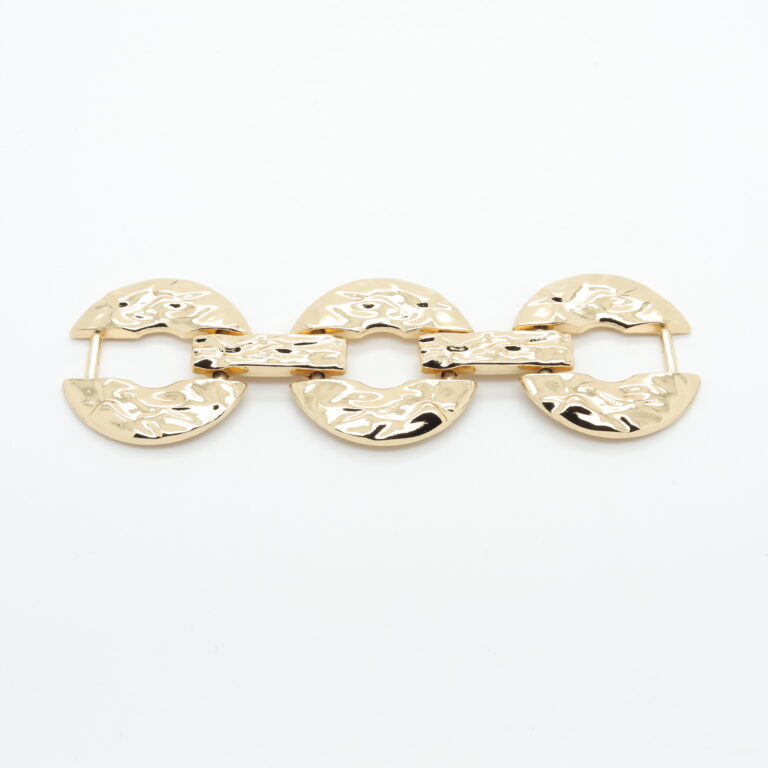 ORN-D18
Gold-plated chain with three hammered links, 11 x 3.5 cm
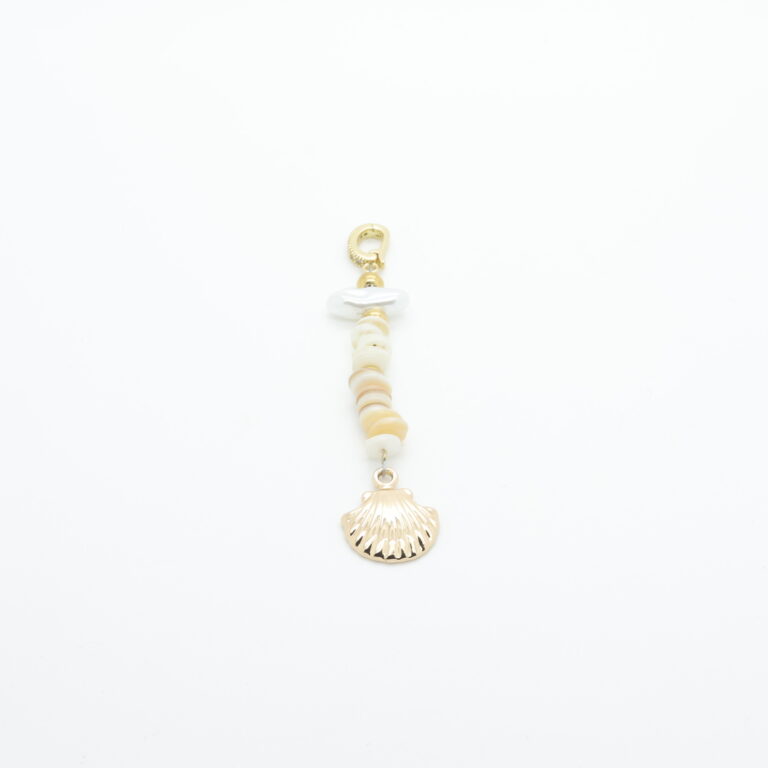 DY3338
Gold bathing suit jewel with shell
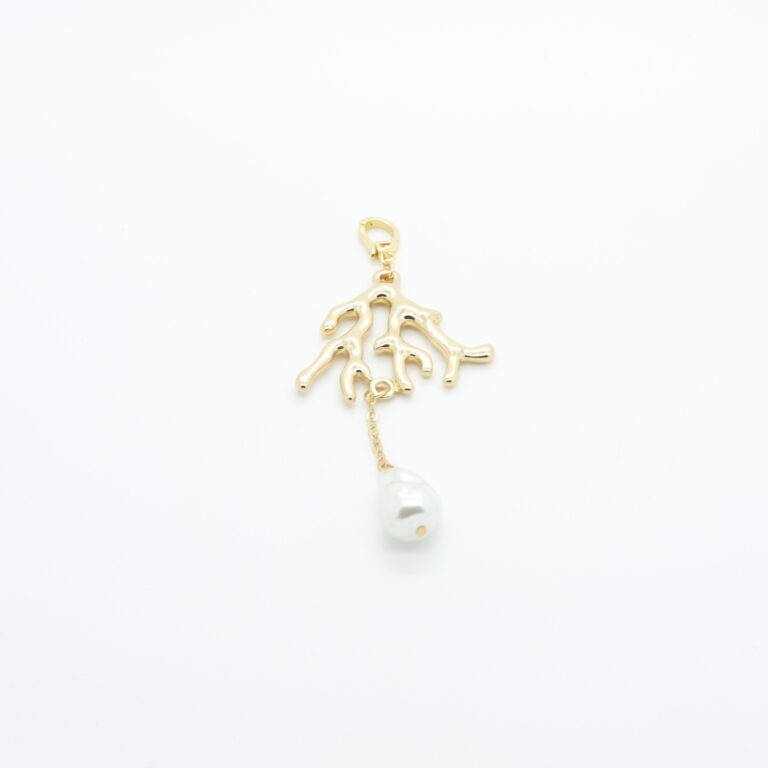 DY9565
Coral-shaped swimsuit jewel
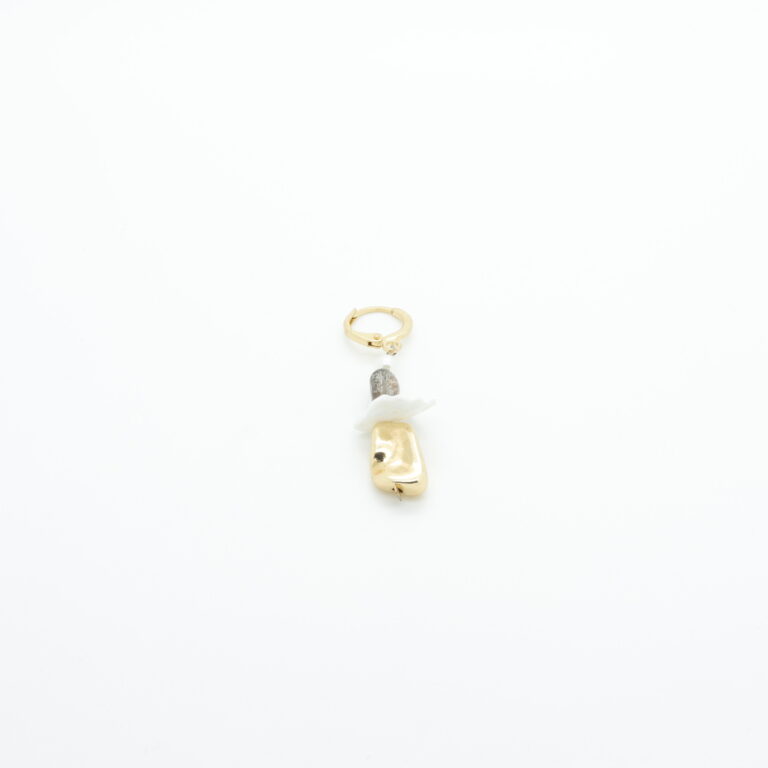 DY0109
Swimsuit jewel with shell and pearls in gold-plated metal
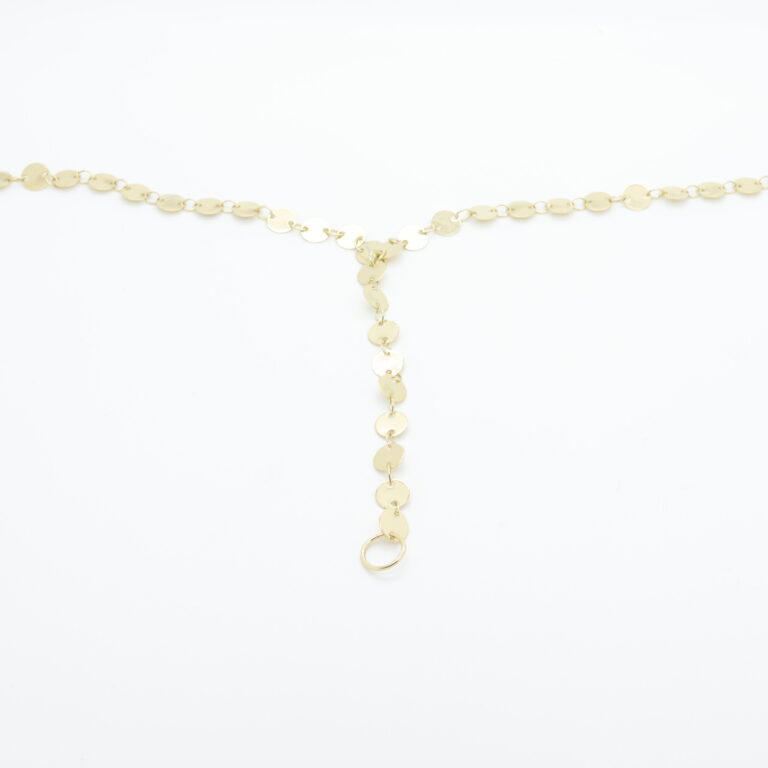 DY7240
Gold-tone metal connector chain
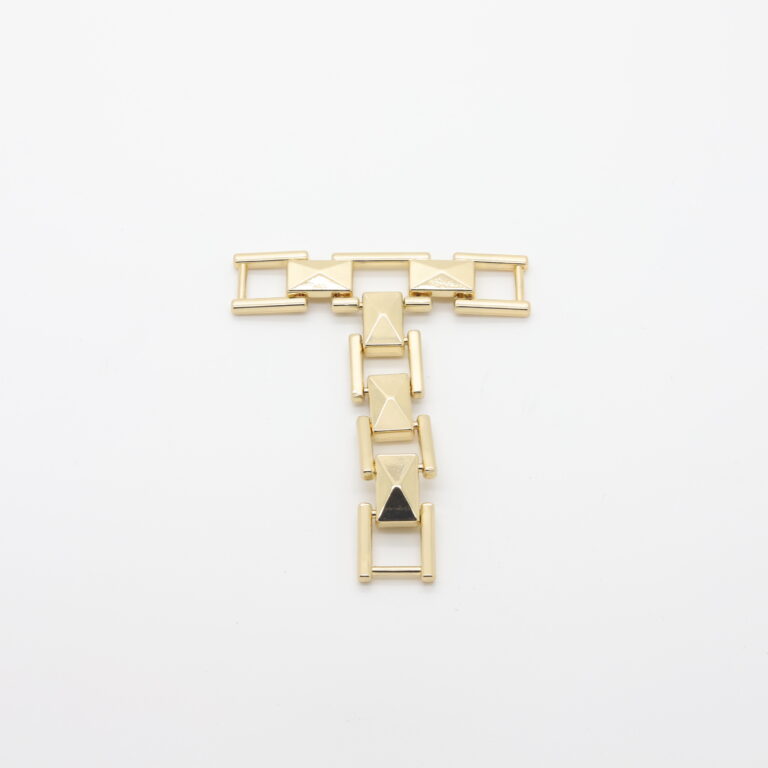 DY5093T6
Gold-tone metal hinged connector
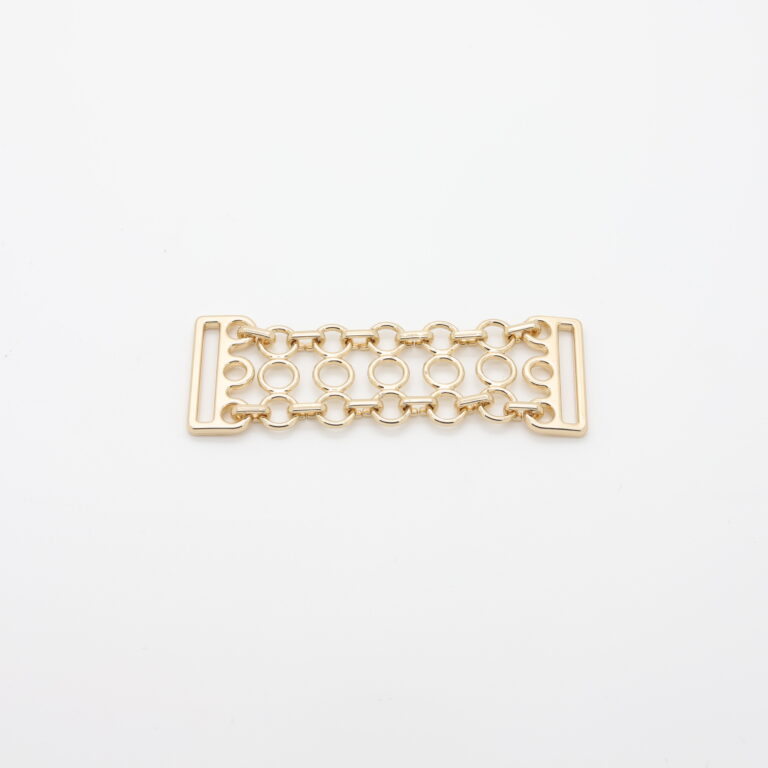 F-2762
Decorative connector chain in gold-plated metal
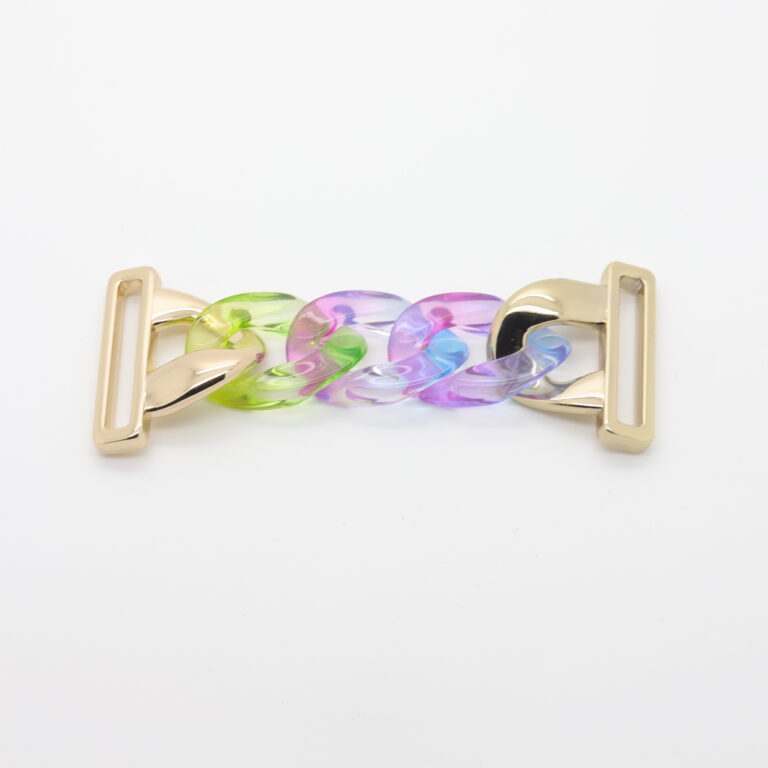 DY8042
Multicolored resin connector chain
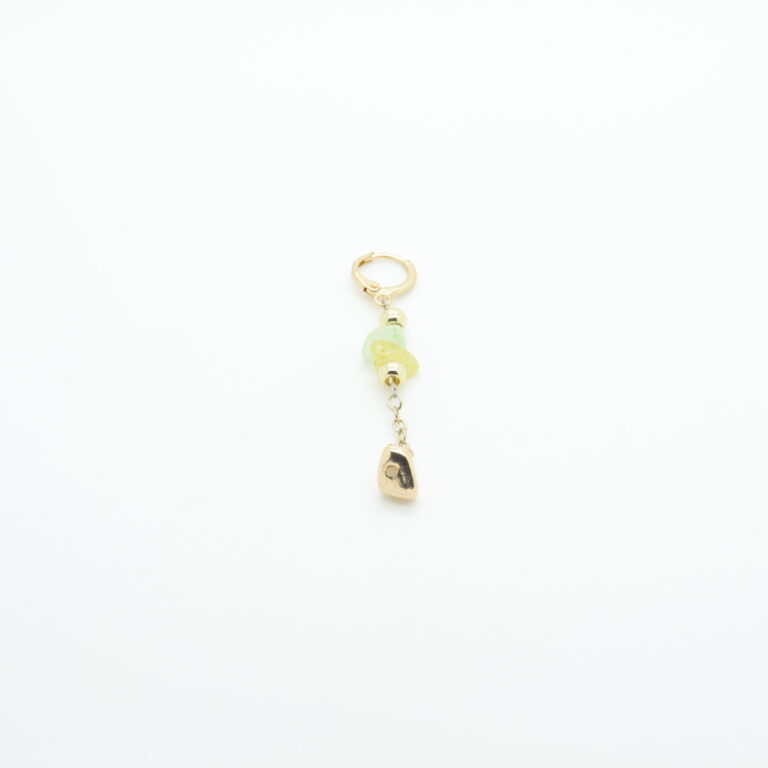 DY0088
Swimsuit jewel in gold metal with colored beads
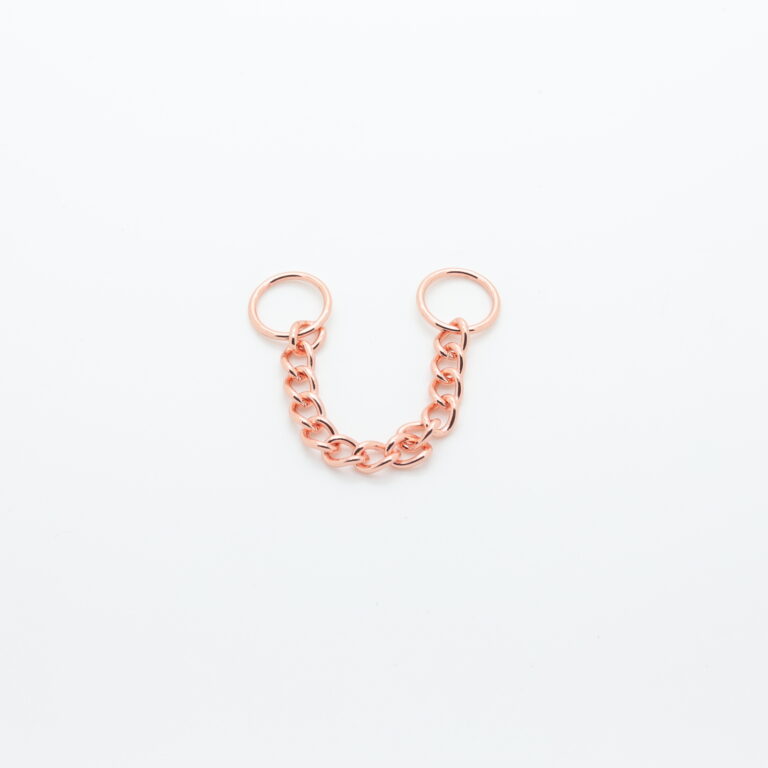 DY6690
Decorative jewelry chain in pink gold metal with rings
YRSAN's haberdashery : fabrics by the meter and supplies selected by the workshop. Discover the haberdashery
Written at the D'YRSAN workshop in Asnières-sur-Seine, where we develop and produce our clients' collections: pattern making, prototyping, industrialization, small-batch production.
Tell us about your project→