Sewing sequin fabric: 9 pro tips for a party outfit
Cutting, needle, removing sequins, lining: our 9 workshop tips for sewing a sparkly party outfit without breakage or discomfort.
October 20, 2026 6 min de lecture Par l’atelier D’YRSAN
Sewing sequin fabric for a New Year's Eve dress or party jacket often makes even experienced seamstresses hesitate. Broken needles, glitter flying everywhere, scratchy seams: the material has its reputation. Yet, with a good preparation and a few workshop techniques, the result is clean and pleasant to wear.
At our workshop in Asnières, we regularly work with glossy materials for the brands we support, from prototype to production. Here are the 9 tips that we apply, from the choice of the sequined fabric by the meter to the finishing touches, so that sewing your sequined dress remains a pleasure.
Choosing the right sequined fabric according to the design
1. Identify the medium first
A sequined fabric consists of two elements: a textile support (tulle, mesh, cotton, muslin) and sequins sewn or embroidered on top. The base fabric dictates the drape, elasticity, and sewing method. A mesh fabric creates a soft and slightly stretchy piece; a woven base provides structure.
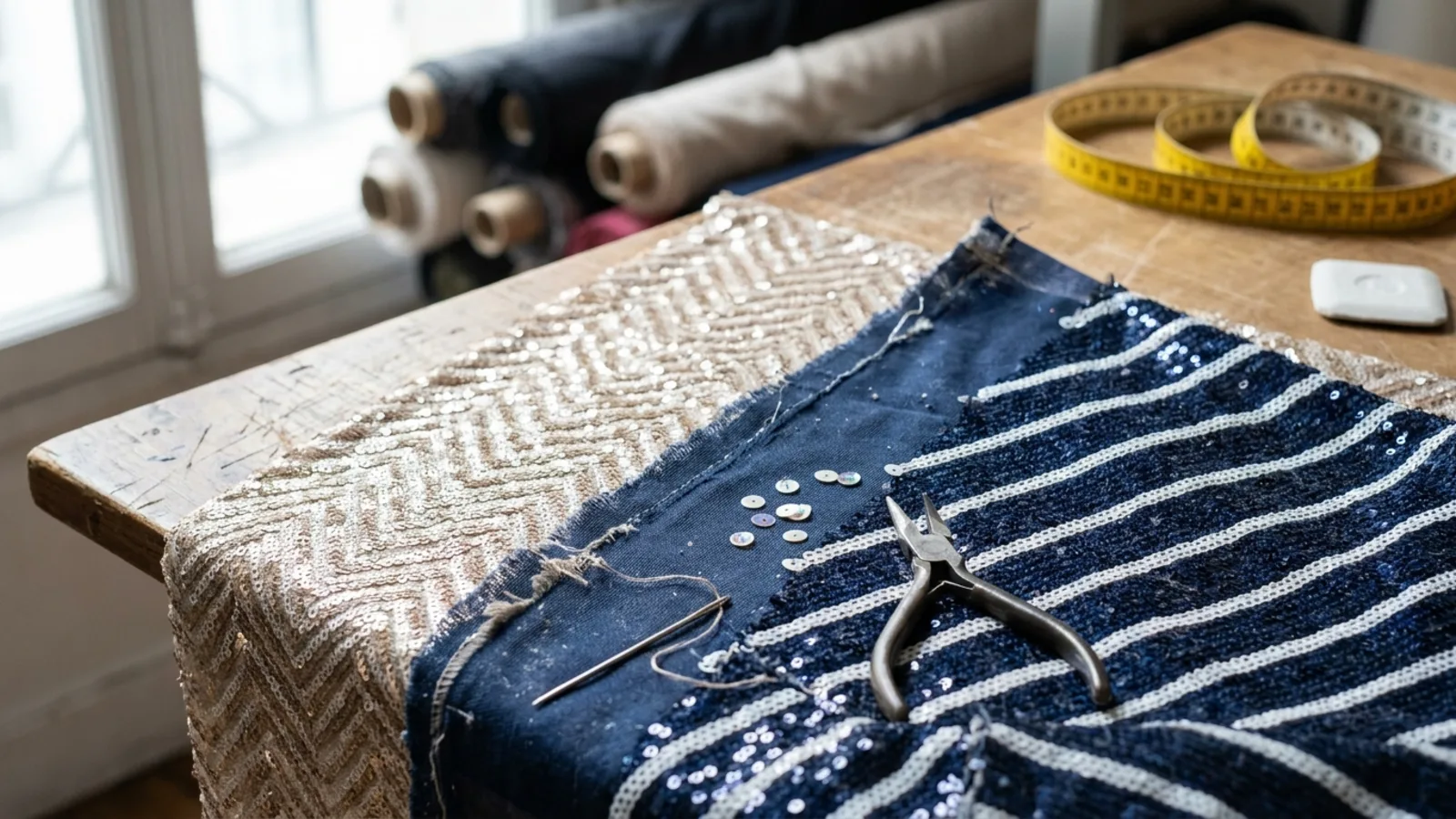
Visit Champagne chevron sequin fabric It creates a very bright, graphic pattern, ideal for a straight dress or pencil skirt. Black sequined embroidered cotton offers a stable support, easier to handle for a first piece: short jacket, structured top or trapeze skirt.
2. Determine the direction of the sequins
The sequins overlap like scales: in one direction they are smooth; in the other, they catch. Always position the pattern so that your hand glides smoothly. from top down of the garment. The sequins then remain flat and reflect light evenly. Therefore, allow for a certain amount of fabric. with meaning, as with velvet.
Banded models, like the Navy blue sequined striped fabric, also ask for a stripe matching at the side seams. Add a margin of fabric to align the patterns and choose a pattern with few cuts: the sequins are the decoration, no need to multiply the darts.
Prepare the cut before sewing the sequin fabric
3. Validate the pattern on a muslin
A loose seam on sequined fabric leaves visible holes: it's best to adjust everything beforehand. First, assemble your garment in a cotton canvas of a similar garment, then adjust the ease, lengths, and armholes. Before sewing sequin fabric, each measurement must be final.
Choose preferably simple lines : sheath dress, kimono dress, straight top, wide-leg trousers. Darts can often be incorporated into a side seam or princess seam, reducing the number of seams to be worked out.
4. Cut flat, in a single layer
Never fold sequined fabric in half to cut: the sequins will slip and the piece will shift. Cut in single thickness, Place the pattern underneath, duplicating it to obtain whole pieces. Trace onto the wrong side. tailor's chalk and hold the pattern in place with weights rather than pins.
Use a dedicated pair of scissors Sequins quickly dull fine blades. Cover the table with a sheet; the cut sequins can then be gathered up in one go instead of getting scattered all over the room.
Unsewing the seams: the gesture that changes everything
5. Remove the sequins from the edges
This is the longest and most crucial step in sewing sequin fabric neatly. Across the entire width of the seam allowance, plus 3 to 5 mm Beyond the seam line, remove the sequins one by one. Flatten them with a flat pliers or cut them flush, without cutting the embroidery thread that holds them.
This thread must stay in place: if it is cut, the entire row may come undone. Make a hand stop point or place a drop of fabric glue at the ends of the broken rows. Carefully keep the removed sequins intact in a box: they will be used for final adjustments.
Work in daylight, using the reverse side of the seam line as a guide. On a fabric with small, dense sequins, this preparation often takes longer than the assembly itself: this is normal, and it makes all the difference.
Sewing machine and needle: sewing sequin fabric without breakage
6. Choosing the right needle for sequin fabric
Even with generous margins, the needle will occasionally catch a forgotten sequin. Opt for a jeans needle size 80 or 90, more rigid than a universal one. On a mesh support, a stretch needle Avoid skipped stitches. Change it as soon as the stitch becomes uneven: a blunt point catches and damages the fabric.
7. Adjust the machine and stitch slowly
Extend the point around 3 mm and slightly reduce the pressure on the presser foot. foot zipper This allows you to stitch as close as possible to the remaining sequins without going over them. On a stretch fabric, a narrow zigzag stitch preserves the elasticity of the seam.
Stitch slowly, and turn the steering wheel by hand in the delicate areas. Wear protective glasses A needle breaking on a sequin will send shards flying. Avoid using an overlocker on untrimmed edges, as its blades don't handle sequins well.
Never place the iron directly on the sequins, as they will melt or tarnish. Open the seams. upside down, on a thick towel, a soft iron and a damp cloth, or simply flatten them with your finger.
Sequin fabric lining and neat finishes
8. Double for comfort
The reverse side of sequined fabric is scratchy: embroidery threads, sequin edges, stiff margins. full lining It makes the room look nice and hides all the seams. Choose it from our fabrics for linings depending on the medium: fluid lining on a woven fabric, stretch lining on a stitch.
For a fitted dress in sequined knit, a satin elastane Follows the movements without pulling. Cut the lining with the same pattern, slightly shorter, and attach it to the neckline and armholes so that no sequins touch the skin.
9. Neaten the edges and fill in the gaps
Final step to sew sequin fabric like in a workshop: hand-sew the sequins back onto the bare areas, using a matching fine polyester yarn. This alteration makes the seam almost invisible. For the hem, choose a facing or a satin bias binding with a thick filling.
A invisible closure Placed on a clear margin, it remains the most discreet. To emphasize a neckline or waist, a gold brooch It complements the highlights well. Maintenance-wise, a hand wash in cold water and drying flat prolongs the life of the glitter.
Sewing sequin fabric: the essentials to remember
Three priorities are sufficient: one pattern approved on canvas, of the margins completely clear and a lining suitable for the fabric. The rest—a sturdy needle, a long stitch, ironing on the reverse side—requires patience more than technique. Sewing sequined fabric takes time, but there are no insurmountable difficulties.
For a first play, a stable support Embroidered cotton remains the most reassuring; save chevrons and stripes for a project where you have time to match the patterns. Other festive fabrics await you among our haute couture fabrics and overall our online haberdashery.
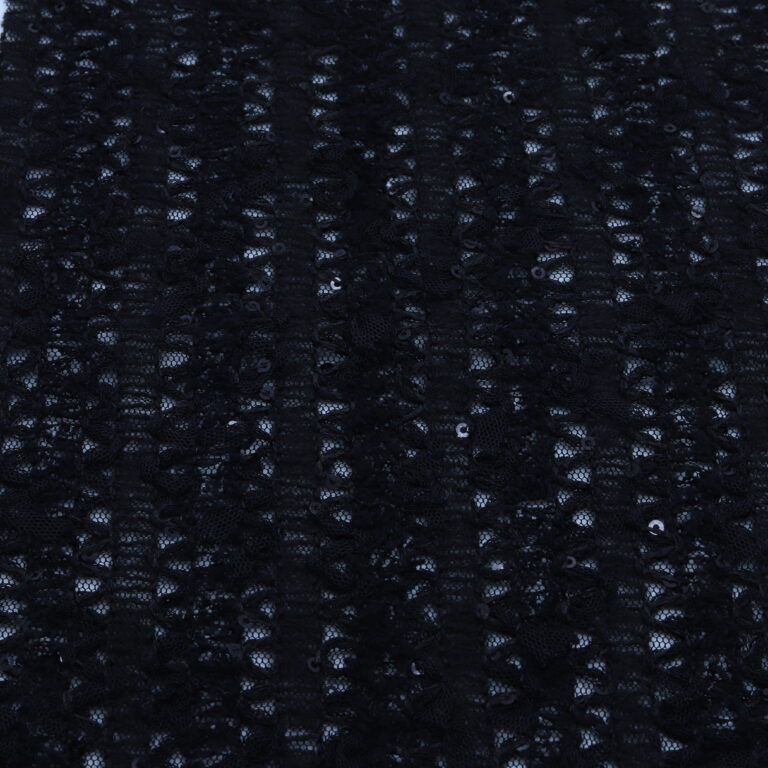 DY488
Black sequined openwork mesh fabric
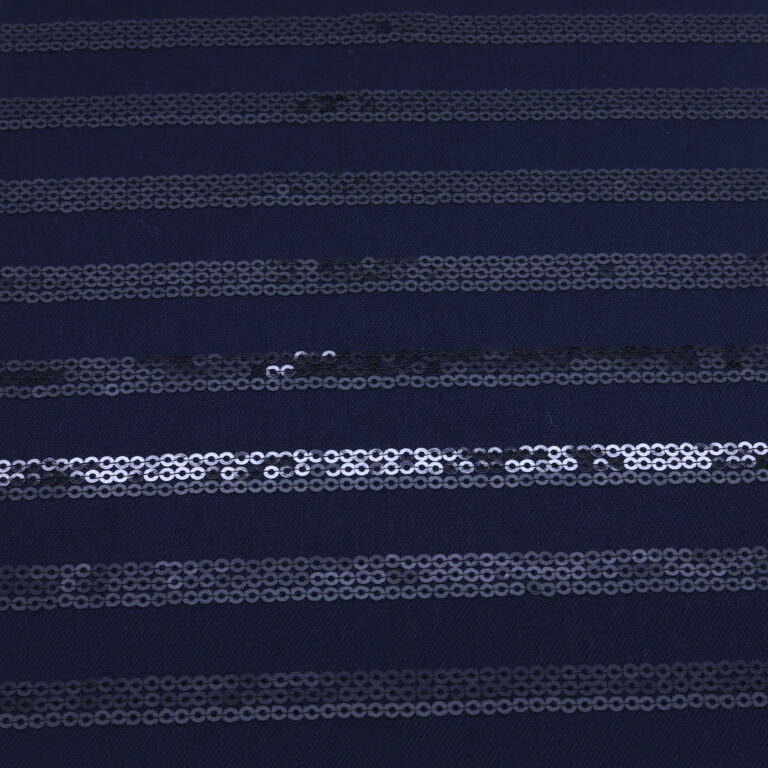 DY143
Navy blue sequined striped fabric
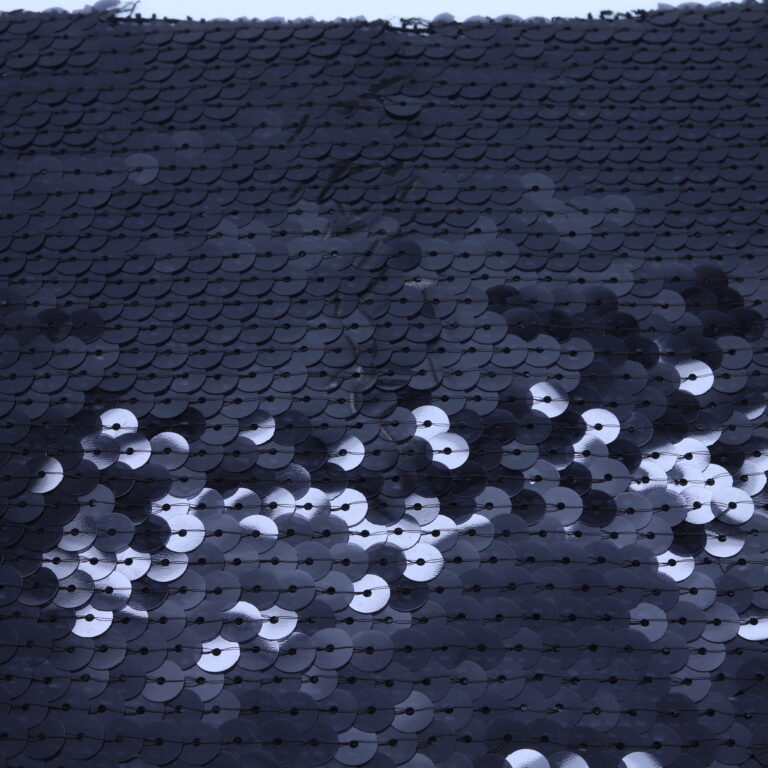 DY100
Black sequined embroidered cotton fabric
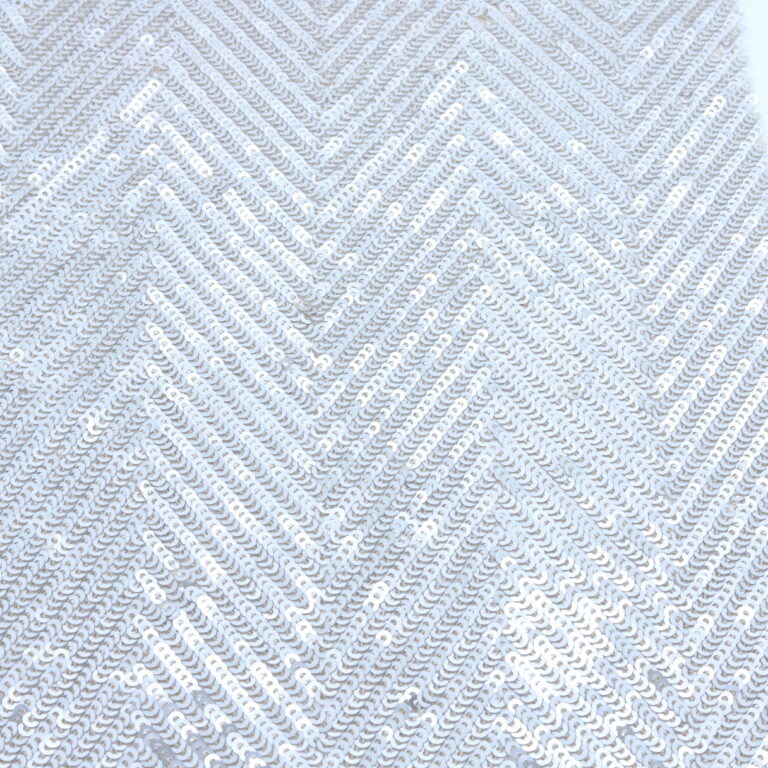 DY280
Champagne chevron sequin fabric
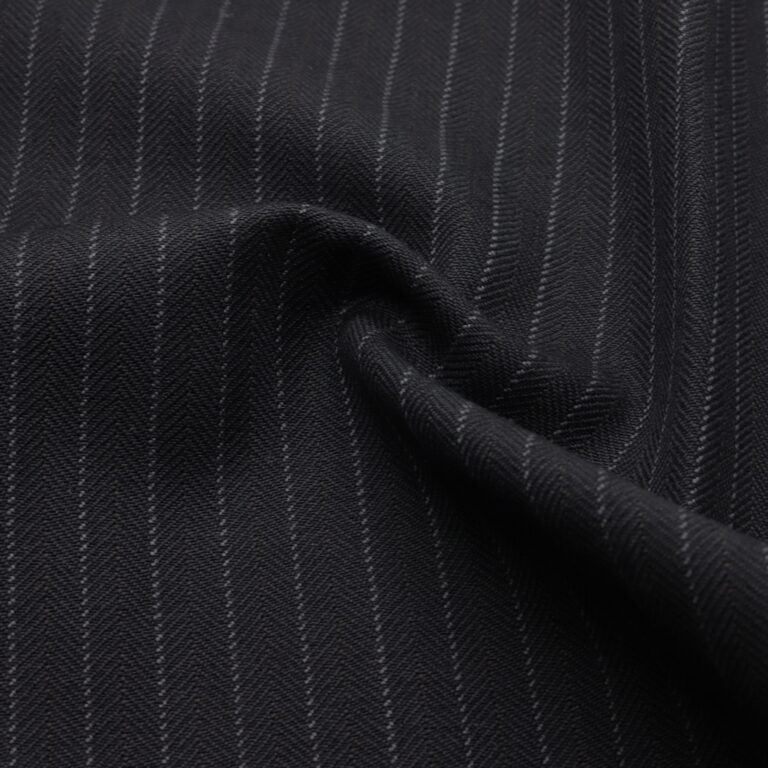 Virgin wool fabric with chalk stripes on a black background
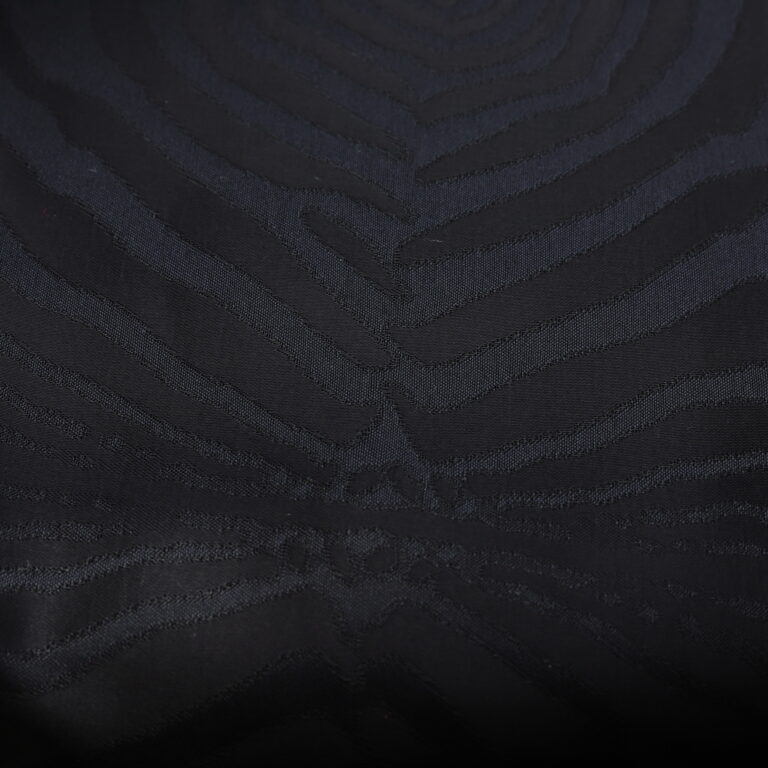 Textured black tone-on-tone viscose and cotton fabric
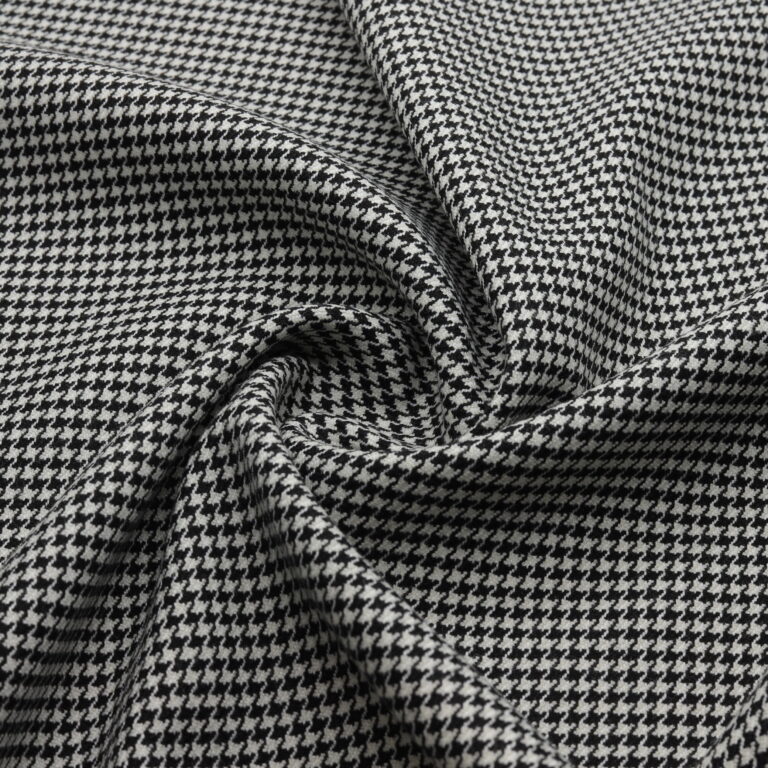 Black and white houndstooth fabric, slightly stretchy
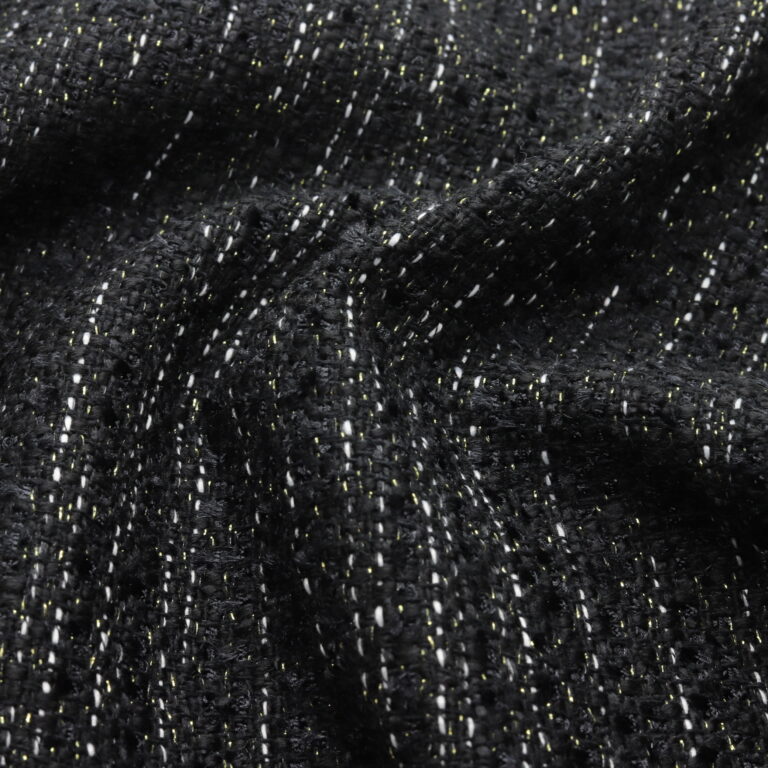 Black bouclé tweed fabric with gold lurex thread
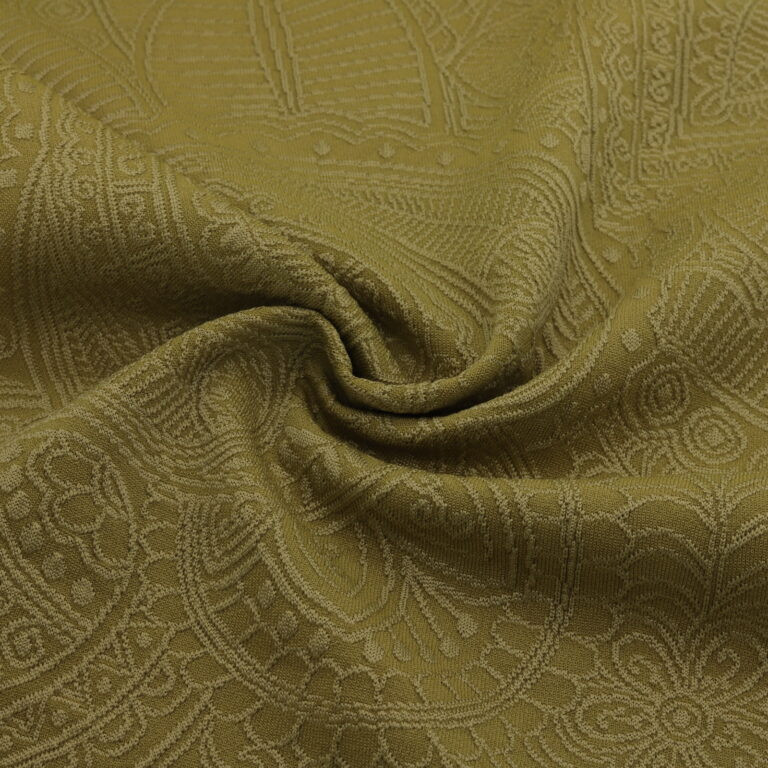 DY80051
Green stretch jacquard fabric
YRSAN's haberdashery : fabrics by the meter and supplies selected by the workshop. Discover the haberdashery
Écrit à l’atelier D’YRSAN, à Asnières-sur-Seine, où nous développons et produisons les collections de nos clients : patronage, prototypage, industrialisation, production petite série.
Parler de votre projet→