Journal / Materials and fabrics
Tweed fabric: the complete guide to choosing the right tweed before sewing your tailored jacket
Wool, cotton, bouclé or lurex: everything you need to know to choose a tweed fabric suitable for your tailored jacket.
October 12, 2026 6 min de lecture Par l’atelier D’YRSAN
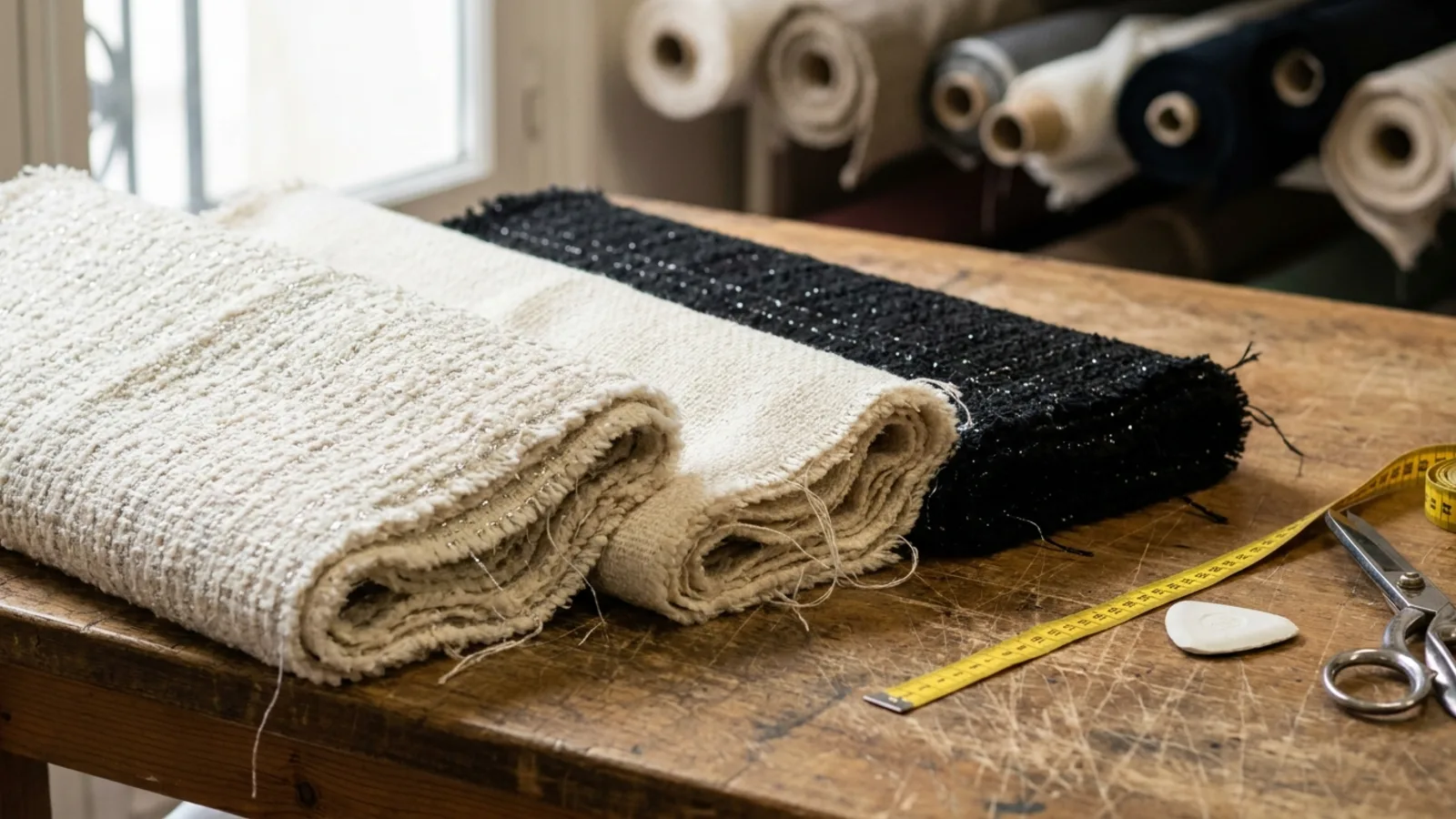
Choose a tweed fabric, This means defining the character of your future tailored jacket even before drafting the pattern. Depending on its composition, weave, and fancy yarns, the same model can be structured and warm, supple and luminous, or decidedly dressy.
Every autumn, we see seamstresses in the workshop hesitating between a bouclé tweed, A lurex tweed or a more understated tweed, without always knowing how each fabric behaves under the needle. This fabric guide provides concrete guidelines for comparing, buying the right yardage, and preparing your fabric before cutting.
What exactly is tweed fabric?
Originally, tweed was a thick Scottish woolen fabric, woven in twill or herringbone with yarns of carded wool with mixed colors. Its mottled, slightly rustic appearance comes from these yarns being dyed before weaving and then combined in warp and weft.
Today, the term refers to a broader family of fabrics with a visible weave and pronounced relief. We speak of fancy tweed when the weave incorporates looped yarns, ribbons, metallic threads or contrasting fibers. It is this version that adorns the short jacket trimmed with braid, which has become a classic in the women's wardrobe.
For a seamstress, a tweed fabric is recognizable by three characteristics: a fairly loose weave, which provides flexibility but promotes fraying; a good thickness, which provides structure without heavy reinforcement; and an irregular surface, which forgives small sewing imperfections.
Wool or cotton tweed: which composition to choose?
First question: fiber optics. One wool tweed It's warm, holds its shape well, and molds remarkably well with a steam iron. You can ease the fullness of a sleeve or shape a collar almost as if it were wool. It's suitable for winter jackets, short coats, and straight skirts.
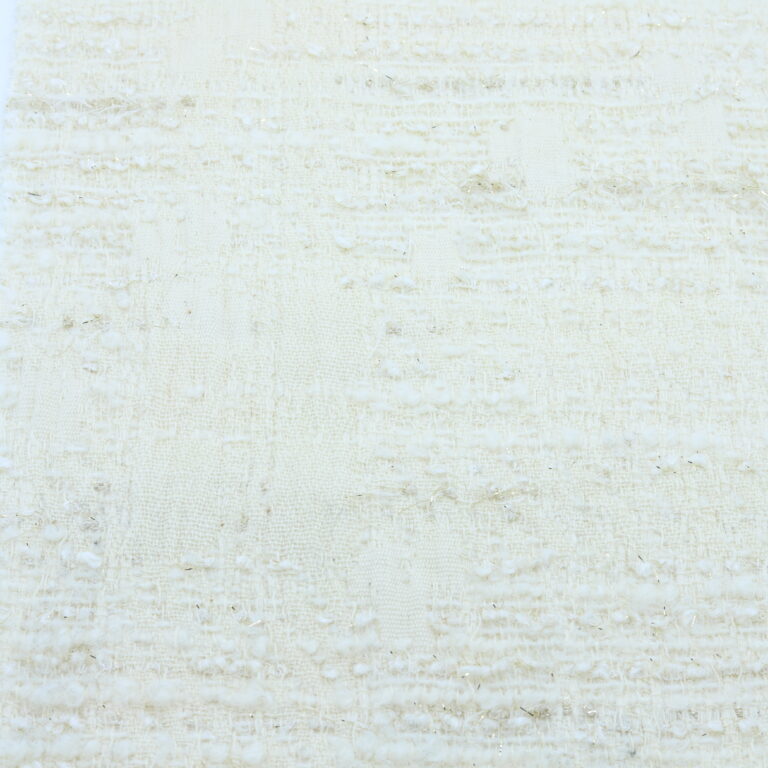
A tweed made primarily of cotton is lighter, more breathable, and easier to care for. It's ideal for mid-season jackets and indoor wear, where wool would be too warm. Our ecru tweed, classified among our cotton fabrics, perfectly illustrates this bright and easy-to-wear option.
Many fancy tweeds combine wool, cotton, viscose, and synthetic fibers: these blends often offer the best compromise between drape and weight. If you're primarily looking for loft and warmth, also check out our woolen fabrics. To decide, ask yourself in which season and how often you will wear the jacket: it's the most reliable criterion.
Bouclé, lurex, herringbone: the families of tweed fabric
The bouclé tweed
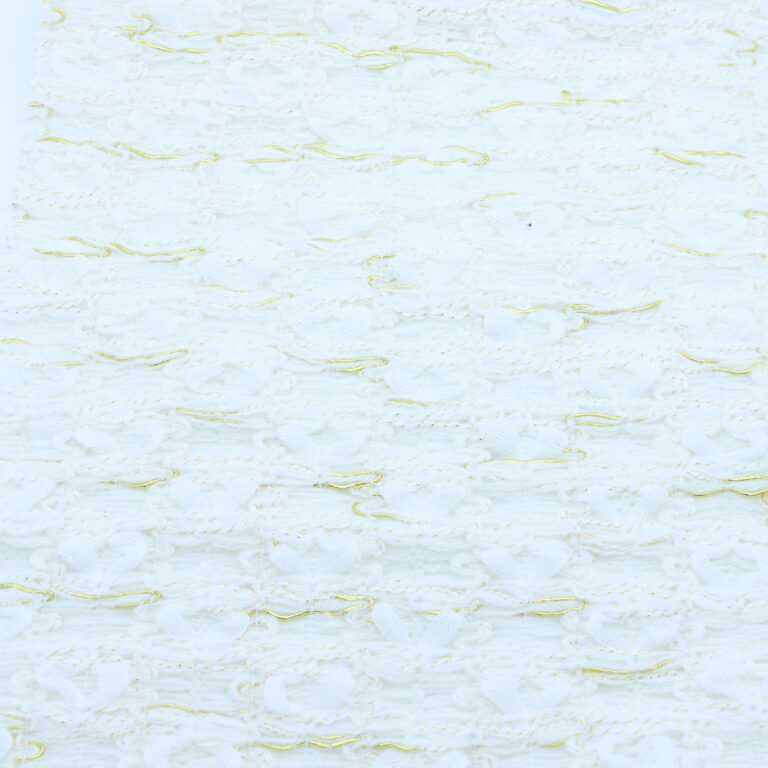
The bouclé tweed incorporates curly threads which form small loops on the surface. It offers a lot of texture, a soft feel, and a very couture look. On the downside: the loops can snag on the presser foot or jewelry, and the fabric stretches if handled too much. ecru lurex bouclé tweed This textured finish is combined with a discreet, shiny thread, ideal for a light-colored formal jacket.
Lurex tweed
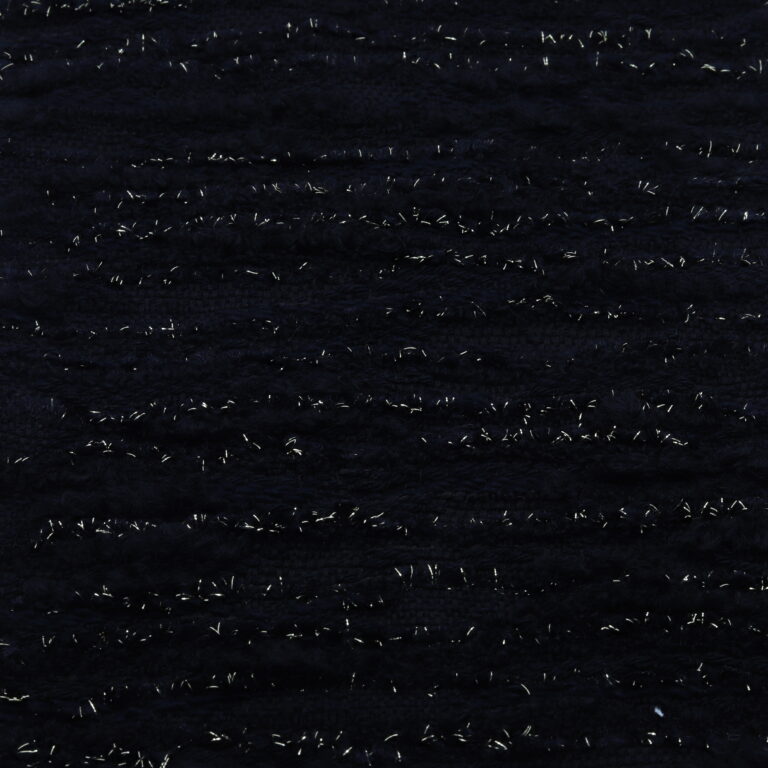
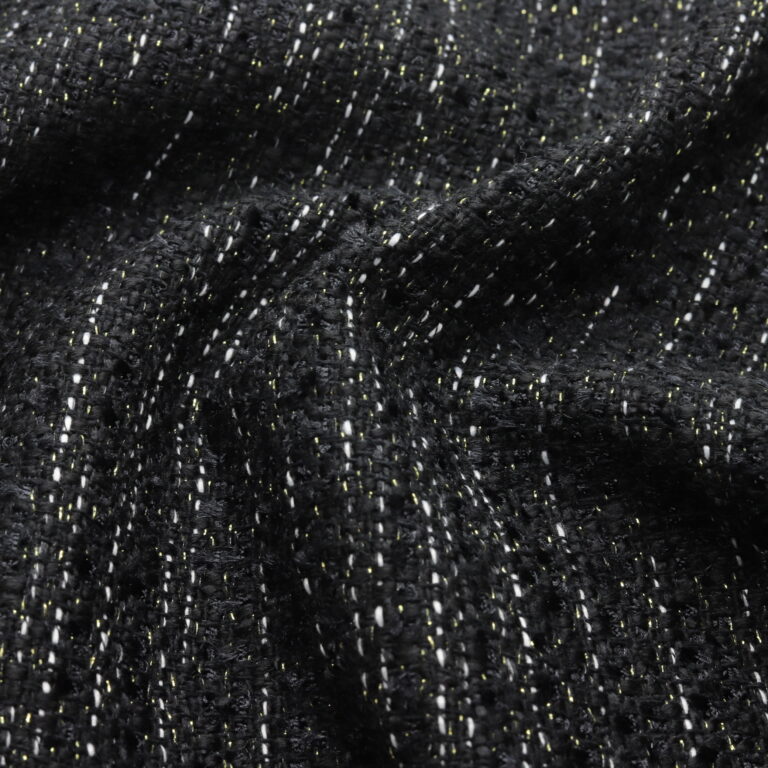
Lurex tweed contains a metallic wire This thread catches the light and transforms a classic cut into an evening piece, without the glitter. This thread doesn't withstand heat well: set your iron to a low temperature. moderate temperature and always use a pattemouille. THE black tweed enhanced with lurex is a safe bet for a jacket that can be worn just as well with jeans as with a long dress.
Classic tweeds
Herringbone, houndstooth, Prince of Wales check, or heathered twill: these regular tweeds have a tighter weave. They fray less, cut more easily, and are suitable for first projects. However, their patterns require careful matching at the side seams, center back and pockets.
Buying tweed fabric by the meter: calculating your yardage correctly
Tweed sold by the meter is most often sold in wide widths, around 140 to 150 cm. For a short, collarless jacket in a medium size, expect to pay between 1.30 m and 1.80 m Depending on the sleeve length and pockets, a long jacket or one with lapels may require more fabric. Your pattern's yardage chart remains the best reference.
Add a margin of 10 to 20 % in three cases: a checkered or striped pattern that requires matching, a directional fabric that requires orienting all pieces in the same direction, and a wool tweed that you plan to pre-shrink, as it may shrink slightly.
Include the lining in your order: a tweed jacket is almost always lined, both for structure and comfort. You'll find suitable options among our fabrics for linings. Add the interfacing, the finishing trim, and the buttons, preferably choose with a sample of the tweed right before their eyes.
Prepare and sew the tweed fabric without fraying
Before cutting, prepare the material. A wool tweed... steam decat Place it inside out, iron it a few centimeters away without pressing down, then let it dry flat for several hours. A cotton tweed can be pre-washed by hand in cold water if you plan to wash the jacket. For a lurex tweed, a light steam is sufficient, tested first on a scrap piece.
Cut into a single layer, the area above, to check the fittings and the direction of the loops. Mark the reference points with basting stitches rather than chalk, which disappears into the texture. As soon as a piece is cut, overlock its edges with a zigzag or overlock machine: a loose tweed can lose a good part of its sewing value in just a few manipulations.
On the machine side, a needle 80 to 90 A 3mm stitch is suitable for most tweeds, and a walking foot prevents thicker fabrics from slipping. For stabilization, there are two schools of thought: a lightweight woven fusible interfacing on the fronts and facings, or the sewing method, where the lining is topstitched on the tweed vertical lines for a flexible jacket that doesn't move.
The finishing touches define the jacket: braided trim, fringe pulled from an edge, or a small chain sewn to the bottom of the lining to add weight to the drape. Gold brooch with carved oval ring can also highlight a lapel or a breast pocket.
How to care for your tweed jacket over time
Tweed doesn't like washing machines or dryers: a wool tweed fabric should be hand-washed. dry cleaning, or refresh yourself with steam and fresh air. Brush the jacket after each wear with a soft clothes brush, in the direction of the weave. Store it on a wide hanger with rounded shoulders, never bent under a pile.
Bouclé and lurex tweeds require even more care. Avoid shoulder bags with metal hardware or Velcro, which can pull the threads. If a thread gets caught, never pull on it: push it back to the inside with a wool needle.
The right tweed fabric is half the battle when it comes to a successful jacket.
A well-chosen tweed fabric meets three criteria: the port season, which directs towards wool or cotton; the’desired effect, wise, embossed or glossy; and your sewing level, Tight tweeds are easier to work with than very loose loops. Touch, crumple a corner, and observe how the light plays on the surface before making a decision.
To compare textures, browse our selection of tweed fabrics, or expand to tailoring fabrics if your project calls for a more classic wool fabric. Our haberdashery gathers fabrics and supplies to put together your entire jacket kit. A well-prepared tweed fabric is already a jacket half successful.
YRSAN's haberdashery : fabrics by the meter and supplies selected by the workshop. Discover the haberdashery
Écrit à l’atelier D’YRSAN, à Asnières-sur-Seine, où nous développons et produisons les collections de nos clients : patronage, prototypage, industrialisation, production petite série.
Parler de votre projet→