Journal / Materials and fabrics
Velvet fabric: 7 types to know before sewing your winter wardrobe
Smooth, ribbed, stretch, devoré: seven types of velvet fabric decoded, with workshop settings for cutting and sewing them without marking them.
October 12, 2026 6 min de lecture Par l’atelier D’YRSAN
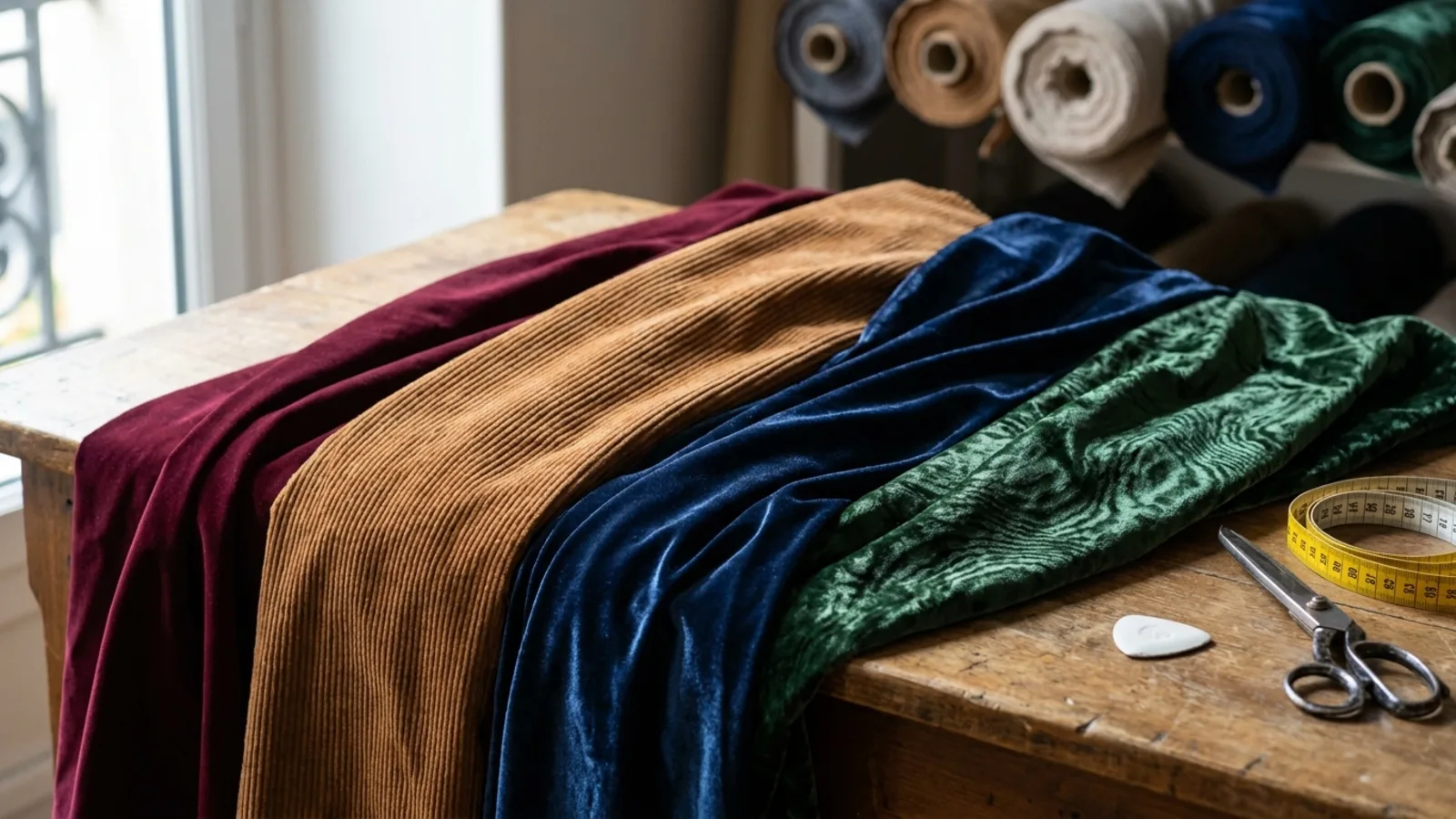
Visit velvet fabric It returns to the cutting tables every autumn, and for good reason: it's warm, it catches the light, and it instantly adds depth to a silhouette. But behind this word lie very different materials, from the robust corduroy of trousers to the fluid panne of an evening gown.
The same pattern can work in one velvet and fail in another, simply because the drape, thickness, or elasticity are not suitable. Here are the seven types of velvet fabric to know, their uses and the settings that will prevent unpleasant surprises when sewing velvet.
Understanding velvet fabric before cutting
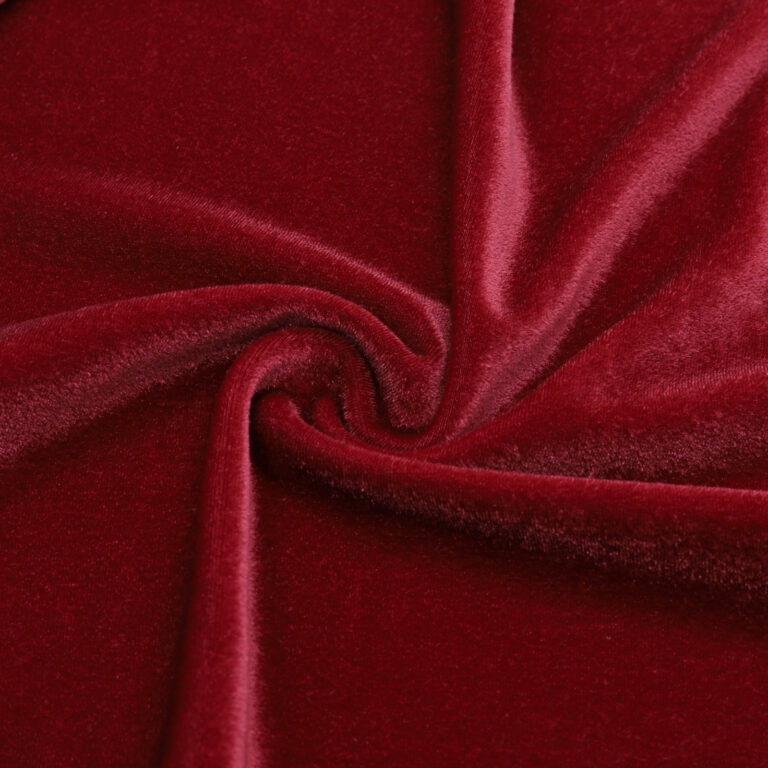
Velvet fabric is recognizable by its pile: short, upright fibers on the surface, created either by adding an extra warp thread or by using loose weft threads that are then cut. This pile can be laid over a woven or knitted base, which makes all the difference to the fabric's elasticity and drape. The fiber itself also varies: cotton, viscose, silk, polyester, with or without elastane.
The common feature of all these velvets is the direction of hair. Run your hand over the fabric: in one direction, it is soft and smooth; in the other, it resists and appears darker. Hair upwards, The color is deeper; with the pile facing down, the surface is shinier and wears a little less quickly. Whatever your choice, all pieces must be cut from the same direction.
In practical terms, this prohibits head-to-toe placement. Allow approximately 10 to 15 % of additional footage compared to a meaningless pattern, and mark a chalk arrow on the back of the fabric as soon as you unpack it.
Smooth velvet and corduroy: the two woven classics
1. Smooth cotton velvet
Smooth velvet, sometimes called short-pile velvet, has a short and dense hair, Approximately one to two millimeters thick. Made of cotton, it is matte, breathable, and structured enough for a jacket, an A-line skirt, or straight-leg trousers. It easily retains fingerprints and iron marks, hence the importance of gentle ironing.
2. Corduroy
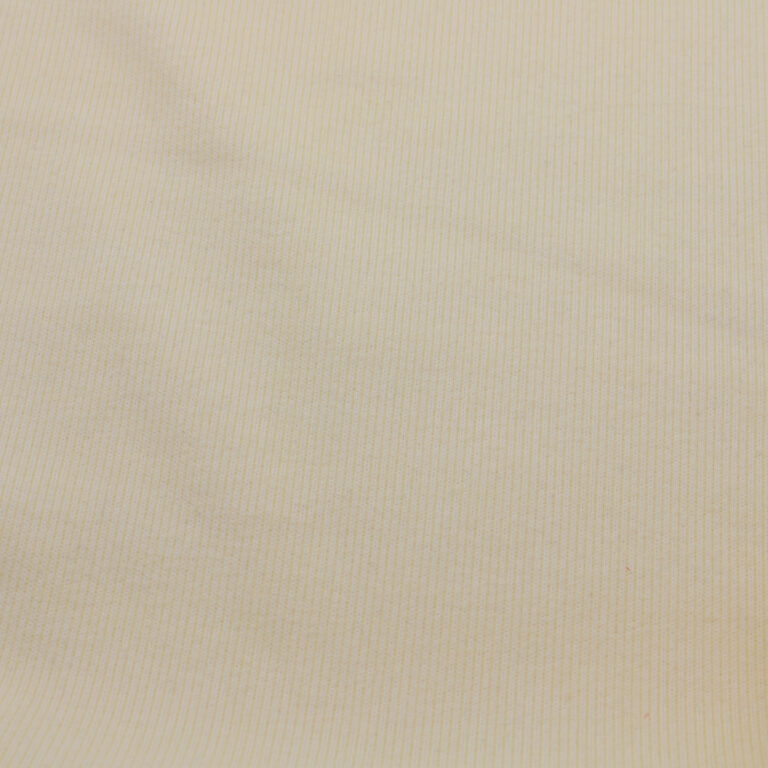
Corduroy has its pile arranged in parallel ribs, running in the direction of the warp. It is classified according to the number of ribs per inch: the very fine corduroy has approximately 16 to 21 and is suitable for shirts and dresses; the standard corduroy, around 10 to 14, is ideal for trousers; the wide ribs, less than 8, give jackets and coats a strong character.
The ribs must fall perfectly vertically: carefully align them on the straight grain and attach them to the center back seams as well as the patch pockets. For a ribbed jacket, choose buttons proportionate to the relief : domed or metallic models are easier to read on pronounced ribs.
Fluid velvets and stretch velvet
3. Silk or viscose velvet
Lighter and more supple, this velvet fabric drapes beautifully and offers a shimmering, almost fluid light. Its delicate pile flattens under pressure and glides smoothly under the presser foot. It is reserved for evening gowns, flowing blouses, kimonos, and stoles.
Cut it into a single layer, If necessary, use tissue paper, and opt for simple seams finished with an overlock stitch. For a lined garment, a smooth lining and lightweight, chosen from among the fabrics for linings, prevents the velvet from snagging and makes it easier to put on.
4. Stretch velvet
Stretch velvet is most often a knit velvet, knitted with a percentage of’elastane. It stretches in one or two directions and hugs the body: bodycon dresses, bodysuits, turtleneck tops, winter leggings. It doesn't fray, which simplifies finishing, but it requires a suitable needle and stitch.
Use a stretch needle or jersey, a narrow zigzag or an overlock machine, and always test the extension during a fall. If you are already working on the stretch lycra fabrics, You will find the same reference points for judging the elastic return.
Breakdown, devoured, struck: the worked velvets
5. Velvet Pan
Panne is a velvet whose pile, being longer, has been lying down and hurried in one direction only. The result: a very glossy, almost mirror-like surface and a smooth feel. Often made of polyester or viscose knit, it is suitable for cocktail dresses, bias-cut skirts, and stage costumes.
6. Devoured velvet
The devoré fabric combines two fibers: a resistant backing, often silk or polyester, and a pile of viscose or cotton. chemical treatment It destroys the hair in a pattern, revealing transparent areas. This is the material used for romantic blouses and evening stoles; plan accordingly. slip dress or a combination underneath.
7. The crushed velvet
The crushed velvet, or crushed velvet, has been hot-pressed in an irregular way: the pile goes in all directions and creates a moiré effect. Its great advantage is that it hides the iron marks and minor irregularities. It's the most forgiving velvet fabric for a first formal garment.
These elegant velvets call for precious finishes. A golden sun brooch with rays on a broken backhand, or a gold loop draped flower to fasten a belt, they sign the piece without weighing down the material.
Sewing velvet without marking it
Regardless of the velvet fabric chosen, the primary enemy is slippage: the two nap sides pull each other along and shift the layers. dual drive foot This is the basic rule; otherwise, baste by hand or place fine pins only in the seam allowances. Lengthen the stitch to 3 mm approximately and sew in the direction of the hair.
For the needle, count some 80 or 90 for a smooth velvet or a fine-wale velvet, of 100 For chunky knits or a coat, a good quality polyester thread is more resistant to friction. Trim seam allowances at intersections and collars to avoid bulk.
Ironing requires the utmost care. Place the velvet right side down. needle board or against a velvet pile, hair to hair, then spray without ever pressing the iron down. Let it cool flat before handling: this is when the hair regains its shape.
Choosing and caring for your velvet fabric by the meter
Before buying velvet by the meter, Ask yourself this question: should the garment hold its shape, drape, or stretch? A cotton velvet fabric provides structure, viscose or panne velvet creates a fluid drape, and a knit velvet hugs the body. Browse our selection of velvet fabrics by checking width and weight, then add the margin related to the direction of the pile.
For care, wash inside out, at 30 °C Maximum or by hand, and avoid strong spin cycles which damage the pile. Dry flat or hang, never tumble dry delicate velvets. Silk velvet and devoré are best left to the dry cleaning. A gentle brushing Going with the grain revives the look at the end of the season.
Velvet also pairs very well with drier winter fabrics: a ribbed skirt with a jacket in wool, smooth corduroy trousers with a cotton shirt. All these families meet in online haberdashery.
Velvet fabric, a material that rewards patience
Smooth, ribbed, fluid, stretchy, coated, burnished, or embossed: each velvet fabric has its own personality and requirements. Remember three key points: one unique hair direction at the cut, a controlled training to the sting and a pressure-free ironing. With these basics, you can confidently approach your winter wardrobe, from the corduroy skirt to the wide-wale coat.
YRSAN's haberdashery : fabrics by the meter and supplies selected by the workshop. Discover the haberdashery
Écrit à l’atelier D’YRSAN, à Asnières-sur-Seine, où nous développons et produisons les collections de nos clients : patronage, prototypage, industrialisation, production petite série.
Parler de votre projet→