Journal / Materials and fabrics
Swimsuit fabric: 7 materials to know to make the right choice
Matte or glossy Lycra, microfiber, jacquard, recycled: 7 materials and our workshop advice to help you choose your swimsuit fabric.
October 16, 2026 7 min de lecture Par l’atelier D’YRSAN
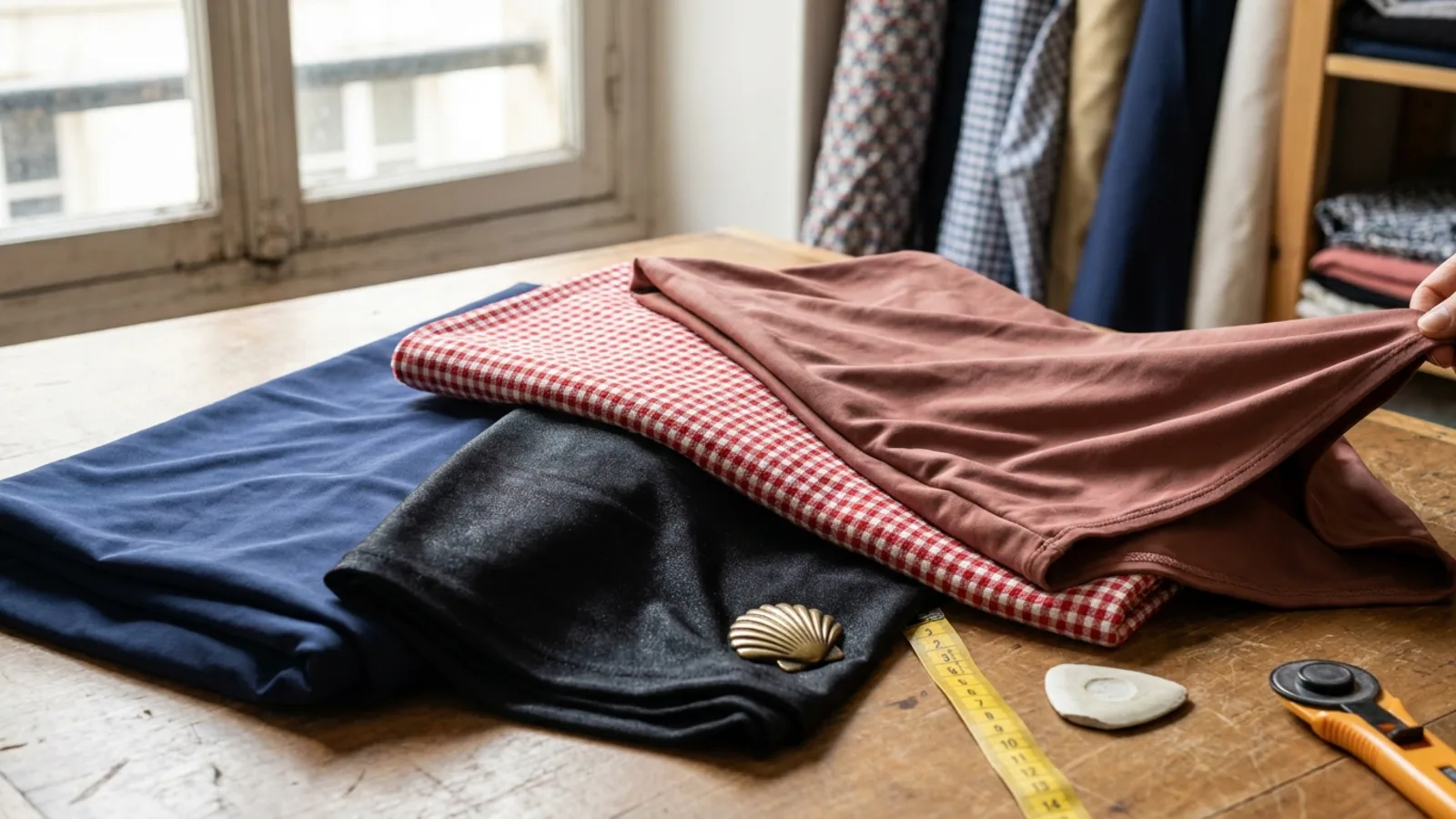
Choose a swimsuit fabric It's not just about liking a color on a screen. The fabric must stretch in all directions and regain its shape after hours in the water. It must also withstand salt, chlorine, and sunlight, all while maintaining its shape without becoming transparent.
In our workshop, we develop swimwear for brands, and every season we see the same dilemma: matte or shiny lycra, microfiber or jacquard, recycled or non-recycled knit, and which lining? Here are the 7 materials to know in our online haberdashery, the criteria for comparing them and our cutting tips to ensure the success of your project, from canvas to finished piece.
Which swimsuit fabric to choose: the criteria to check
Before comparing fabrics, consider three factors: composition, elasticity, and weight. These determine the comfort, fit, and lifespan of the jersey, far more than its initial appearance.
Composition and elasticity
The classic base combines a polyamide or polyester with elastane, in proportions close to 80/20. Polyamide provides softness and durability, while elastane provides elasticity. Check that the knit is expandable in four directions : pull it lengthwise then widthwise, it should lengthen clearly and return without wrinkling.
Weight and opacity
Fabric weight is expressed in grams per square meter. For a jersey, we generally work between 180 and 230 g/m² Below this point, the fabric lacks structure and quickly becomes transparent when wet; above it, it dries more slowly. Try the test by sliding your hand under the stretched fabric in daylight.
Chlorine, salt and UV
Elastane is the most fragile fiber when it comes to chlorine and sunscreens. Knits made from polyester They are more resistant to chlorinated pools, at the cost of a slightly less soft feel. Regardless of the material, a rinse with clean water Its lifespan doubles after each swim.
Matte or glossy Lycra: the two essential bases
When we ask ourselves what fabric for a swimsuit When choosing a first model, the answer is almost always lycra: a knit polyamide-elastane smooth, even, easy to cut and sew. Our stretch lycra fabrics are based on this principle, available in two finishes.
1. Thick matte lycra
It's the most versatile material. Its appearance matte and velvety It flatters all body types, and its thickness provides shaping without constricting. It's suitable for both a structured one-piece and a minimalist bikini. Thick matte lycra midnight blue or a matte chocolate-colored lycra give a simple and timeless result.
2. High-shine lycra
Brighter and more reflective, glossy lycra enhances draping, gathers, and cutouts. It also glides more easily under the presser foot. pin tightly or use flat-nose pliers. The high-shine black lycra remains a classic of the dressy jersey, while fuchsia plays the card of summer brightness.
Microfiber and recycled swimsuit fabric: softness and commitment
3. Thick microfiber
Microfiber is knitted with very fine filaments, which gives it a peach skin feel. Denser than classic lycra, it offers excellent covering power, Ideal for light shades that are prone to transparency. Thick microfiber, rose brown This perfectly illustrates the nude and silky finish.
You will find other references in our microfiber fabrics. Reserve this material for pieces that require comfort: high-waisted bottoms, high-cut one-piece swimsuits, and swim bras.
4. Recycled knitwear
Recycled swimwear fabric is made from regenerated polyamide or polyester, often sourced from industrial waste or fishing nets. Its drape and elasticity are comparable to those of virgin knit fabric, making it a solid choice for an environmentally conscious brand.
Think about ask for the exact composition and any necessary certifications before communicating about your collection. anthracite recycled wavy jacquard proves that eco-responsible does not mean united; our recycled knits they compare easily side by side.
Embossed jacquards and textured knits: the relief that makes all the difference
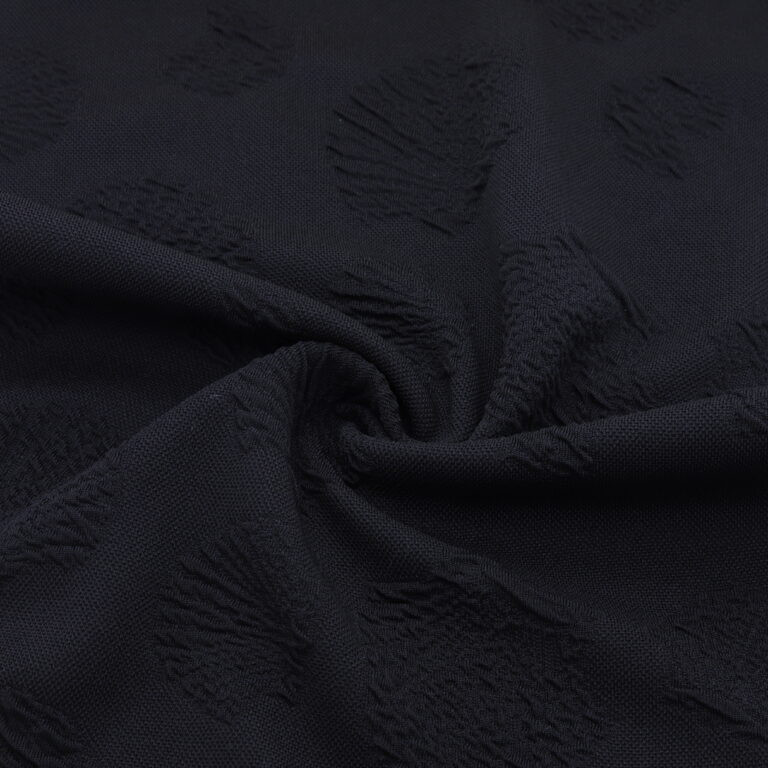
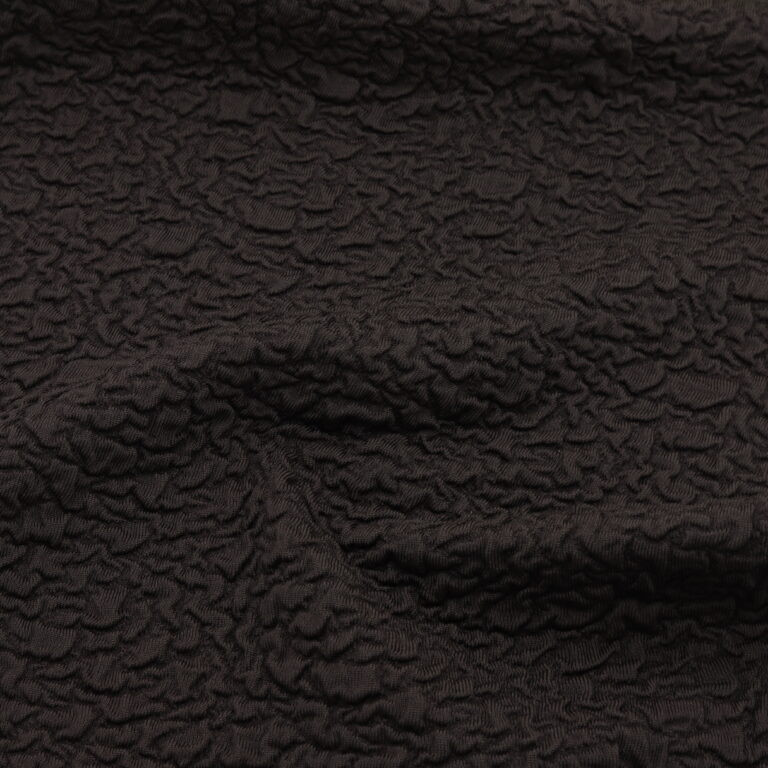
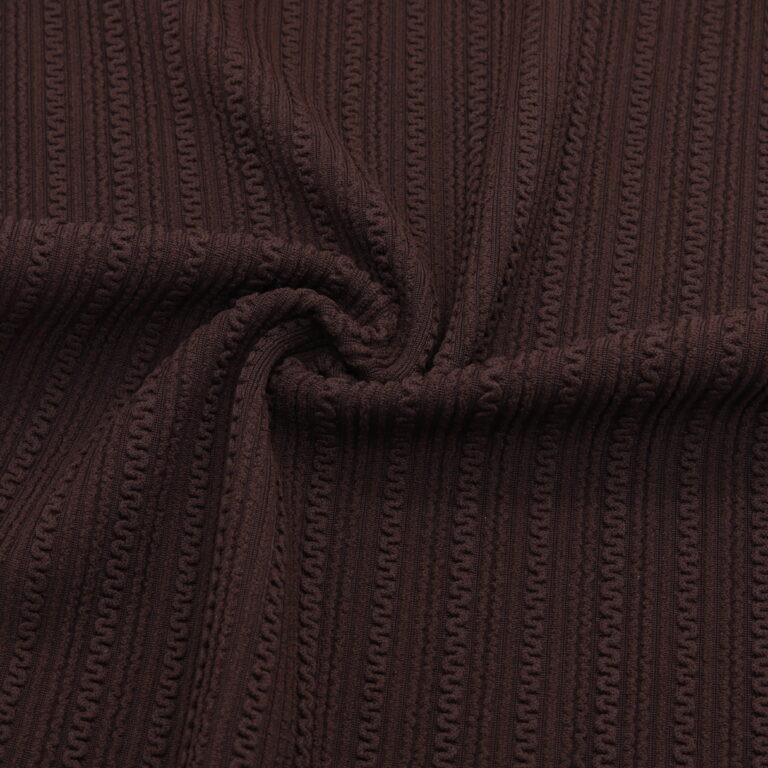
5. Embossed or blistered jacquard
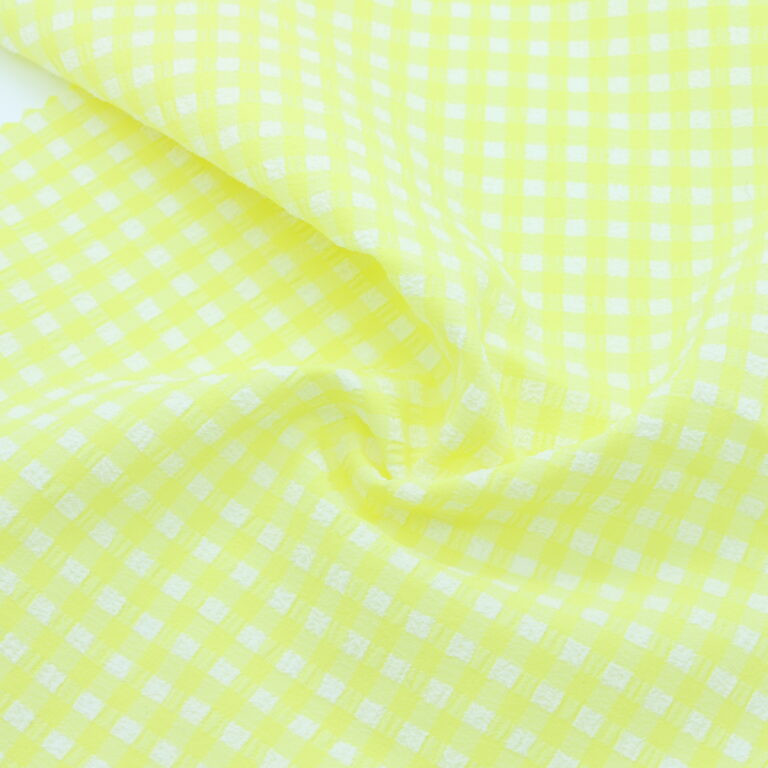
Jacquard stitches create texture directly within the knit: embossed gingham checks, honeycomb, blisters, ribbing. This volume camouflages minor imperfections and immediately gives it a high-end look. red embossed gingham swimsuit fabric evokes the 1950s, while the candy pink honeycomb jacquard adds a more graphic texture.
Warning: the terrain often reduces the’width elasticity. Measure it over a 10 cm length before cutting and, if necessary, enlarge the pattern slightly. Jacquards pair beautifully with plain lycra for straps and trim. The entire selection can be found in our... jacquard mesh.
6. Lurex knits
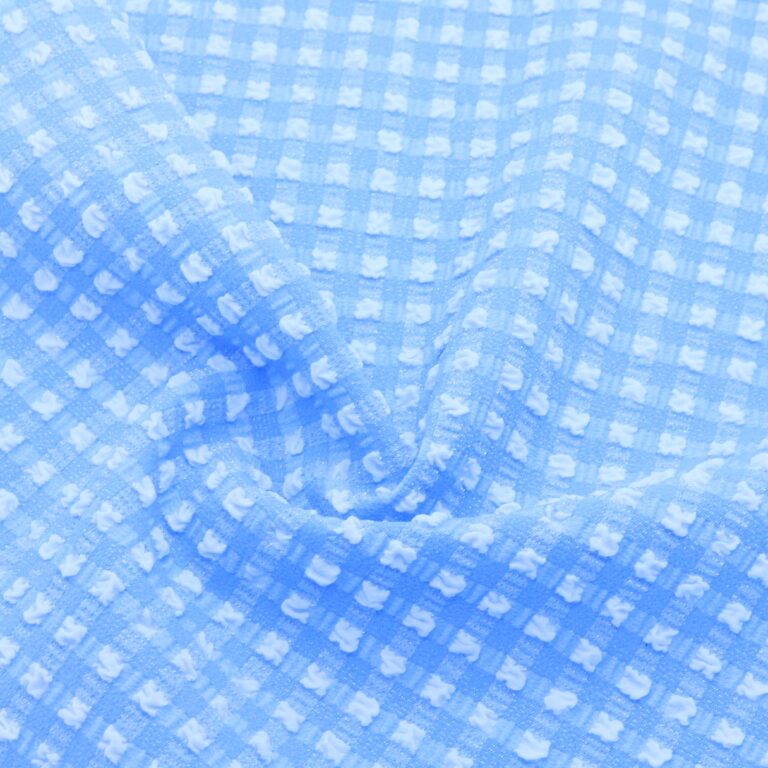
A metallic thread knitted into the fabric makes the jersey sparkle without the use of sequins. gingham embossed lurex silver sky blue It combines texture and shine. Lurex can be slightly scratchy: a full lining hand washing is essential, and preserving the yarn's shine.
Mesh and lining: the materials that complete the jersey
7. Fishnet and mesh
Fishnets are rarely used alone; they are used in insert, It can be worn over plain lycra or as a top layer. It lightens a full-coverage one-piece swimsuit and creates controlled plays of transparency. leopard print mesh or the beige lurex jacquard mesh They lend themselves well to sleeves, sarongs and beachwear.
The lining, essential
A jersey is lined at a minimum on the front and the’crotch, And in full for light shades. Choose a lining also extensible that the main material, otherwise it will restrict the fabric and cause the seams to twist. For support, some padding inserts They slip between the outer fabric and the lining. Our department fabrics for linings helps you find the right base.
Cutting, sewing and caring for your swimsuit fabric by the meter
The amount of fabric needed depends on the style and the width of the fabric: a bikini requires less material, a one-piece a little more. Always allow extra for pattern matching, especially with gingham checks and directional jacquards.
The cup
Place the greater extensibility in the direction of the turn of the body, that is, horizontally. Cut flat, in a single layer if the fabric is slippery, using a rotary cutter and weights rather than pins. A swimsuit pattern incorporates a negative ease : it is intentionally smaller than the body measurements.
Sewing
Use a stretch needle or jersey in 75 or 80 weights, polyester thread, and a narrow zigzag stitch or an overlock machine. The elastic edges must be designed for swimming and chlorine resistance. Always test your settings on a scrap piece: if the stitch breaks when you stretch the seam, lengthen it or widen the zigzag.
Finishes and maintenance
Visit gold earrings and the jersey connectors connect suspenders and hats; a scallop shell loop It's enough to sign a template. As for maintenance, rinse with clean water After each swim, wash at a maximum of 30°C without fabric softener and do dry flat in the shade, Never in the dryer.
The right swimsuit fabric depends on your style.
There is no universal material, but there is a general principle: matte lycra or microfiber for a swimsuit that provides support and lasts, shiny lycra for draping, jacquard or lurex for a statement piece, recycled knit for a responsible approach. In all cases, check the...’elasticity in all four directions, the weight and the quality of the lining.
Perform your stretch and transparency tests, then sew a canvas before cutting into your finest swimsuit fabric. All of our swimwear fabrics It allows you to compare textures and colors. A well-chosen material means a jersey that keeps its shape season after season.
 DY81105
Silver lurex embossed gingham swimsuit fabric, sky blue
DY81105
Silver lurex embossed gingham swimsuit fabric, sky blue
 DY81135
Yellow embossed gingham swimsuit fabric
DY81135
Yellow embossed gingham swimsuit fabric
 DY80208
Brown embossed shell jacquard fabric
DY80208
Brown embossed shell jacquard fabric
 DY80206
Chocolate blistered jacquard fabric
DY80206
Chocolate blistered jacquard fabric
 DY80186
Chocolate ribbed jacquard fabric
DY80186
Chocolate ribbed jacquard fabric
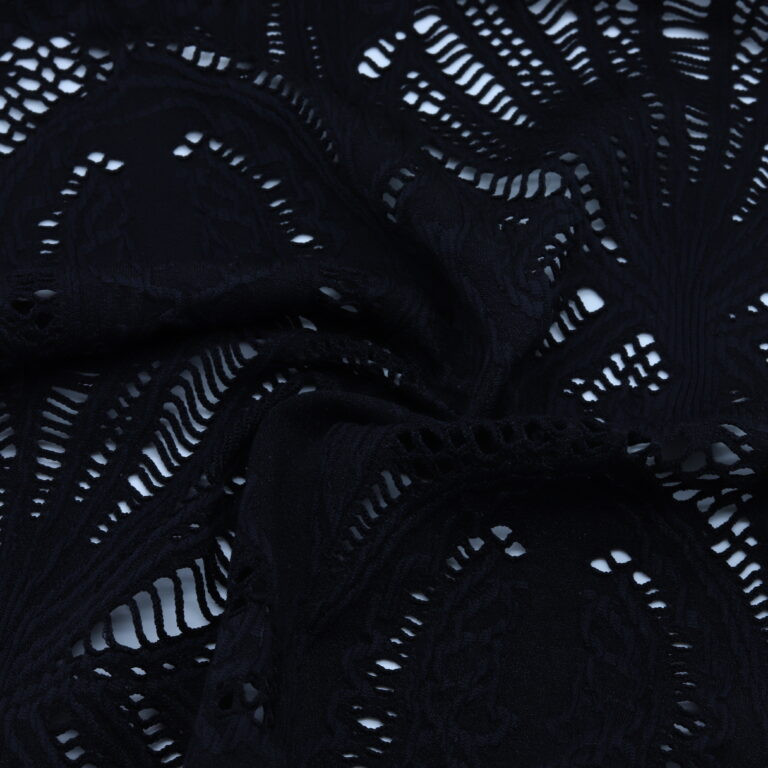 DY98607
Midnight Blue Graphic Openwork Jacquard Fabric
DY98607
Midnight Blue Graphic Openwork Jacquard Fabric
 DY97519
Thick microfiber fabric, rose brown
DY97519
Thick microfiber fabric, rose brown
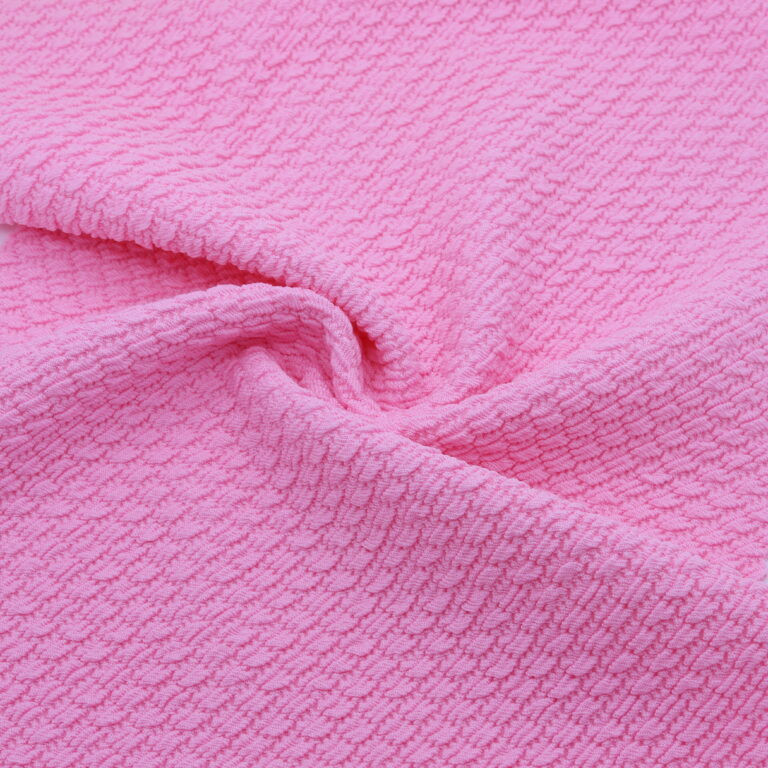 DY80224
Thick honeycomb jacquard fabric, candy pink
DY80224
Thick honeycomb jacquard fabric, candy pink
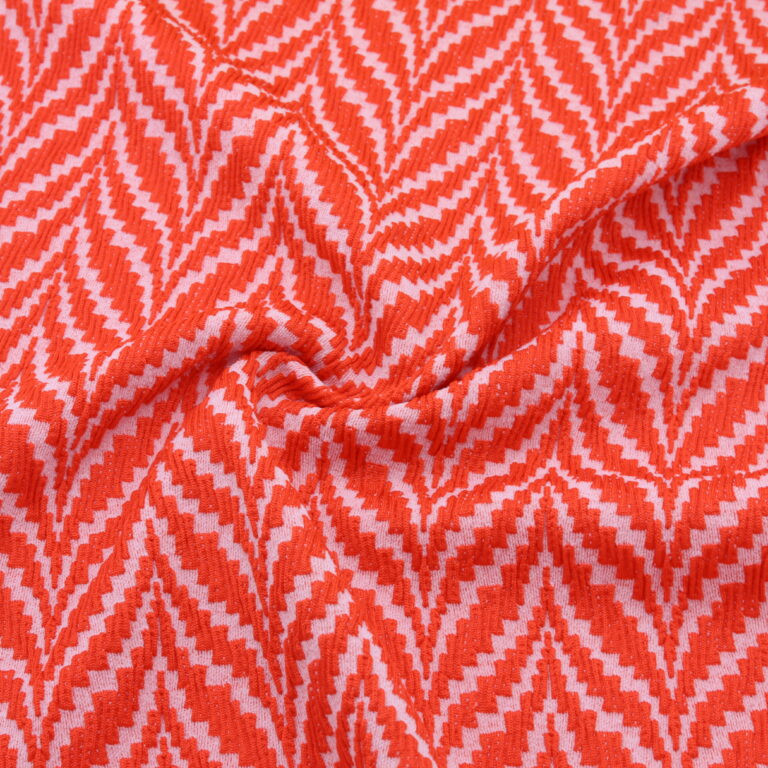 DY80215
Red and pink chevron jacquard fabric
DY80215
Red and pink chevron jacquard fabric
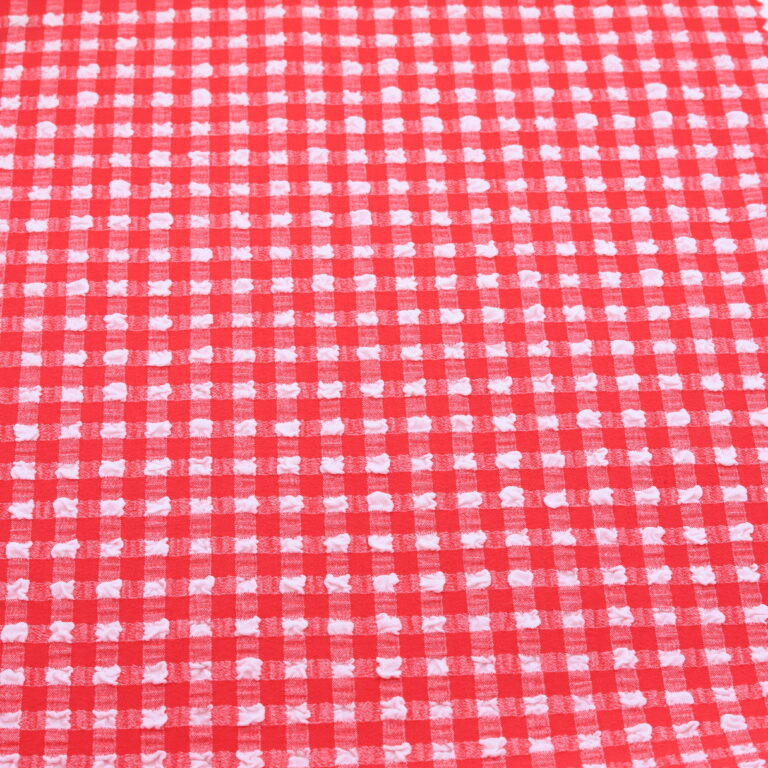 DY81053
Red embossed gingham swimsuit fabric
DY81053
Red embossed gingham swimsuit fabric
YRSAN's haberdashery : fabrics by the meter and supplies selected by the workshop. Discover the haberdashery
Écrit à l’atelier D’YRSAN, à Asnières-sur-Seine, où nous développons et produisons les collections de nos clients : patronage, prototypage, industrialisation, production petite série.
Parler de votre projet→