Registering a clothing trademark: 7 steps to protect your name with the INPI
Distinctiveness, prior art search, class 25, cost and follow-up: the 7 steps to register a clothing trademark with the INPI without error.
October 28, 2026 7 min de lecture Par l’atelier D’YRSAN
You've found the name for your future brand; it sounds perfect, and you can already picture it woven onto a label. Before ordering any prototypes, take the time to registering a clothing brand Proper registration is what transforms an idea into a protected asset. An unregistered name can be reserved by someone else or expose you to a trademark infringement action if a prior trademark already exists.
Following on from our article on choosing a name, here are the seven steps we recommend to female entrepreneurs launching their projects. The goal: a INPI trademark filing solid, without any unpleasant surprises when presenting your first collection of swimwear, lingerie, or ready-to-wear. The amounts mentioned are those of official INPI royalties, to be checked on their website at the time of filing.
Why register a clothing brand before your first collection?
In France, trademark rights arise from its registration, not its use. In other words, the first person to file is generally the owner, even if you have been using the name for months on social media. Filing gives you a 10-year operating monopoly, renewable indefinitely, within the territory and for the designated products.
The calendar matters too. Woven labels, shipping bags, boxes, and your online store: your entire world revolves around this name. Changing it after a series is produced means reprint and reweave, Not to mention the loss of brand recognition. It's best to secure the name before starting the visual identity work with our team. branding and brand creation.
Finally, a registered trademark reassures your partners. Investors, retailers, and online sales platforms are increasingly demanding one. registration certificate, in particular to activate their anti-copying tools.
Steps 1 and 2: a distinctive name and a serious prior art search
Step 1: Check that the name is distinctive
A brand name should identify your products, not describe them. A name like "Sun Swimsuit" for swimwear would be rejected because description ; Similarly, a misleading term like "Pure Silk" for a polyester collection will not pass muster. Opt for a arbitrary or evocative name, without direct link to the function of the garment.
Before registering a clothing trademark, also check that the name is not contrary to public order. It must not include a protected designation of origin, a protected geographical indication, or the name of a well-known person without their consent.
Step 2: Conduct a prior art search
This is the step that is too often skipped, and the most costly to neglect. INPI don't check If your name is similar to an existing trademark: the previous owners can file an opposition or take legal action. prior art search allows you to anticipate this risk before investing.
Start with the free database data.inpi.fr, then expand to TMview, which includes trademarks from the European Union and many national offices. Don't just search for the exact name: test the... phonetic variants, similar spellings and translations. "Lunaé" and "Lunea" can be considered similar for clothing.
Supplement this with a check of domain names, social media accounts, and company names. For a more in-depth analysis, an intellectual property consultant can conduct similarity searches: a worthwhile investment if you plan on international distribution.
Steps 3 and 4: Brand type and class of 25 garments
Step 3: Choose between verbal and figurative marking
Visit verbal marker A figurative trademark protects the name alone, regardless of its typography: this is the broadest protection and the one to prioritize. A figurative trademark protects a logo without text, while a semi-figurative trademark combines a name and a graphic.
If your logo isn't finalized yet, register the name verbally first. You can protect the logo later, once the visual identity is settled. Registering a provisional logo risks paying for a design you might abandon a few months later.
Step 4: Select the right classes
Each depot designates products distributed according to the Nice classification, which has 45 classes. To register a clothing trademark effectively, the Class 25 clothing is essential: it covers clothing, shoes, and headwear, including swimwear and lingerie. Depending on your project, also consider:
- the class 18 for leather goods, bags and pouches; ;
- class 14 for jewelry and watches; ;
- class 24 for fabrics and household linen; ;
- the class 35 for the retail and online sale of clothing.
Write the label precisely: "swimsuits; bras; panties; beachwear" is safer than a vague formula. Don't designate products you'll never sell: a trademark that isn't used for five years can be revoked.
Step 5: Online INPI trademark filing and its cost
To register a clothing brand, everything is done online on the INPI trademark portal, After creating an account, you will need to provide the applicant's identity, the trademark representation, the product descriptions, and the classes. The form guides you through each step and summarizes your application before payment.
Frequently asked question: Who should be the filer? If your company already exists, file in its name. If it is being created, you can file at personal title, then transfer the trademark to the company by means of a transfer deed registered in the national trademark register.
In terms of budget, the basic fee amounts to 190 euros for a class, Then 40 euros per additional class. For classes 25, 18, and 35, expect to pay €270 in official fees. If you are targeting several European countries, the European Union trademark registered with the EUIPO starts at €850 per class.
The cost of trademark registration remains modest compared to a launch budget. However, it protects all the work done subsequently, from pattern making to prototype and then to series production, which you will discover on our page. workshop and design office.
Steps 6 and 7: Follow the procedure and protect your clothing brand in the long term
Step 6: Follow the exam and the opposition period
After submission, your application is published in Official Bulletin of Industrial Property (BOPI), usually within six weeks. Then a two-month objection period During this period, any holder of a prior right can challenge your trademark. At the same time, the INPI examines the formal validity and distinctiveness of the mark.
In the absence of objection, the registration generally takes place about five months After filing, monitor your email: the INPI may send you a notification of irregularity, to which you must respond within the specified timeframe.
Step 7: Exploit, monitor, renew
Once registered, the trademark must be actively used. Really use it on your products, labels, packaging, and website, and maintain the trademarks. evidence of use Invoices, dated collection photos, and purchase orders will be invaluable in the event of a dispute or forfeiture claim.
Set up a day before Be sure to file an objection to similar new filings in a timely manner; monitoring services exist to prevent unpleasant surprises. Finally, note the renewal date in your calendar: without renewal, protection expires after ten years.
Bringing your name to life on every piece
The symbol ® The trademark can only be affixed once it is registered; using it beforehand constitutes a deceptive practice. In the meantime, the name can appear freely on your labels without any special mention.
On the garment, the brand coexists with the fiber composition, mandatory, and maintenance instructions, strongly recommended, especially for parts exposed to chlorine and salt. We integrate these elements from the development stage, whether you are launching a line of swimsuits, of lingerie and corsetry or ready-to-wear.
Think consistency: the woven label, neck label, care label, and packaging must all use the exact registered name. stable graph strengthens your brand recognition and facilitates proof of use.
Registering a clothing brand, the first step in your collection
Distinctiveness, prior art search, trademark type, classes, filing, procedural monitoring, exploitation: these seven steps require a few hours of attention and a controlled budget. They prevent you from building an entire collection on a fragile name.
For an international strategy or a name similar to an existing brand, the opinion of a industrial property consultant remains valuable. Once the name is secured, you can confidently move towards pattern making and the first prototypes, and continue your thinking with the other articles in the... Newspaper.
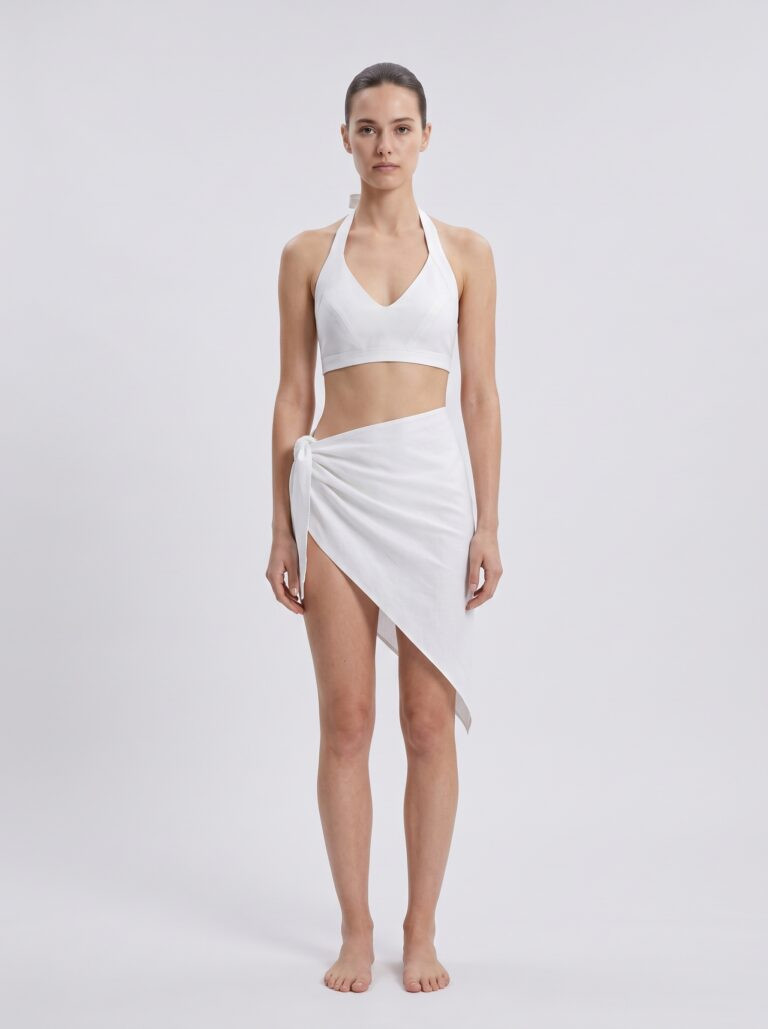 DYSW-403
Asymmetric tie pareo skirt
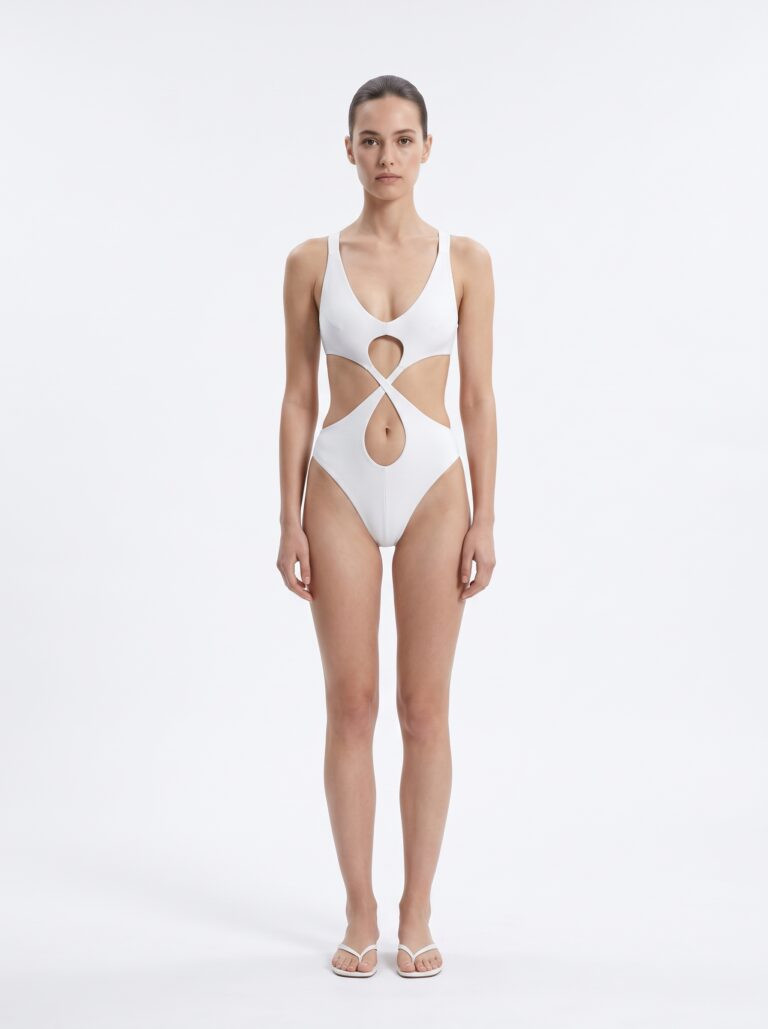 DYSW-135
One-piece swimsuit with figure-eight cut-outs
 DYSW-220
Sliding triangle bikini with tie strings
 DYSW-402
Asymmetric panel beach kimono
 DYSW-134
Plunging one-piece swimsuit with braided cords
 DYSW-219
Twisted bandeau bikini with high-cut bottoms
 DYSW-218
Ruffled bandeau bikini with ring
 DYSW-401
Long V-neck beach dress
 DYSW-133
One-piece swimsuit with spiral cut-outs and starfish
 DYSW-132
One-piece swimsuit with crossed cut-outs
Écrit à l’atelier D’YRSAN, à Asnières-sur-Seine, où nous développons et produisons les collections de nos clients : patronage, prototypage, industrialisation, production petite série.
Parler de votre projet→