The Journal / Brand development
French swimwear manufacturer: 8 criteria for choosing the workshop for your collection
Specialization, pattern making, materials, small runs, timeline: the 8 criteria for choosing the workshop that will make your swimwear in France.
November 14, 2026 7 min read By the D'YRSAN workshop
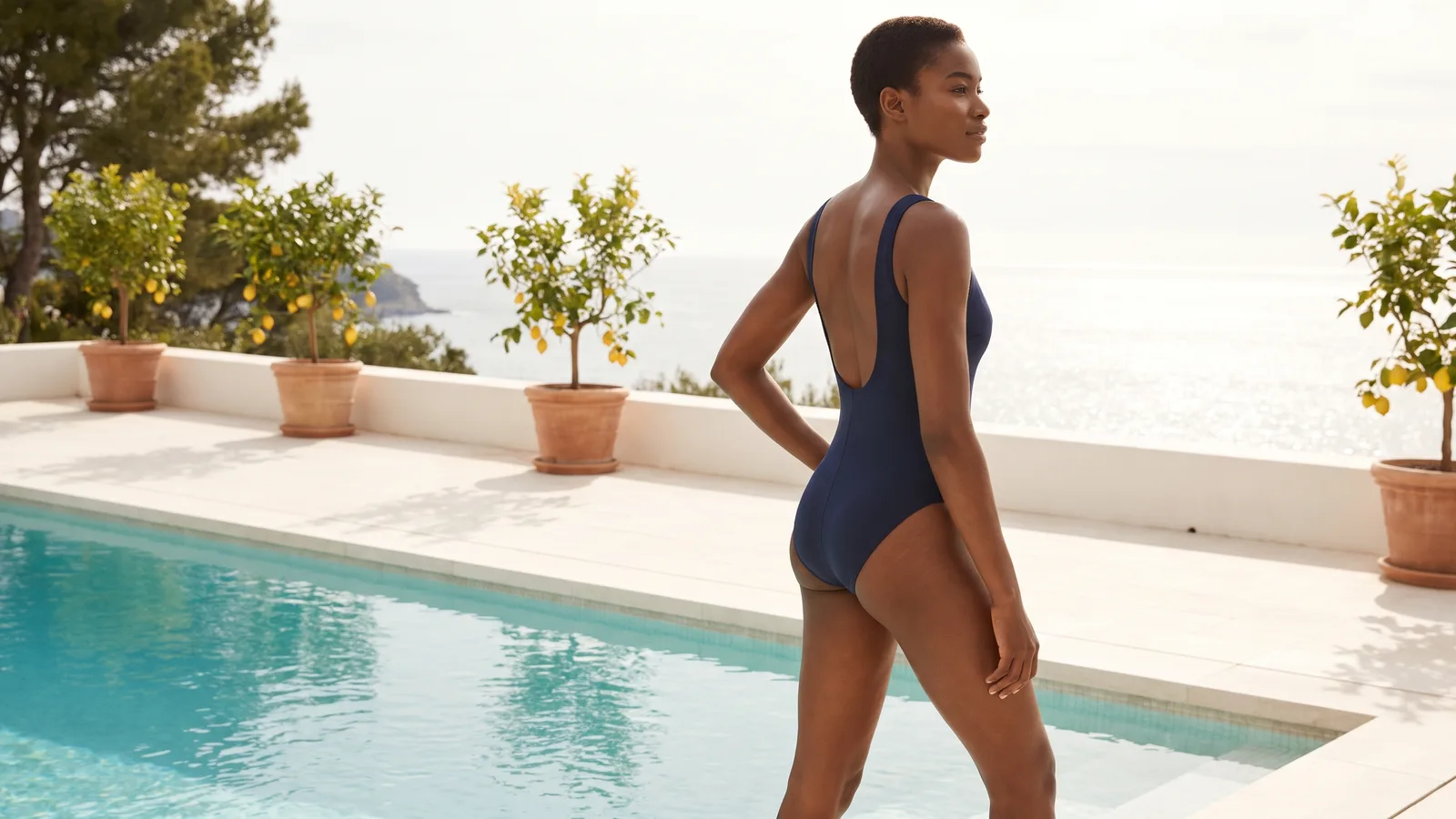
Finding the right swimwear manufacturer in France is often the step that decides the success of a first collection. A swimsuit forgives nothing: the slightest pattern, elastic or fabric choice error elastic tension or material choice shows up from the first fitting, then in the water. In November, most designers look for their workshop for the following summer, and the calendar is already starting to tighten.
At D'YRSAN, we support swimwear brands in Asnières-sur-Seine, from pattern to production. We have gathered here the eight criteria to check before entrusting your designs to a workshop, whether you are launching a designer swimwear or that you are developing an existing range. Each point comes with concrete questions to ask during your first exchanges.
Why work with a French swimwear manufacturer
Manufacturing swimwear in France has advantages that go beyond the image argument. The proximity lets you follow your prototypes in person, attend fittings and correct a detail quickly rather than through long exchanges of parcels. For a young brand, this responsiveness limits costly back-and-forth and unpleasant surprises at the end of production.
It also meets an expectation of your customers, who are increasingly attentive to the origin and manufacturing conditions. A swimwear manufacturer in France generally accepts shorter runs than a distant factory, which spares you from tying up your cash in too large a stock. In return, the unit cost is higher: your choice should be considered, not just compared on price.
Criteria 1 and 2: swimwear specialization and an in-house design office
1. Genuine specialization in swimwear
Swimwear is a technical product. It is worked on highly stretchy knits, requires specific machines (overlocker, coverstitch, three-point zigzag) and finishes that resist chlorine, salt and UV. A standard ready-to-wear workshop knows how to sew a jersey, but does not necessarily master the taux de réduction of a swimsuit pattern, this deliberate reduction of measurements that ensures the fit on the body.
Ask to see finished pieces, to touch them and turn them inside out. A serious swimwear manufacturer in France will gladly show you their insides: evenness of topstitching, neatness of linings, elastics applied without waves. An artisan swimwear maker proud of their work has nothing to hide.
2. A design office capable of pattern making and prototyping
If your project is limited to sketches, you need a workshop that handles pattern making, grading and prototypes. Check that the bureau d’études works on site, in direct contact with production: it guarantees that the approved pattern will be exactly the one that gets cut. You can discover how these stages are organized our design office and prototyping to visualize these steps.
Ask how many prototypes are included and how the fittings are scheduled. A good workshop plans at least one fitting on a live model, because a swimsuit is judged in motion: seated, arms raised, bending at the torso.
Criteria 3 and 4: mastery of materials and notions
3. Advice on materials
Polyamide-elastane, recycled polyester, rib knit, textured fabrics: each material reacts differently to cutting and sewing. The workshop should guide you according to use (pool, beach, sport), the weight and the elastane percentage, often between 15 and 25% for a swimsuit. It should also warn you about light colors that become sheer once wet.
Ask for washing and immersion tests on your yardage before launching production. A workshop that offers them unprompted shows it anticipates customer returns rather than suffering them.
4. Access to suitable notions
Rubber or silicone elastics, cups, rings, buckles, high-tenacity polyester thread : swimwear notions must withstand chlorine and salt. A workshop that knows its suppliers, or that has its own haberdashery of fabrics and notions, saves you valuable time on sourcing.
Also check who buys the materials: you or the workshop. Both options exist, but they don't carry the same responsibility in case of a fabric defect or a supplier delay.
Criteria 5 and 6: minimum quantities and small-batch production
5. Minimum order quantities that fit your launch
Small-run swimwear production is the main reason designers turn to a local workshop. The minimum orders vary a lot from one manufacturer to another: per style, per colorway or per size. Have the exact rule explained to you, because a minimum «per style» quickly multiplies your quantities if you offer each shape in three colors.
A workshop used to young brands will help you build a tightly focused first collection : two or three strong silhouettes, intelligently varied, rather than a scattered range that weakens your budget.
6. A reliable production organization
Ask the workshop about its organization: who cuts, who sews, who inspects? A piece-by-piece quality control, with checks on measurements and seams, prevents a batch defect from reaching your customers. Also ask how non-compliant pieces are handled and who bears the cost.
For a swimsuit, the consistency from one piece to the next is an excellent indicator. Compare two samples of the same size: they should hang exactly the same way, with elastics stretched identically.
Criteria 7 and 8: schedule, transparency and commitments
7. A realistic, shared schedule
Swimwear is a seasonal product: a collection delivered in the middle of summer has already missed part of its season. Work backwards from your on-sale date, including development, prototypes, corrections, purchase of materials and production. A reliable swimwear manufacturer in France will give you a written timeline and will flag its periods of heavy workload.
That is why autumn is the right time to start: end-of-year exchanges allow prototypes to be launched early in the new year, with a margin for adjustments.
8. Clear commitments on responsible production
Origin of materials, offcut management, working conditions, transport: ask the workshop how it positions itself. This information will feed your communication and keep you from claiming to your customers what you cannot prove. See for example our commitments to responsible production to spot the points to verify.
Beware of vague promises. A transparent workshop names its practices, welcomes visits and answers your questions about traceability.
How to compare quotes from a swimwear manufacturer in France
After your first contacts, you will probably receive very different quotes. Before comparing totals, check that each proposal covers the same scope : pattern making, grading, number of sizes, prototypes, trims, labels, quality control and packaging.
To obtain reliable figures during a request a quote, prepare a technical file as complete as possible:
- flat sketches front and back, with construction details; ;
- the fabrics considered, with their composition or a reference; ;
- the number of styles, colorways and the breakdown by size ;
- the desired on-sale date; ;
- a reference model, if you have one, to illustrate the desired support.
A price gap often comes down to a difference in method. A workshop that includes more fittings or more thorough quality control costs more, but it protects you from far more costly customer returns. Ask for the detail of each line : it is also a good test of transparency.
Choosing your swimwear workshop: a partnership above all
Choosing a swimwear workshop commits your brand over several seasons. Beyond the eight criteria, rely on the quality of dialogue : a workshop that cares about your customers, your positioning and your budget takes your project seriously.
Take the time to meet two or three garment manufacturers, to visit their workshops and touch their pieces. A swimwear manufacturer in France who opens its doors to you, explains its expertise and details its method of swimwear development already gives you a faithful preview of the upcoming collaboration. It is this trust, built from the very first exchanges, that will make the difference on the day your swimsuits arrive with your customers.
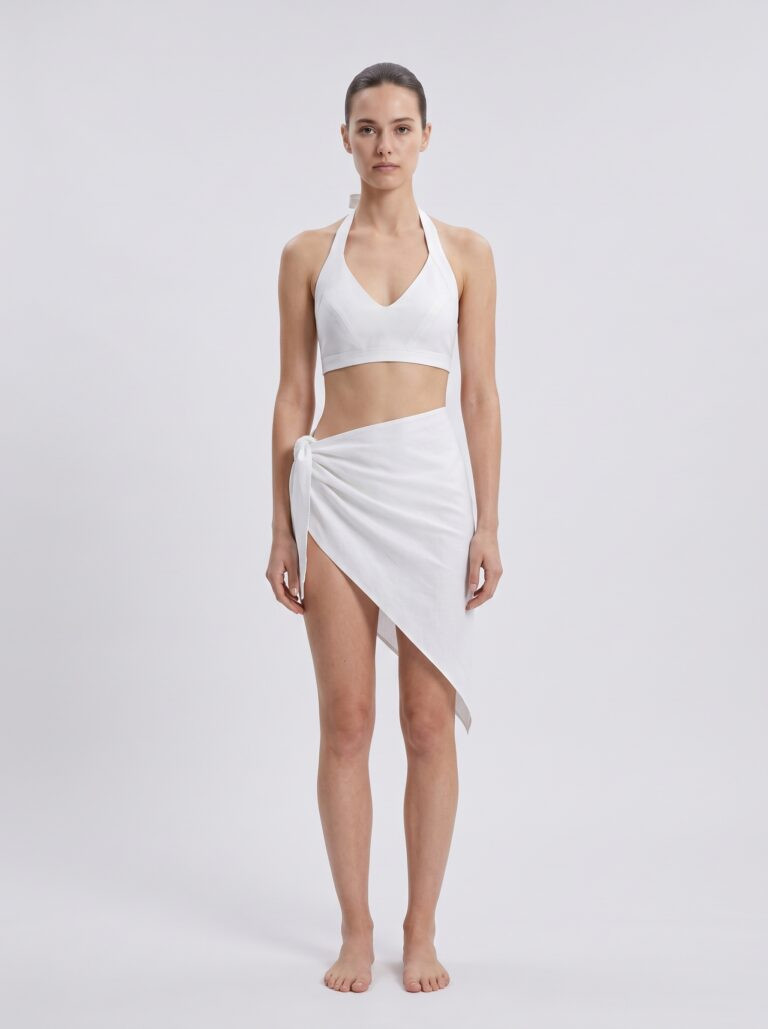 DYSW-403
Asymmetric tie pareo skirt
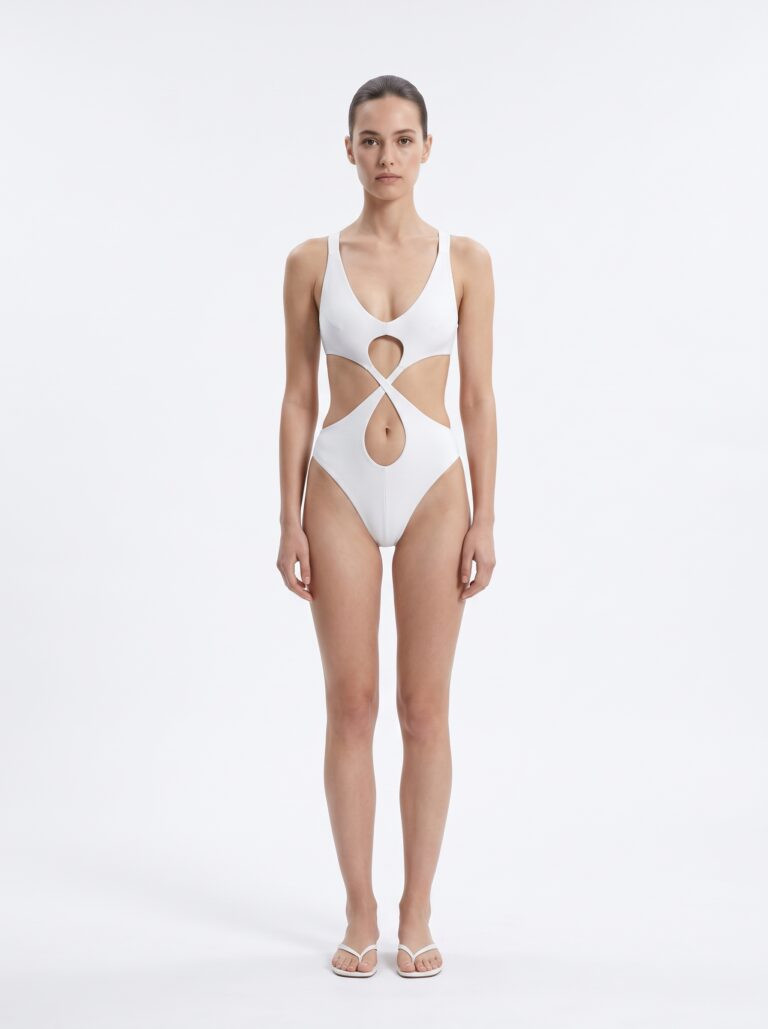 DYSW-135
One-piece swimsuit with figure-eight cut-outs
 DYSW-220
Sliding triangle bikini with tie strings
 DYSW-402
Asymmetric panel beach kimono
 DYSW-134
Plunging one-piece swimsuit with braided cords
 DYSW-219
Twisted bandeau bikini with high-cut bottoms
 DYSW-218
Ruffled bandeau bikini with ring
 DYSW-401
Long V-neck beach dress
 DYSW-133
One-piece swimsuit with spiral cut-outs and starfish
 DYSW-132
One-piece swimsuit with crossed cut-outs
Written at the D'YRSAN workshop in Asnières-sur-Seine, where we develop and produce our clients' collections: pattern making, prototyping, industrialization, small-batch production.
Tell us about your project→