Journal / Materials and fabrics
What fabric for a coat: 8 warm materials to choose before sewing this winter
Wool, cashmere, tweed or velvet: eight warm materials to help you make the perfect winter coat, with the right yardage and lining guidelines.
October 24, 2026 6 min de lecture Par l’atelier D’YRSAN
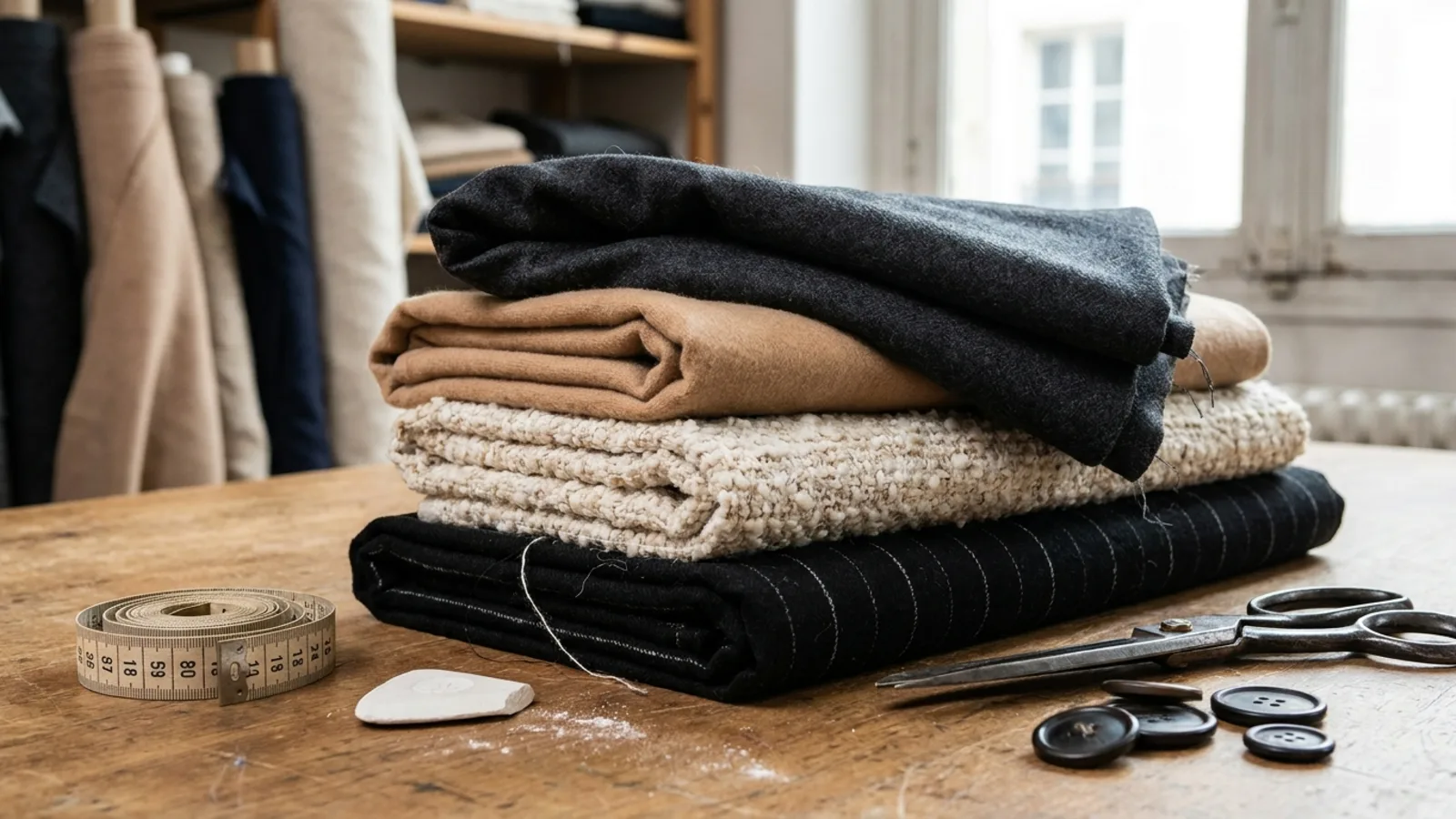
Wondering which fabric to choose for your winter coat before starting your project? This is the question that determines everything else: warmth, shoulder support, drape, and even the difficulty of sewing. A coat represents several meters of fabric and many hours of work, so it's best to get it right from the start.
In our workshop, we work with woolens, tweeds, and tailoring fabrics each season for ready-to-wear brands. Here are eight warm materials, categorized by use, with their strengths, cutting challenges, and best practices for yardage and lining. Everything you need to confidently choose from our selection. online haberdashery.
Choosing the right fabric for a coat: the criteria that matter
Before falling in love with a color, consider three things. The weight First: a fabric for a winter coat is generally between 450 and 700 g/m², whereas a mid-season coat is made of 300 to 450 g/m². Then there's the composition: the higher the proportion of wool, the more the garment insulates while still allowing the body to breathe.
The third criterion is the fit. A structured coat with strong shoulders requires a firm material that holds its shape; a wrap-style or oversized coat prefers a soft wool with a beautiful drape. Crumple a corner of the fabric in your hand If it regains its shape in a few seconds, it will age well. Finally, consider its actual use: walking in the rain, car rides, going out dressed up.
If you're still unsure which coat fabric is best for your model, reread the pattern instructions. Most of them indicate recommended material families, and following this advice avoids many unpleasant surprises during assembly.
Dense woolens, champions of warmth
1. Woolen cloth
Visit woolen cloth is the benchmark for classic coats. Woven, then fulled and brushed, it has a felted, compact surface that cuts through the wind. It hardly frays, simplifying finishing, and it's equally suited to a pea coat or a double-breasted coat. Choose it from around 500 to 650 g/m² for a real winter coat.
2. Boiled wool
Visit boiled wool is a wool knit that has been warmed and then felted. Dense and slightly stretchy, it offers great comfort and its edges can be left raw. It's the ideal material for a first unlined coat, provided that sew with a slightly elongated stitch so as not to crush the thickness.
3. Double-sided wool fabric
Visit double-sided It combines two fabrics bonded together, often in two different colors. It is worked without lining thanks to specific stitching techniques: the two layers are separated by a few centimeters to tuck in the edges by hand. The technique is demanding, but the result is reversible, very warm, and highly elegant.
Cashmere and fine wool for an exceptional coat
For a dressy yet lightweight coat, the answer to the question of which fabric to use often boils down to two words: fine fibers. They provide remarkable insulation for their low weight and offer an incomparable feel.
4. Cashmere and cashmere wool
Nothing compares to the sweetness of a cashmere fabric by the meter. Very warm for its light weight, it makes for fluid and enveloping coats. Pure cashmere remains susceptible to friction; a blend wool and cashmere offers an excellent compromise between softness and durability. Browse our selection of cashmere fabrics to compare the touches and the weights.
These materials often have a direction of hair Run your hand over it; the smoothest side indicates the direction. All pieces must be cut in the same direction, otherwise the reflections will be different from one panel to another.
5. Wool fabrics with fibers: mohair, alpaca, camel hair
These long-pile or brushed woolens provide volume and warmth without heaviness. They are suitable for loose-fitting coats, generous collars, and cocoon silhouettes. Opt for a 90 or 100 needle and a dual feed presser foot to prevent layers from slipping on top of each other.
Tweed, worsted wool and velvet: coats with character
Do you like structured lines? Then what fabric should you choose for a coat? Tailoring fabrics, which are more structured, create clean shoulders and precise lapels.
6. Tweed
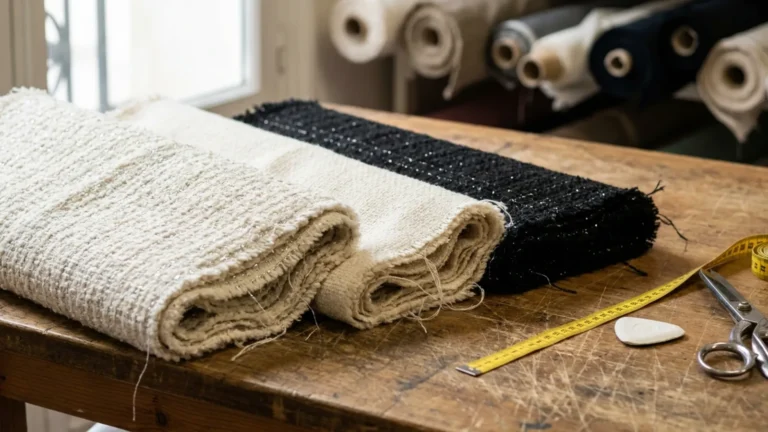
Visit tweed is traditionally a tightly woven carded wool, often heathered or looped; check the composition on each product sheet. ecru tweed brings light to a winter wardrobe, while a lurex bouclé tweed These weaves add a dressy touch to a short coat. fray quickly : overlock each piece immediately after cutting.
7. Virgin combed wool
Smoother and thinner, the combed virgin wool This style is reserved for city and mid-season coats, cut like a suit. virgin wool with chalk stripes For example, she gives an overcoat in a masculine-feminine style. She asks for a fusible interfacing on the front and facings. Discover other qualities among our tailoring fabrics.
8. Velvet
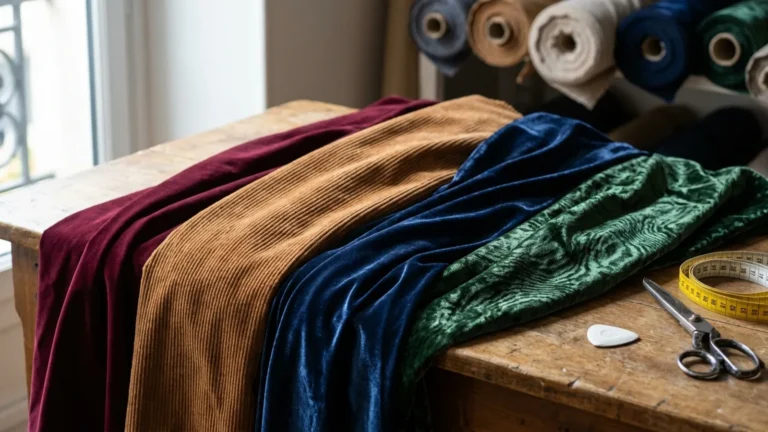
Visit velvet, Ribbed or wool fabric offers a rare depth of color. Less windproof than a sheet, it benefits from a warm lining. Like cashmere, it requires cutting in one direction only and ironing on the reverse side over a terry towel to avoid flattening the fibers. Our department velvet by the meter offers several textures.
Coat and lining yardage: what fabric for a well-finished coat
Visit coat yardage depends on the length, fullness, and width of the fabric. As a guide, allow 2.5 to 3 m in 140-150 cm wide for a mid-length coat in a medium size, and up to 3.5 m for a long, double-breasted, or high-collared style. Add approximately 10 to 15 % for a checked, striped or nap-direction fabric.
The lining is just as important as the outer fabric. It makes them easier to put on, protects the seams, and adds a layer of insulation. Choose a smooth, breathable material, such as viscose or satin, from our selection. fabrics for linings, and allow roughly the same amount of fabric as for the body, minus the facings.
Deciding which fabric to choose for a coat also means thinking about supplies: interfacing, strong polyester thread, shoulder pads. coat buttons well-proportioned, of 25 to 30 mm In general, they signify the finishing touch.
Sewing and caring for a wool coat fabric
Before the cut, decatize your woolens Steam the entire surface with a gentle iron, holding it a few centimeters away, then lay it flat to dry. This step prevents the coat from shrinking at the first dry cleaning. Cut thick fabrics into a single layer and secure them with clips rather than pins, which can leave marks.
During assembly, open each seam with an iron. pattemouille and a wooden clapper to obtain clean edges. Degrade the seam allowances In thick areas: collar, lapels, cuffs. Always test the stitch and temperature on a scrap piece.
For maintenance, brush your coat after each wear and leave it to dry on a wide hanger. Wool coat fabric rarely needs washing. Air it out rather than cleaning it, and have it professionally cleaned once a season.
The right woolens for a warm winter
For a first project, the woolen cloth or the boiled wool The safest choices remain: warm, durable, and easy to finish. Cashmere and wool fabrics with a soft pile appeal to those seeking comfort, while tweed and worsted wool are ideal for those who prefer tailored lines. Knowing which fabric for a coat suits your style and everyday life is key to a garment that will last for years.
Take the time to touch and compare the weights and to explore our woolen fabrics before cutting. A well-chosen and carefully constructed coat will last through the winters without losing its shape.
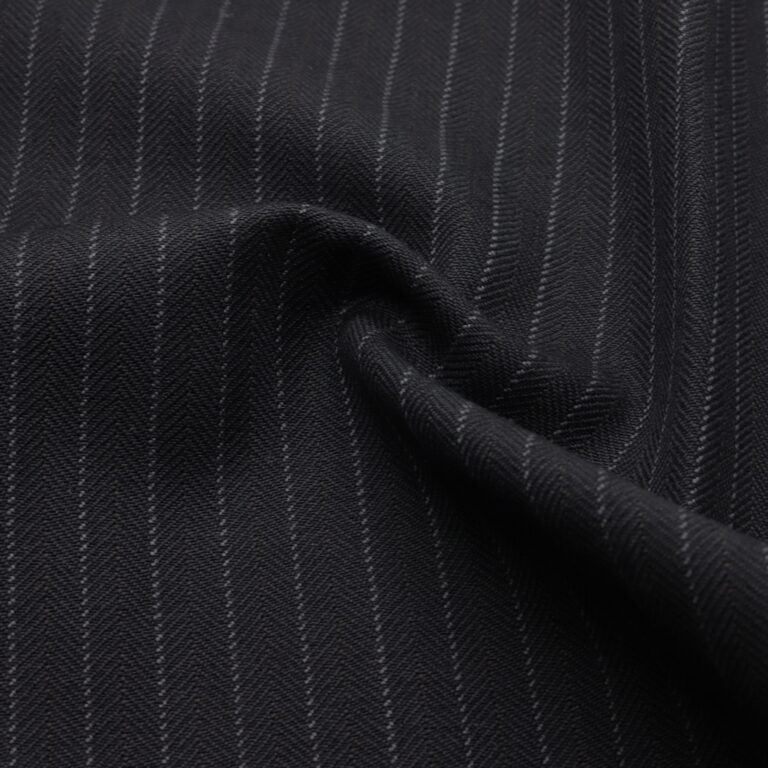 Virgin wool fabric with chalk stripes on a black background
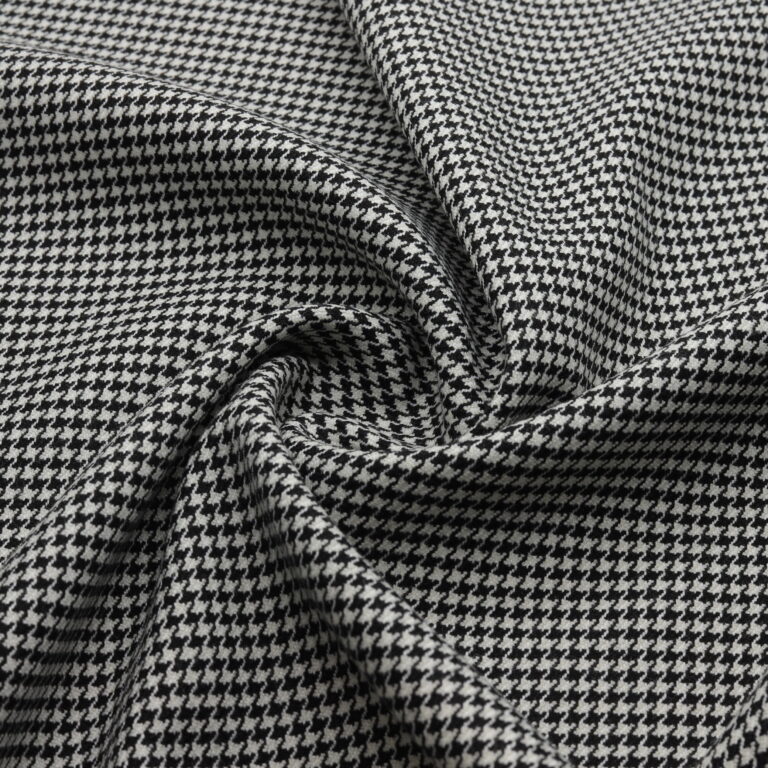 Black and white houndstooth fabric, slightly stretchy
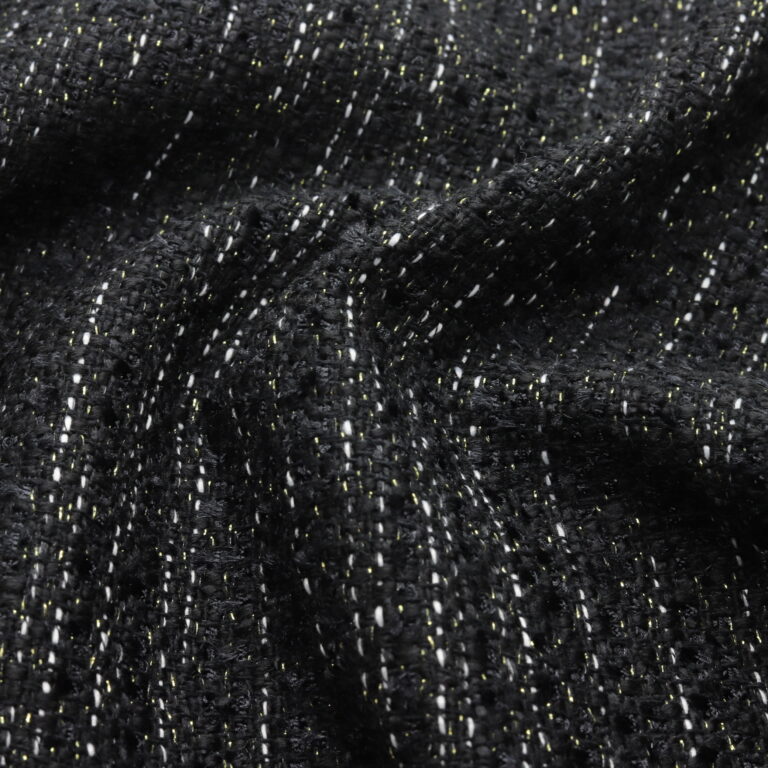 Black bouclé tweed fabric with gold lurex thread
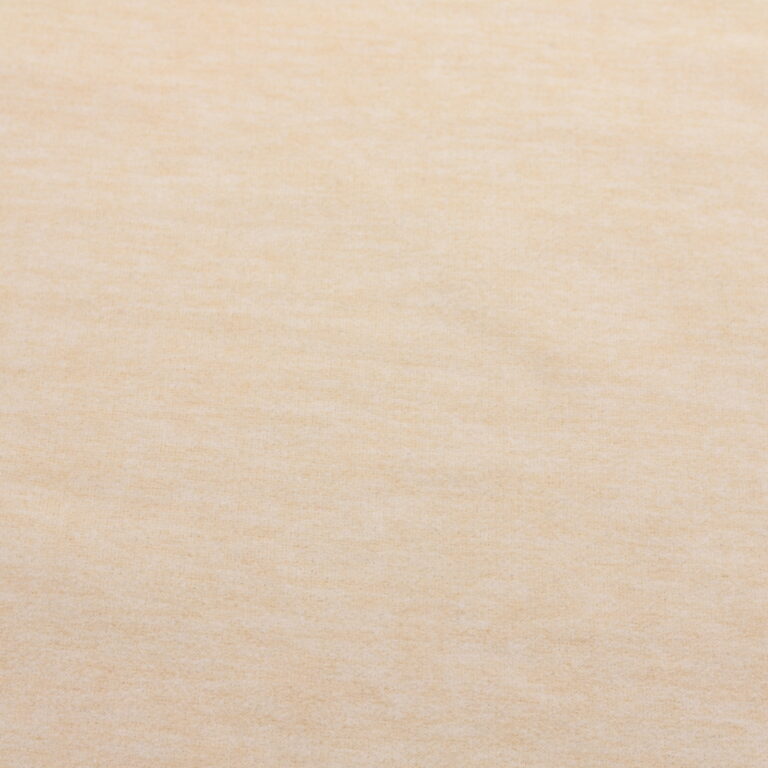 DY72252
Cream fabric with a cashmere silk effect
 DY1182-3
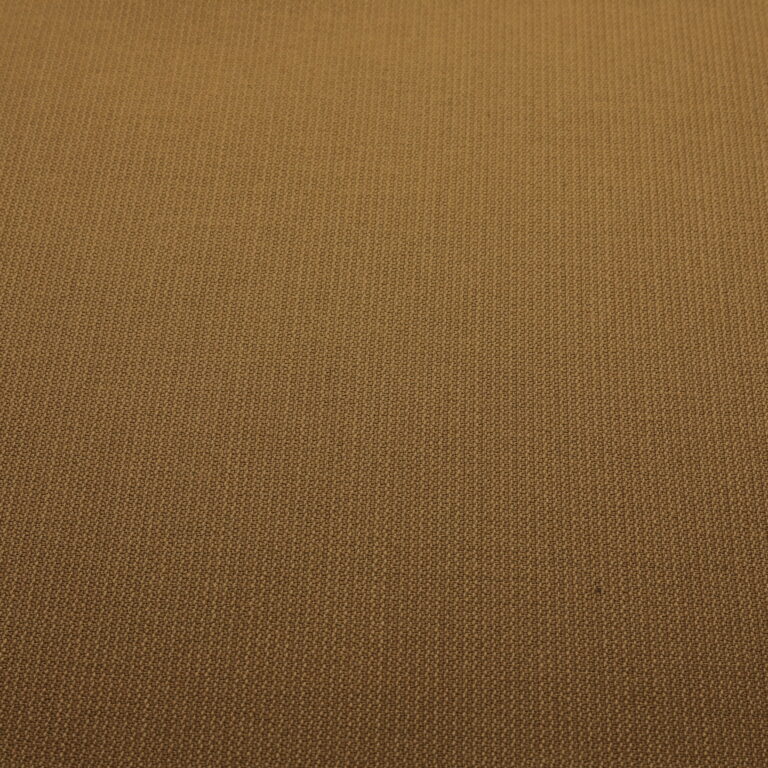
Plain camel wool fabric
 DYNEWBUS
Black slightly stretch wool fabric
 DY1182
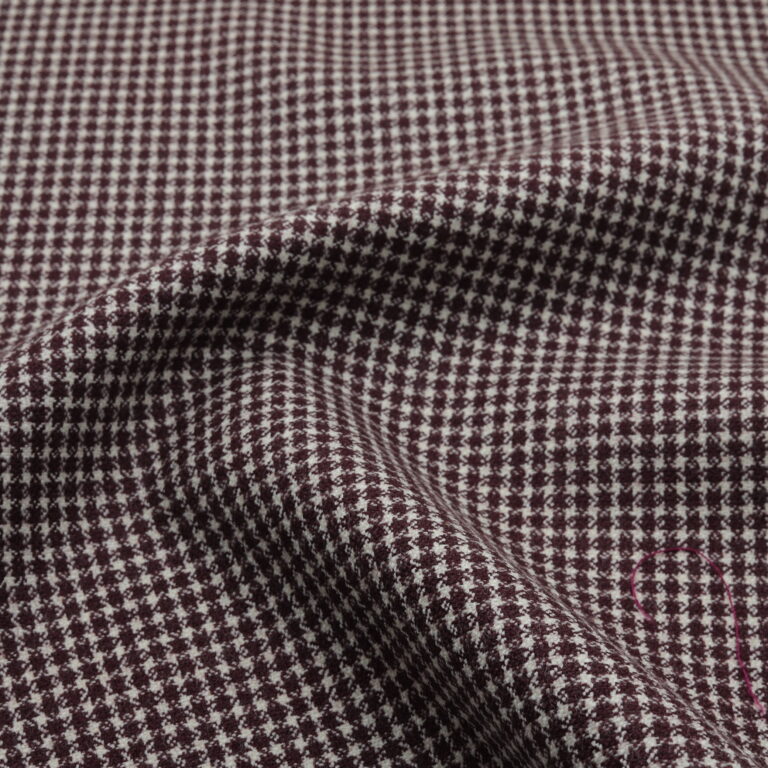
100% pure wool fabric
YRSAN's haberdashery : fabrics by the meter and supplies selected by the workshop. Discover the haberdashery
Écrit à l’atelier D’YRSAN, à Asnières-sur-Seine, où nous développons et produisons les collections de nos clients : patronage, prototypage, industrialisation, production petite série.
Parler de votre projet→