The Journal / Materials and fabrics
Lurex fabric: 7 things to know to sew a party outfit that shines
Definition, families, cutting, sewing and care: everything you need to know about lurex fabric to create a radiant party outfit.
2 November 2026 6 min read By the D'YRSAN workshop
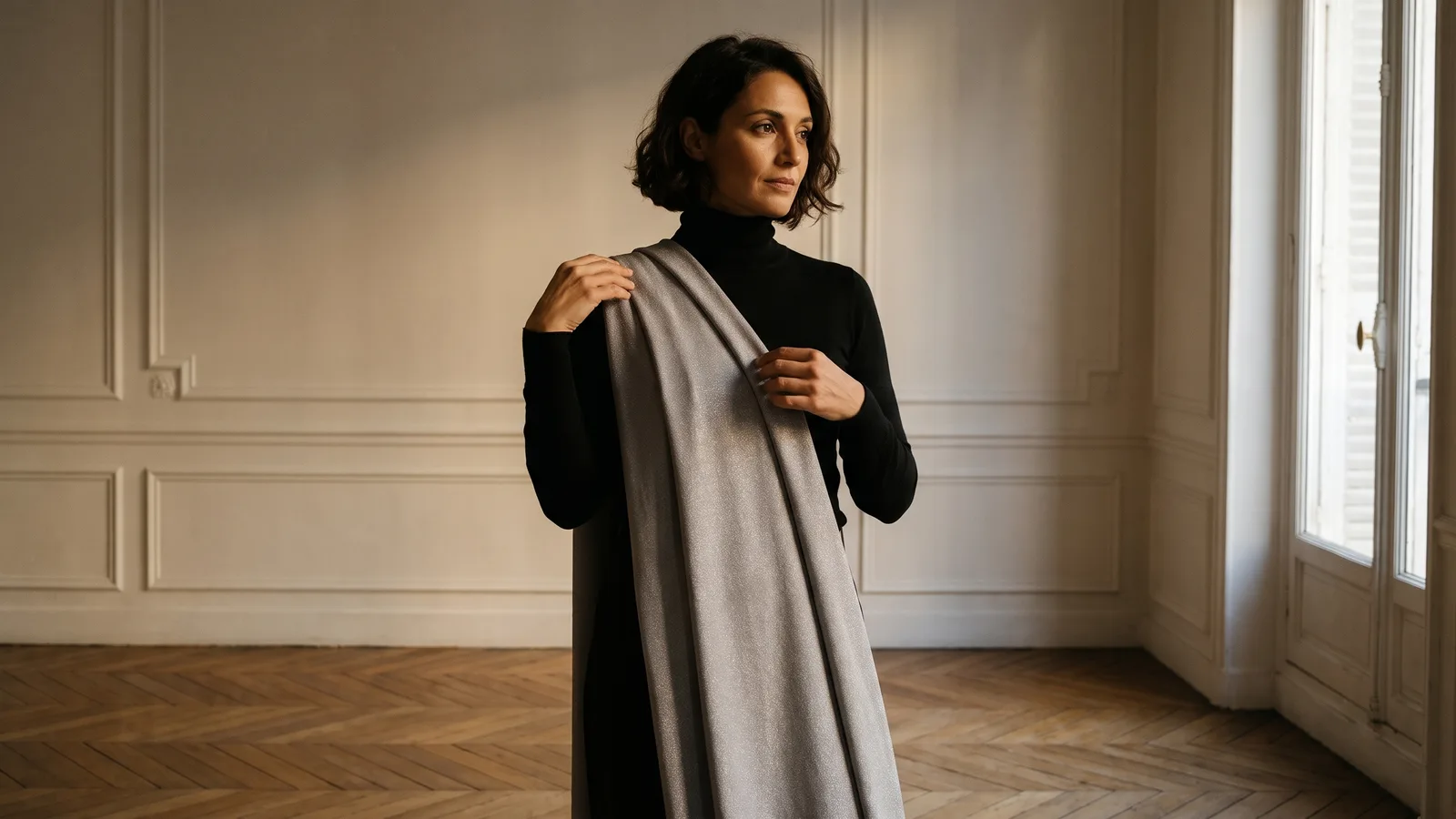
Visit lurex fabric returns every year with the first cold snaps, when party dresses, New Year's tops and jackets that catch the light are being prepared. Behind its shine hides a demanding material: metallic threads sensitive to heat, knits that run, sequins that break needles.
Before cutting into a precious yardage, it is best to understand what you have in hand. Here is 7 things to know, from the definition of lurex to caring for the finished garment, so you can sew a festive piece that sparkles for a long time without distorting or itching.
Lurex fabric: definition and material families
1. What lurex really is
Visit definition of lurex comes down to one sentence: it is a flat thread obtained from a metallized polyester film, colored then cut into very fine strips. It is often wound around a support thread to gain flexibility. Lurex is therefore never a fabric on its own: it is woven or knitted with other fibers, in variable proportions.
This proportion changes everything. A lurex fabric where the shiny thread forms only a discreet scattering works almost like a classic material. One where it dominates becomes stiffer, scratchier to the touch and much more sensitive to the iron. The thread color also matters: silver, gold, copper or thread matching the ground give very different glints at the same yardage.
2. The main families to recognize
You will come across four main families. The lurex knit and knitted jacquards, such as the silver grey lurex jacquard, are stretchy and fluid. The lurex tweeds are woven, thick and structured. Lurex jacquard mesh is openwork and lightweight. Sequined and embroidered sequin fabrics form a category of their own, heavier and more technical.
To compare these textures side by side, browse the selection of high-gloss lurex fabrics from the haberdashery, looking at the composition and weight of each material before thinking about color.
Choosing the right lurex fabric for your party outfit
3. Matching the material to the garment
The first reflex is to start from the garment, not the sparkle. A wrap dress, a bodysuit or a draped top calls for a fabric that flows: a lurex knit or a knitted jacquard will be ideal. A short jacket, a straight skirt or a small suit call instead for a woven fabric that holds its shape, such as black lurex tweed or its version ecru lurex bouclé.
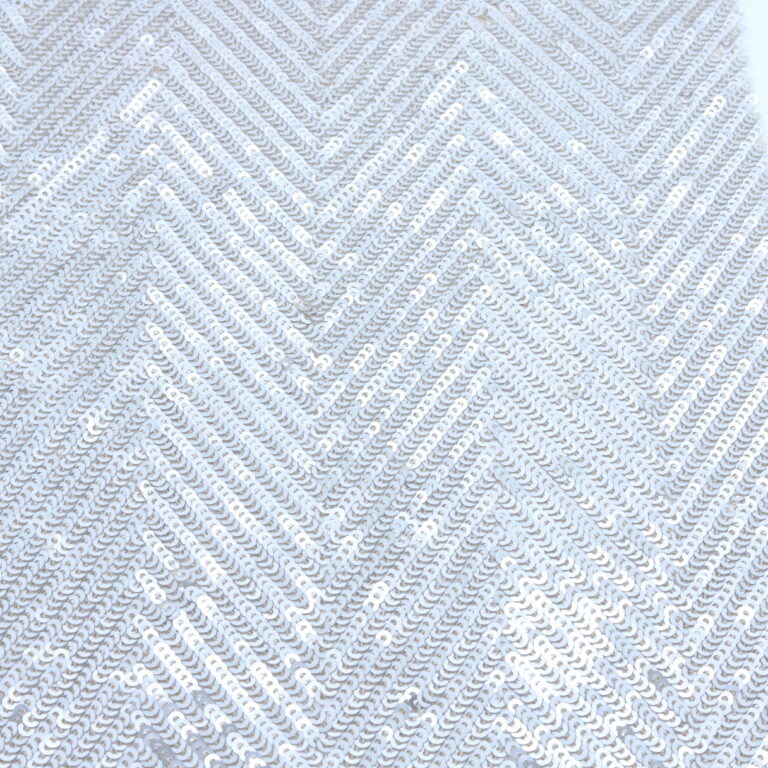
For a shimmering evening gown fabric for high impact, sequins take center stage: the champagne chevron sequin fabric suits a simply cut sheath dress. Keep one rule in mind: the more the material shines, the more the pattern should be pared down. Darts, cutouts and gathers get lost in the sparkle and weigh the piece down.
If you are looking for a lighter sequined fabric, an openwork knit or a striped sequin ground lets the skin breathe and suits long-sleeved tops. Always test the drape by holding the yardage against you in front of a mirror, in daylight and then under warm lighting: a lurex fabric may look understated by the window and far more intense in the evening.
Preparing and cutting a lurex fabric without marking it
4. A flat cut, in one direction
Metallic thread reflects light differently depending on its orientation: place all pieces the same direction, as you would for velvet. For sequined fabrics, the sequins should point downward so the hand glides over them without catching. This constraint uses more yardage: do your layout on paper before ordering.
Cut preferably in single layer, right side up, to follow the jacquard motifs and keep the stitches from slipping. Pins sometimes leave visible holes: secure the pattern with weight or stitch only in the seam allowances. Lurex dulls blades, so reserve a pair of scissors for it or a new needle of rotary cutter.
On tweeds, overlock the edges right after cutting, since loose threads fray quickly when handled. Transfer your markings with basting thread rather than chalk or pencil, which leave lasting marks on some metallized surfaces.
Sewing lurex: needles, stitches and finishes
5. The right equipment at the machine
To sew lurex, change the needle for every project. On a knit, use a stretch or jersey needle in 75, whose rounded tip pushes the threads aside without cutting them. On a woven, a fine-point needle in size 70 or 80 gives a clean stitch. A standard polyester thread, matched to the background rather than the shine, is enough for assembly.
Slightly lengthen the stitch, around 2.5 to 3 mm, and reduce the presser foot pressure if your machine allows it. On knit, a small zigzag or the overlocker preserves the stretch. For the sequins, remove them one by one in the seam allowances before stitching, then sew with the piping foot: a needle that hits a sequin breaks cleanly.
On the interfacing side, avoid fusible interfacings that require a hot iron: prefer a sew-in interfacing or a low-temperature fusible tested on a scrap. For the closure, an invisible zip hand-stitched at the end of construction remains the most discreet solution.
6. Lining for comfort
The reverse side of a lurex fabric often itches, especially at the armholes and neckline. A soft lining solves the problem: choose it from the lining fabrics, in viscose for a woven dress, in fine knit for a stretch piece. On the beige lurex jacquard mesh, the lining also becomes a background colour that alters the final effect.
When lining is not possible, bind the seams with a bias binding or make English seams on lightweight wovens. For decoration, a golden sunburst brooch restores the metallic sheen without overloading the design.
Ironing and caring for a lurex fabric garment
7. Gentle heat and delicate washing
The metallized film melts or dulls under an iron that is too hot. Set the iron to the lowest temperature, always press on the reverse side and insert a cotton pressing cloth. On sequins, never apply the iron: open the seams with your finger or with light steam held at a distance.
For washing, prefer a hand wash at 30 °C with a gentle detergent, without rubbing or wringing. Dry flat, away from the radiator, and avoid the tumble dryer. Pieces embroidered with sequins and structured tweeds tolerate water poorly: entrust them to a dry cleaner, specifying the composition.
Finally, store the outfit on a padded hanger or folded in tissue paper: a lurex fabric rubbed against other garments ends up pilling and losing its brilliance.
A well-understood lurex fabric, an outfit that shines for a long time
Sew a lurex fabric is not insurmountable as long as you respect its nature: a metallized thread that is fragile to heat, a surface that plays with light and a sometimes scratchy reverse side. Choosing the right family for the pattern, cut in one direction only, adjust the needle and line the sensitive areas make all the difference.
Take the time for a test sample : one seam, one pass of the iron, one wash on a scrap. These few minutes tell you how the material really behaves, and your party outfit will go through several seasons of festive evenings without losing its shine.
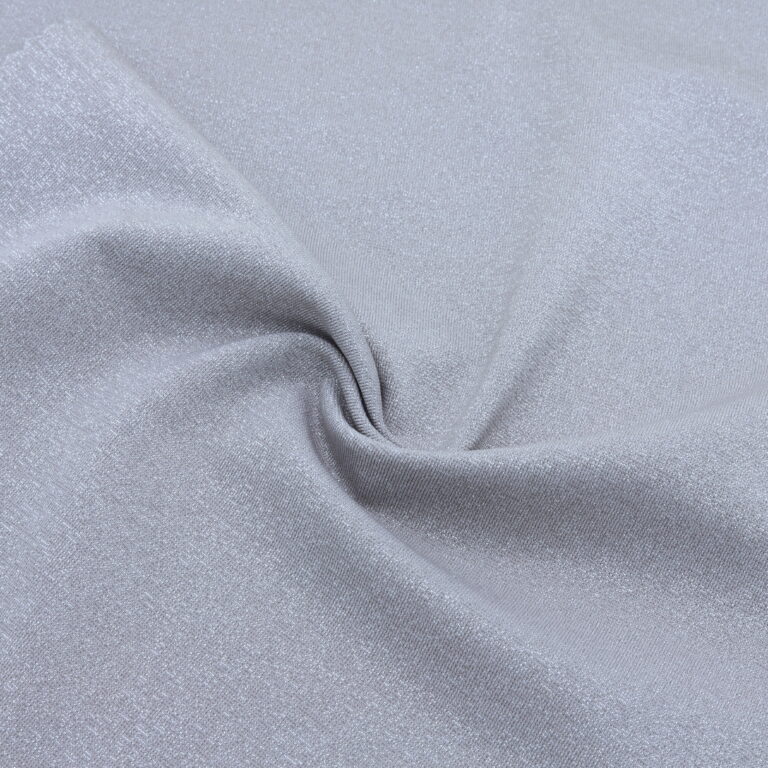 DY98556
Silver Grey Lurex Jacquard Fabric
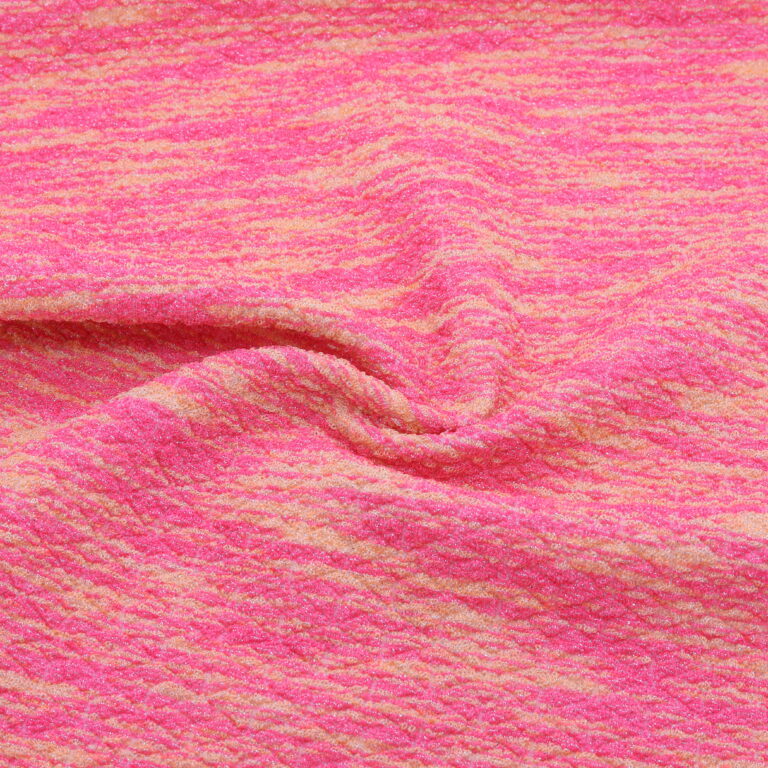 DY81113
Textured lurex swimsuit fabric, coral pink
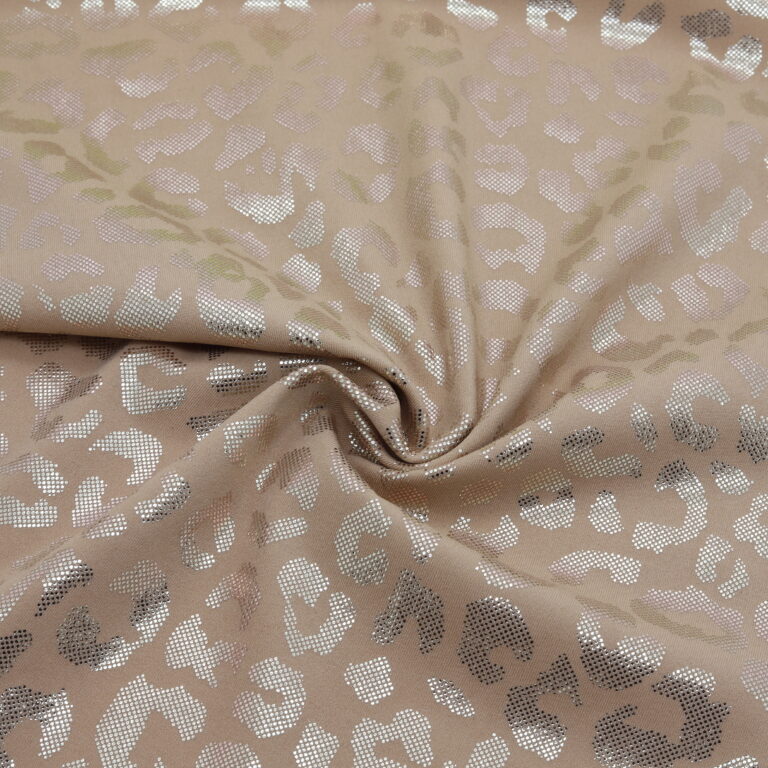 DY97827
Camel Gold Leopard Print Microfiber Fabric
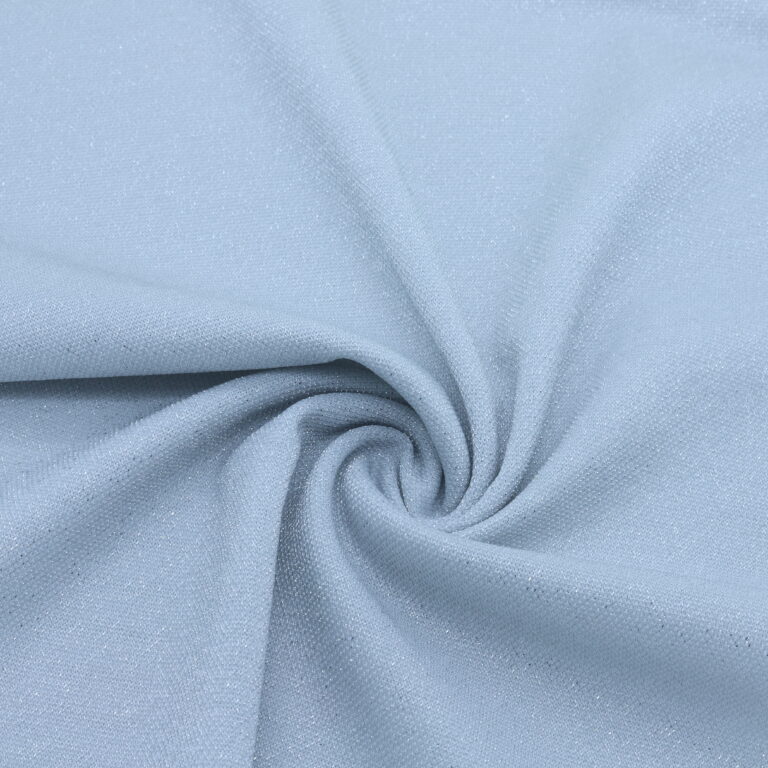 DY80119
Sky blue lurex jacquard fabric
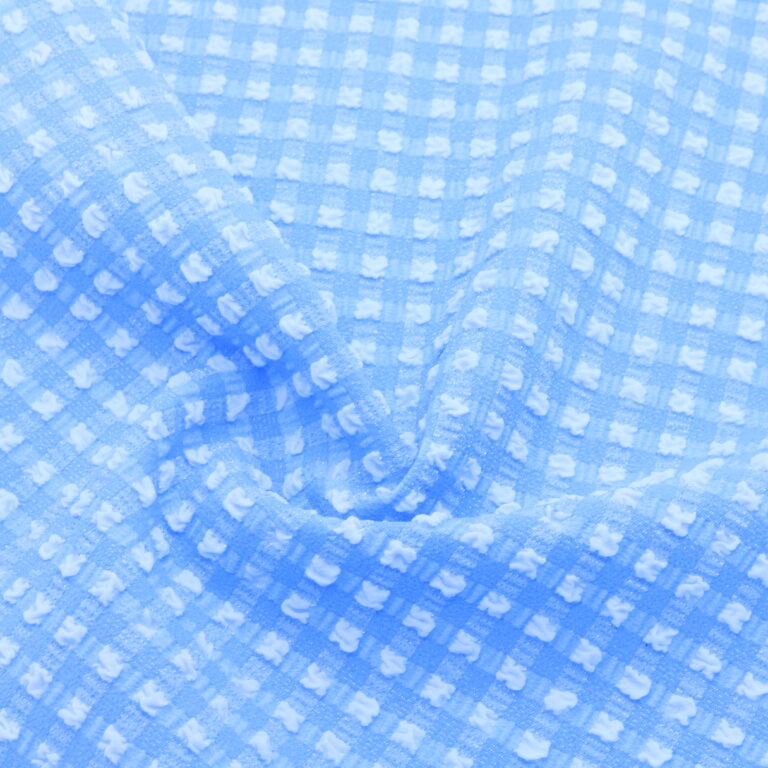 DY81105
Silver lurex embossed gingham swimsuit fabric, sky blue
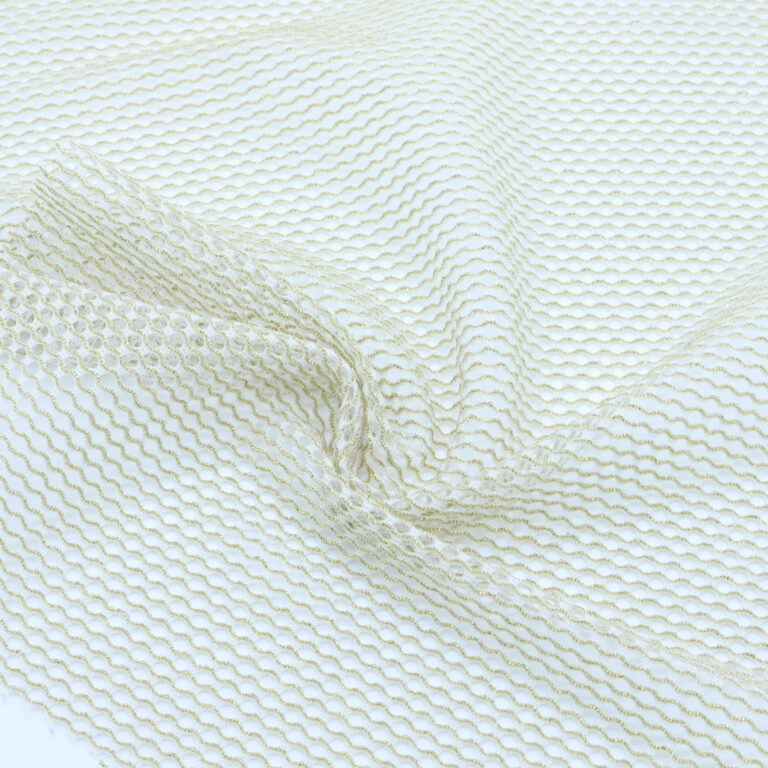 DY72461
Beige lurex jacquard mesh fabric
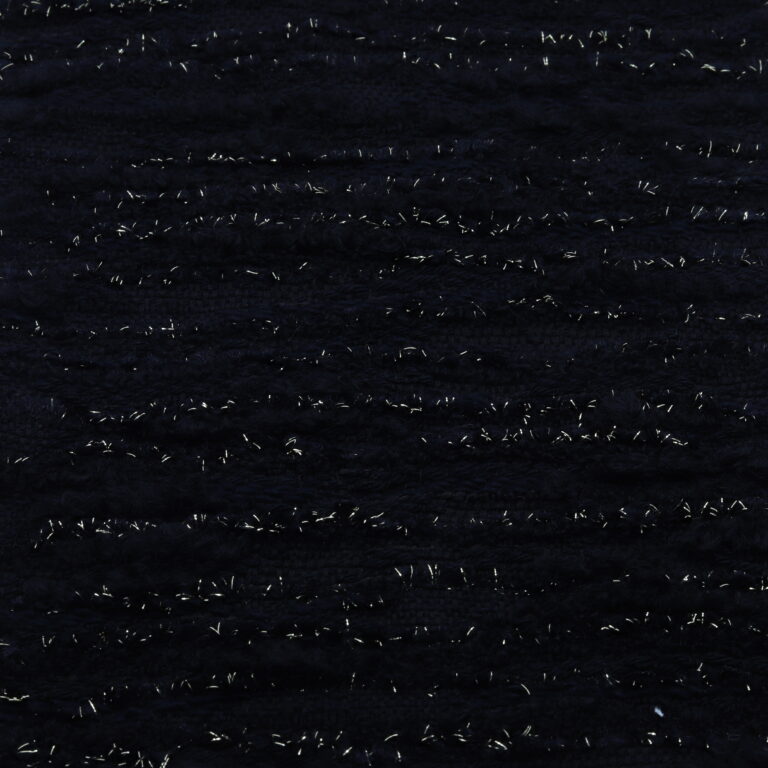 DY148
Black lurex tweed fabric
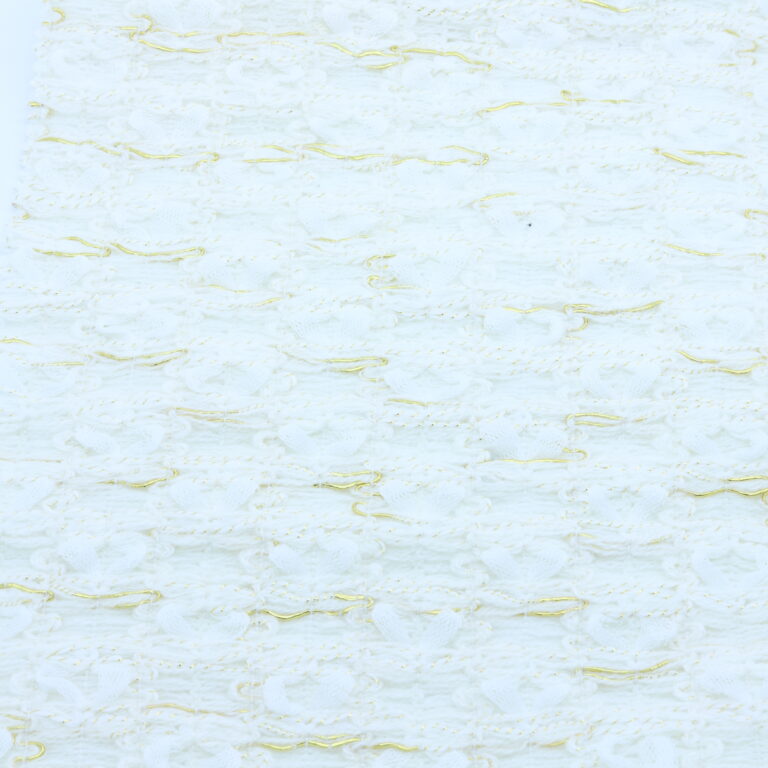 DY375
Ecru lurex bouclé tweed fabric
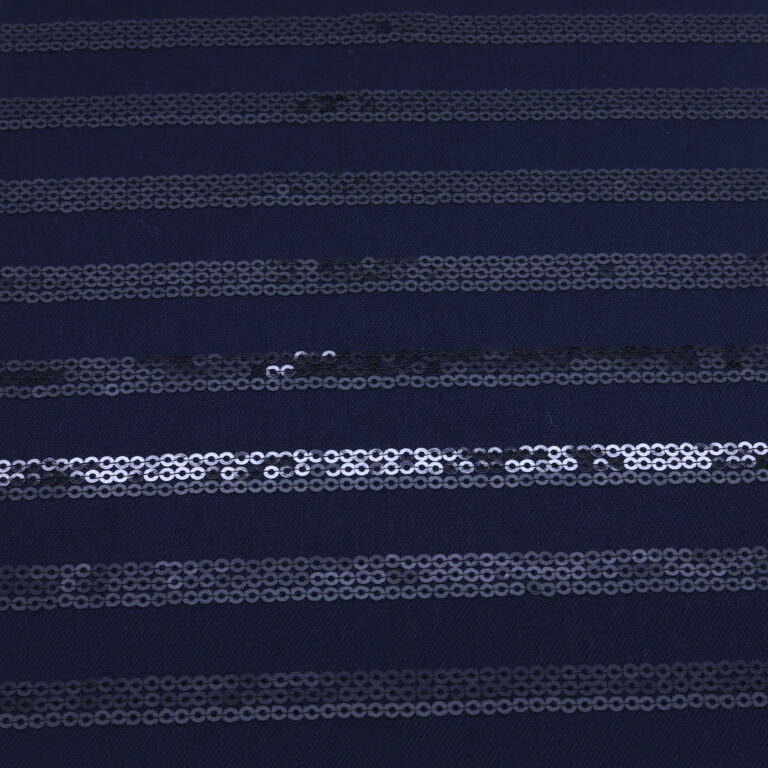 DY143
Navy blue sequined striped fabric
 DY280
Champagne chevron sequin fabric
YRSAN's haberdashery : fabrics by the meter and supplies selected by the workshop. Discover the haberdashery
Written at the D'YRSAN workshop in Asnières-sur-Seine, where we develop and produce our clients' collections: pattern making, prototyping, industrialization, small-batch production.
Tell us about your project→