Journal / Materials and fabrics
Viscose fabric: 8 things to know before buying and sewing it
Origin, quality, shrinkage, cut and finishes: the 8 points to know before buying and sewing viscose fabric.
October 31, 2026 6 min de lecture Par l’atelier D’YRSAN
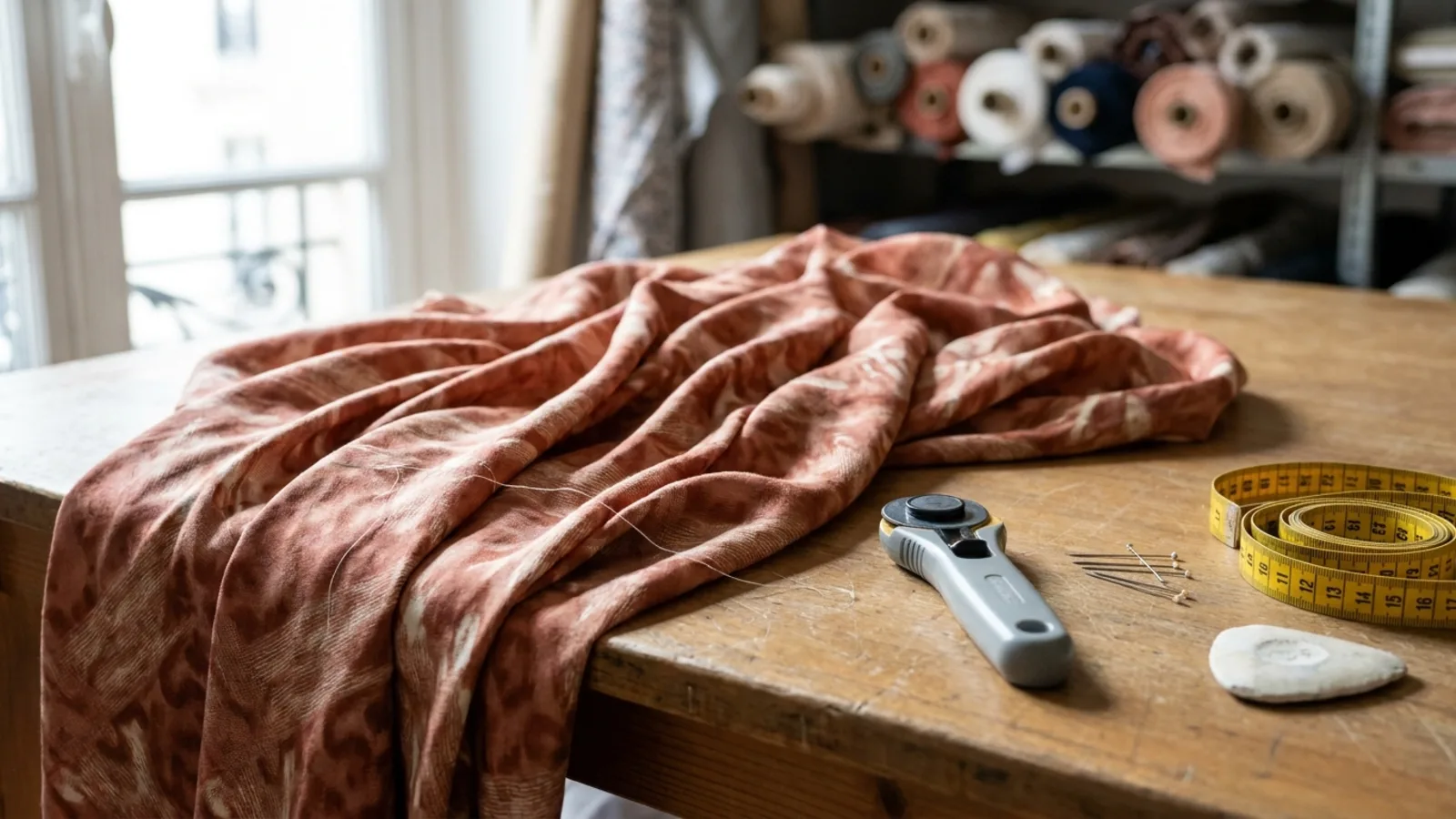
Visit viscose fabric It's one of those fabrics we love to wear but are a little apprehensive about sewing. Fluid, soft, and luminous, it gives dresses, blouses, and wide-legged trousers a drape that few fibers can match. But it slips under the scissors, loses its shape easily, and sometimes holds a surprise after the first wash.
In the workshop, we work with it for both ready-to-wear and linings, and the same questions keep coming up: what exactly is viscose? Is it natural or synthetic? Does it need to be washed before cutting? Here are eight points to know to buy the right amount and sew with confidence.
What is viscose? What's behind viscose fabric?
1. A fiber made from cellulose
Viscose fabric is made from plant cellulose, cellulose, most often extracted from wood pulp (beech, eucalyptus, pine) or bamboo, is chemically dissolved to form a viscous paste—hence its name—then extruded through spinnerets to produce filaments. These filaments are then cut and spun, or used continuously, before being woven or knitted.
It is also known as rayon. Its cousins, modal and lyocell, start from the same raw material but use different processes. Lyocell uses a solvent recovered in a closed loop, which often places it among the eco-friendly materials.
2. Natural or synthetic viscose? Neither.
This is the most common misconception. Viscose is not a fiber natural like cotton or linen, since it undergoes a profound chemical transformation. It is also not synthetic like polyester, which is derived from petroleum. We're talking about artificial fiber : of natural origin, but regenerated by industry.
This explains its hybrid nature. It breathes and absorbs moisture like a plant fiber, while offering a sheen and uniformity similar to a synthetic yarn. The label, stating "100 % viscose," says nothing about its environmental impact: this depends on the wood's origin and the manufacturer's handling of chemicals.
Choosing the right viscose fabric by the meter
3. Voile, crepe, twill, satin or jersey: a drape for every use
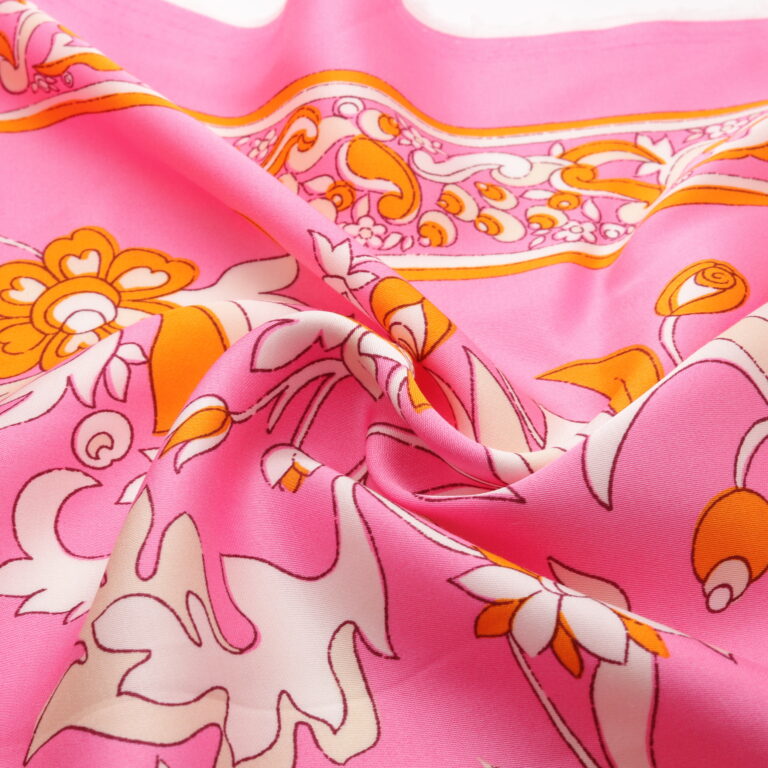
The word viscose refers to a fiber, not an armor. veil or challis, light and supple, are suitable for blouses, summer dresses and scarves. The pancake, With its slightly grainy texture, it wrinkles less and dresses up a wrap dress or flowing trousers well. Twill and twill, being denser, hold their shape better with a skirt or structured shirt.
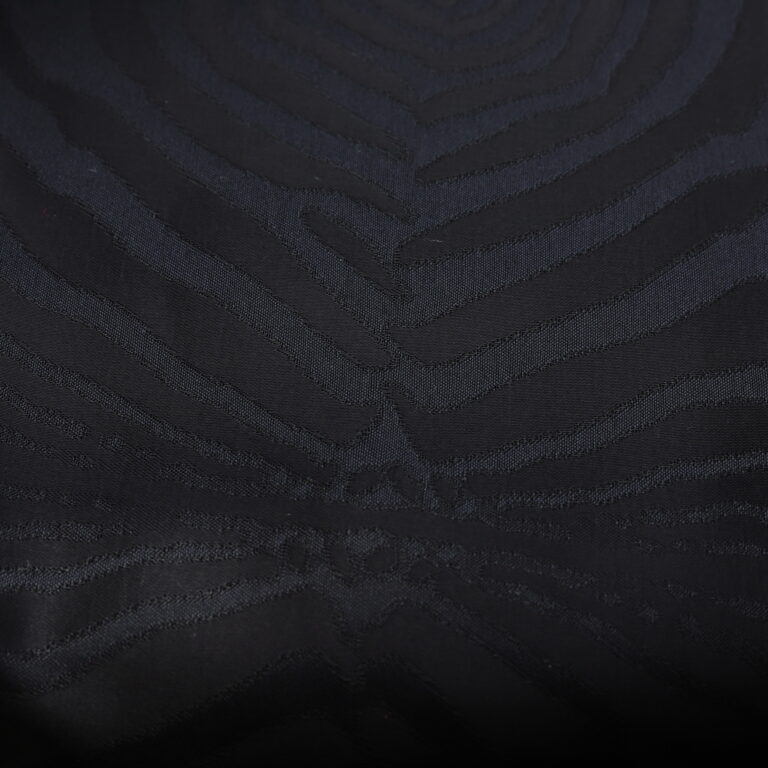
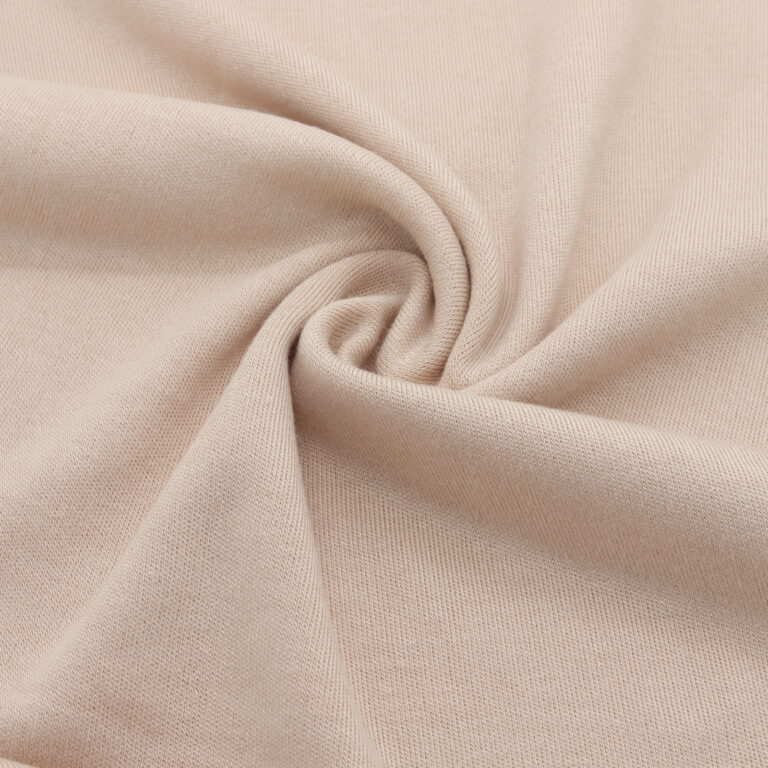
Smooth and shiny viscose satin is a classic for lining jackets and coats: you'll find its essence in our selection of fabrics for linings. Viscose jersey, often blended with a little elastane, is sewn like a knit fabric and is suitable for draped tops and fitted dresses, alongside other fabrics. jersey knit.
4. Indicators of good viscose fabric
To judge a film, first look at its density When held up to a window: a fabric that's too loose will show signs of fraying seams and distortion. Furthermore, crumple a corner hold it in your hand for a few seconds. Good viscose retains moderate creases, low-quality viscose remains creased like paper.
Also check the weight As indicated. Below approximately 100 g/m², viscose is very lightweight and often transparent in light colors; between 120 and 180 g/m², it is suitable for most dresses and trousers. On a quality print, the color penetrates the fiber well and the reverse side is not too pale. Our category viscose by the meter allows you to compare drapes and finishes.
Viscose, advantages and disadvantages: the honest assessment
5. Advantages: comfort, breathability and vibrant colors
Viscose is very absorbent, It's often more absorbent than cotton, making it comfortable in warm weather. It doesn't stick to the skin and allows perspiration to evaporate. It's soft, has no static electricity, and doesn't pill much when it's well-woven.
It takes dye remarkably well, hence the deep colors and crisp prints. Its fluid drape enhances bias cuts, gathers, and ruffles. A well-chosen viscose fabric readily imitates the feel and sheen of silk, at a significantly more affordable price.
6. Limitations: Viscose shrinks when washed and becomes brittle when wet.
Yes, viscose shrinks in the wash, and that's the main criticism leveled against it. withdrawal The standard thickness is 3 to 5 %, and can exceed this figure on less stable viscose fabrics, particularly some voiles or crepes. On a long dress, a few centimeters can therefore shrink during the first wash.
Another point to know: the fiber loses a large part of its resistance in wet conditions. When wet, it tears and deforms much more easily, hence the importance of gentle washing and moderate spinning. It also wrinkles quite quickly, requiring regular ironing.
Sewing viscose: preparing and cutting without distorting
7. Decatish, stabilize, cut flat
First rule: Wash your viscose fabric before cutting, Wash under the conditions specified for the finished garment. A delicate cycle at 30°C, a low spin speed, then dry flat or on a hanger. Remember to allow a little extra fabric when purchasing to account for shrinkage.
Then iron on the reverse side with a medium iron and a damp cloth to avoid shiny areas. Leave the fabric lay flat a few hours: freshly unfolded, it is still under tension and gradually regains its shape.
For cutting, work on a large table, never with fabric hanging loose. Control the straight grain by aligning the selvedges, because viscose twists easily. The rotary cutter Using a cutting mat limits slippage better than scissors; hold the pattern in place with weights or very fine pins inserted into the seam allowances. A starch spray, which will wash out, makes a very unstable fabric temporarily more manageable.
Assembling and caring for viscose fabric
8. Needle, stitches, finishing and ironing
Choose a fine, new needle, Use a size 70 or 80 needle for woven viscose fabric, and a jersey needle for knits. Set a stitch length of approximately 2 to 2.5 mm A stitch that is too long will cause puckering, a stitch that is too short will stiffen the seam. A fine polyester thread works very well.
The bias seams and necklines stretch out very quickly. Stabilize them Secure with a stitch in the seam allowance, or with thin fusible tape. Start each seam a few millimeters past the edge, or hold the threads behind the presser foot, to prevent the machine from pulling in the fabric.
In terms of finish, viscose frays easily. English seams Flat-felled seams are ideal for veils and blouses, while a four-thread overlock stitch is perfect for speed. For hems, a narrow rolled hem or a double hem maintains the drape; let bias-cut pieces hang overnight before hemming.
For care, wash inside out in a mesh bag, without vigorous spinning or tumble drying. Iron inside out, while still slightly damp, at a medium temperature. If you are lining a jacket or skirt, check that the lining can withstand the same treatment, and complete your project with supplies from our online haberdashery.
Key points to remember about viscose fabric
Viscose fabric is neither natural nor synthetic: it's an artificial cellulose fiber that offers fluidity, softness, and vibrant colors. However, it does require some skill to work with. detangle before cutting, work flat, stabilize the sloping areas and wash gently.
Choose the weave according to the garment you intend to wear, check the density and weight, and keep a margin for withdrawal. With these reflexes, viscose becomes a faithful ally, as pleasant to sew as it is to wear.
YRSAN's haberdashery : fabrics by the meter and supplies selected by the workshop. Discover the haberdashery
Écrit à l’atelier D’YRSAN, à Asnières-sur-Seine, où nous développons et produisons les collections de nos clients : patronage, prototypage, industrialisation, production petite série.
Parler de votre projet→