The Journal / Materials and fabrics
Types of jewelry chains: 10 links to know for your creations and your garments
Curb, cuban, venetian: ten chain link styles decoded to help you choose the right one for a piece of jewelry, a swimsuit or a garment.
18 November 2026 7 min read By the D'YRSAN workshop

Curb, cuban, venetian: behind these names lie the types of jewelry chains found on a necklace as well as on a swimsuit or an evening dress. Each link style has its own way of draping, shining and resisting tension.
In the atelier, we often see designers choose a chain based solely on its color, then discover at the first fitting that it twists, snags the fabric or deforms. This guide reviews ten link styles, explains how they behave in sewing and helps you match the right chain with the right clasps and connectors. It complements our article on gold chains by focusing this time on the structure of the links.
Understanding the types of jewelry chains before you buy
A chain is defined by three criteria: the chain link style, that is to say the shape and assembly of the links, the wire gauge the thread and the finish. The chain link style determines the look and flexibility; the wire gauge, expressed in millimeters, determines the strength. The same curb chain can thus be almost invisible at 1.5 mm or boldly graphic at 6 mm.
There are two main families. The open links, made of visible rings, cut and join easily with pliers and jump rings. The solid links form a compact, shiny cord, more elegant but more delicate to cut. Keep this distinction in mind: it determines how you will fix the chain to a garment.
As for finish, ask yourself where the piece will live. A chain meant for a swimsuit will endure salt, chlorine and sunscreen; an evening jewel, almost nothing. Always check the composition indicated on the product sheet before validating a choice for water.
Open links: cable, curb, figaro and marine
Among jewelry chain types, open links are the easiest to work in sewing. They lengthen, shorten and attach to any link.
1. The cable chain
This is the most classic: oval or round links, all identical, assembled at right angles to one another. The cable chain is sturdy, flexible in every direction and can be cut at any link. It is the ideal chain for beginners, and the one most often chosen for straps or a waist chain.
2. The elongated cable chain
A variant with elongated links, it looks lighter at equal weight and lets the eye pass through. On a garment, it draws an airy line that suits bare backs and low waistlines.
3. The curb chain
Its links are twisted then flattened, so they lie flat against the skin or fabric. Diamond-cut, that is faceted, it catches a lot of light. The curb chain is an excellent choice for a swimsuit strap: it barely twists and does not mark the shoulder.
4. The figaro chain
It alternates several small links and one long link, the most common rhythm being three for one. This regular pattern gives character to a belt or the hem of a jacket. When cutting, respect the rhythm so that both ends are symmetrical.
5. The marine chain
Each oval link is crossed by a small bar at its center, like an anchor chain. Rigid and very legible, it withstands traction well and gives an obvious nautical touch to a beach outfit.
Solid links: Venetian, snake, rope, palm and ball
6. The Venetian chain
Made of small interlocking square links, the Venetian chain forms a square-section tube, clean and shiny. It is fairly rigid, which makes it valuable when you want a straight line, for example between two cups. However, it handles repeated folds poorly: plan a path without sharp angles.
7. The snake chain
Made of articulated plates, it resembles a smooth, fluid metal cord. Its shine is superb on a neckline, but a sharp fold marks it permanently. Never cut it without planning a finish : you need suitable end caps, glued or set, to finish it cleanly.
8. The rope chain
Its links coil in a spiral and imitate twisted cord. Voluminous and shiny, it holds its shape well and is used as a bag handle, belt or shoulder strap detail.
9. The palm chain
Also called the wheat chain, it interlocks oval links in a V shape reminiscent of an ear of wheat. It is dense, strong and not prone to knots, which makes it pleasant to wear every day.
10. The ball chain
Metal beads joined by a fine rod: this is the easiest to recognize. Light, it ends with a specific clasp which catches the last bead. It suits tassels and zipper pulls, less so pieces subject to traction.
What types of jewelry chains for a swimsuit or a garment?
On a garment, the chain is no longer merely decorative: it bears part of the weight and follows every movement. For a strap or a link between two cups, favor the curb, the Cuban link or the Venetian, in a section of ’at least 2 to 3 mm. Below that, the chain risks stretching or giving way at the first sudden movement.
For a swimsuit, the finishing matters as much as the link. Always rinse with fresh water after swimming and lay flat to dry, away from direct sun. Pair the chain with a fabric dense enough to support the anchor point, such as those in our selection of swimwear fabrics.
On ready-to-wear, think about friction. A flat curb glides without damaging a fine link, whereas a marine or rope chain can pull the threads of a jersey or a mesh. In that case, reinforce the anchor point with a sewn-on tab or a small square of heat-fusible placed upside down.
Chains and accessories: clasps, connectors, sliders
Whatever your choice among types of jewelry chains, a chain is never fixed alone. The jump rings connect them to a fabric, a loop or another chain; choose them in the same metal and the same color. Open and close each ring by sideways twisting, never by spreading it, otherwise it gives way under tension.
As for clasps, the carabiner suits medium and heavy chains, the spring ring suits fine chains, and the ball clasp is reserved for the ball chain of the same name. You will find the different models in our clasps for jewelry and garments.
On a swimsuit, the chain often pairs with a connector placed at the center of the bust or on the hips. A model like the gold geometric three-link connector naturally extends a prisoner or curb gold chain. For more sculpted volumes, browse the full range of bikini connectors, and think of the decorative sliders to slide a strap.
Finally, harmonize the tones: a polished gold and a hammered gold coexist well, provided you keep the same metal tone. A gold and silver mix can work, but it must be intentional and repeated elsewhere in the piece.
Buying chain by the meter and maintaining it
Visit chain by the meter is the most flexible solution for a designer: you cut exactly the length needed and can reproduce the same piece in a small run. Measure on the body or on the mannequin, fabric in place, then add the length of the clasps and rings. Allow a margin of a few links to correct after the fitting.
To shorten an open chain, open a link rather than cutting it : you can reuse it. Solid links, Venetian and snake in particular, are cut with cutting pliers and then finished with end caps. All our references are grouped in the chains from the haberdashery.
For care, store different types of jewelry chains separately, flat or hanging, in an individual bag to prevent knots and scratches. Clean them with a soft, dry cloth and avoid abrasive products that damage the plating. On a garment, remove the chain before washing whenever possible, or wash the piece by hand.
Types of jewelry chains at a glance
Remember the essentials: the open links, prisoner, curb, figaro and marine, are easy to work with and withstand tension; the solid links, Venetian, snake, rope, palm and ball, bring a more precious shine but require careful finishing. Choose first the use, then the gauge, then the color.
Think of the chain as a full-fledged element of the garment: its weight, its anchor point and its accessories matter as much as its shine. Well chosen, types of jewelry chains turn a simple swimsuit or a understated dress into a signature piece.
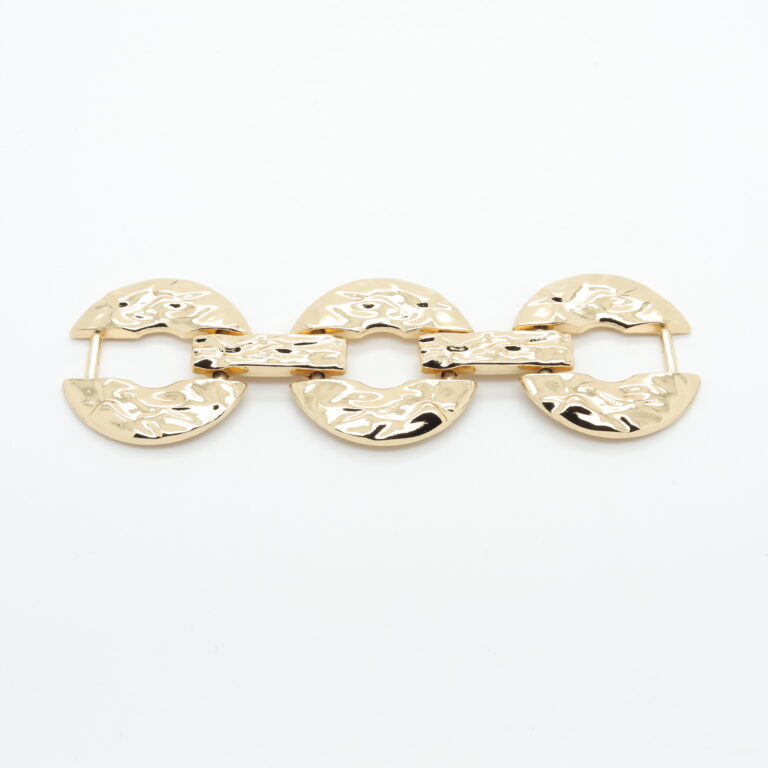 ORN-D18
Gold-plated chain with three hammered links, 11 x 3.5 cm
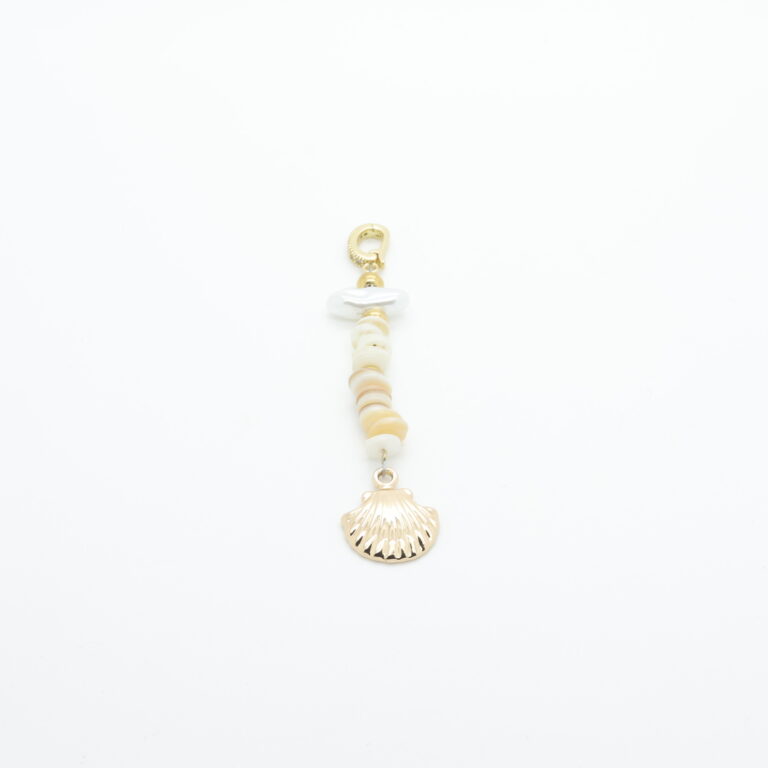 DY3338
Gold bathing suit jewel with shell
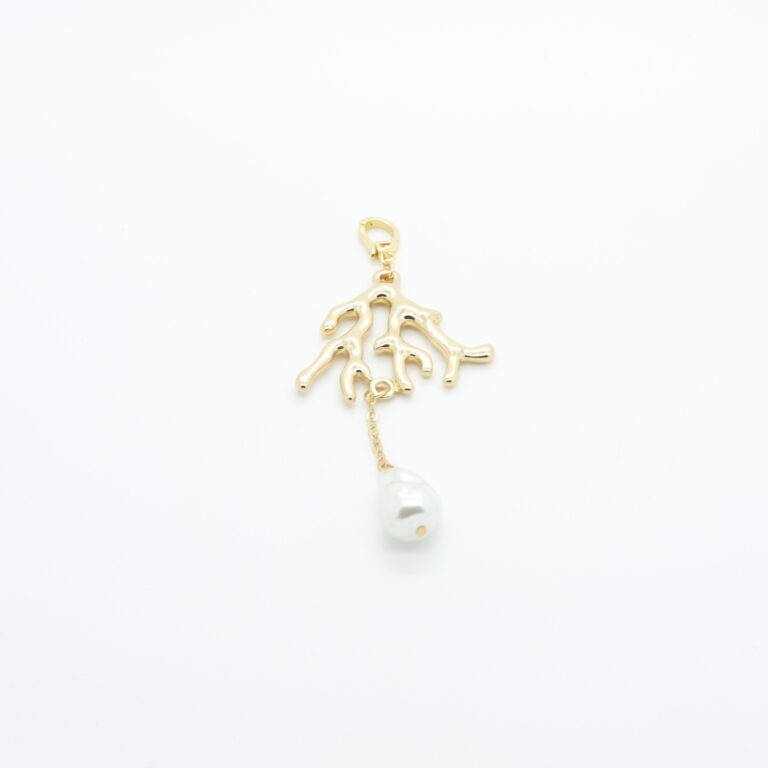 DY9565
Coral-shaped swimsuit jewel
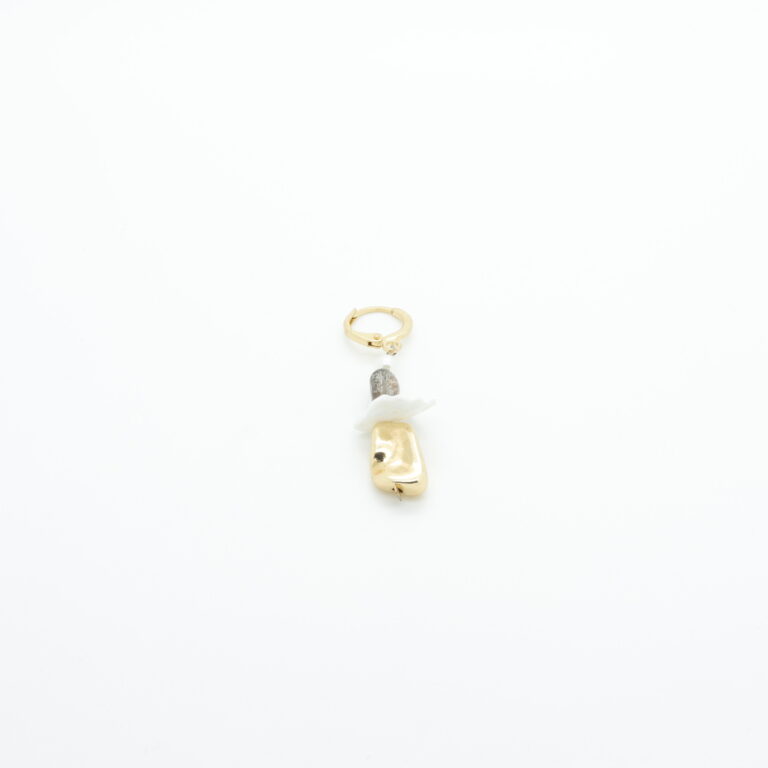 DY0109
Swimsuit jewel with shell and pearls in gold-plated metal
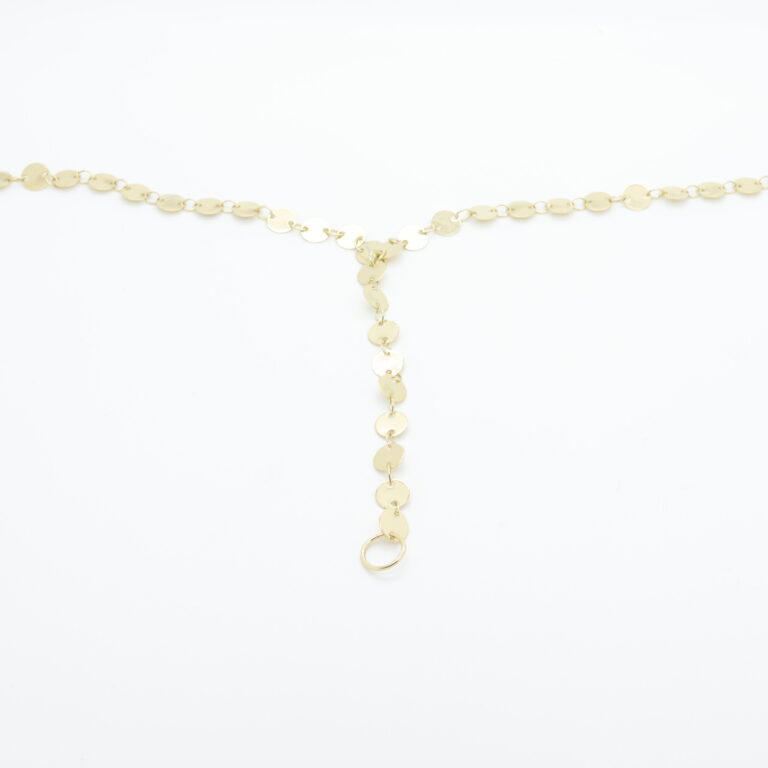 DY7240
Gold-tone metal connector chain
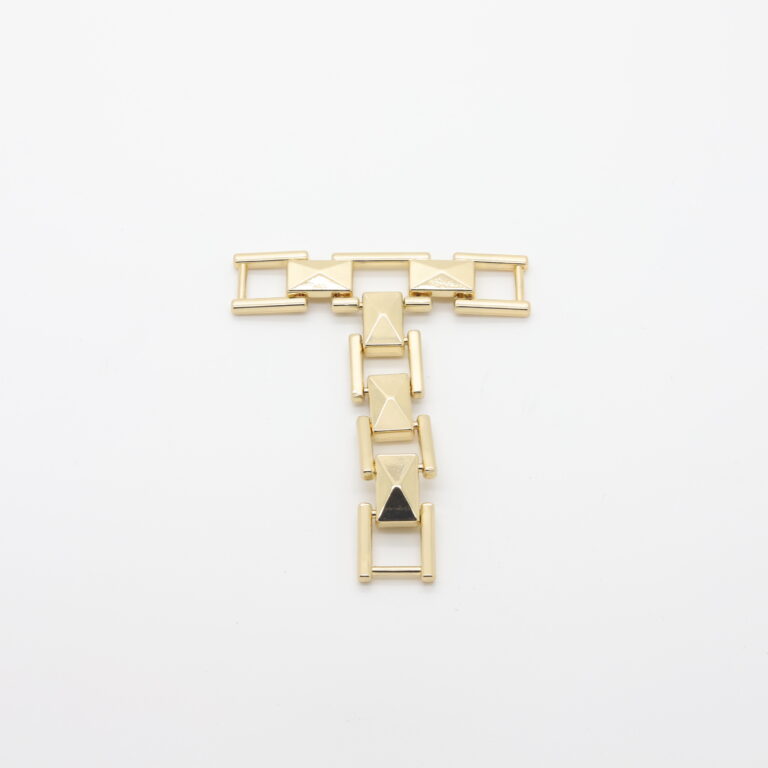 DY5093T6
Gold-tone metal hinged connector
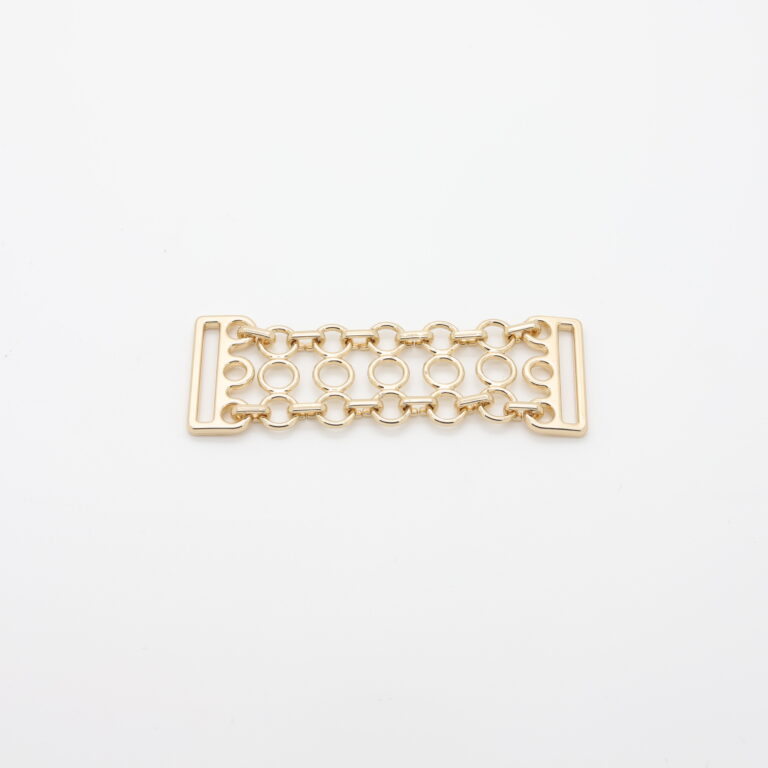 F-2762
Decorative connector chain in gold-plated metal
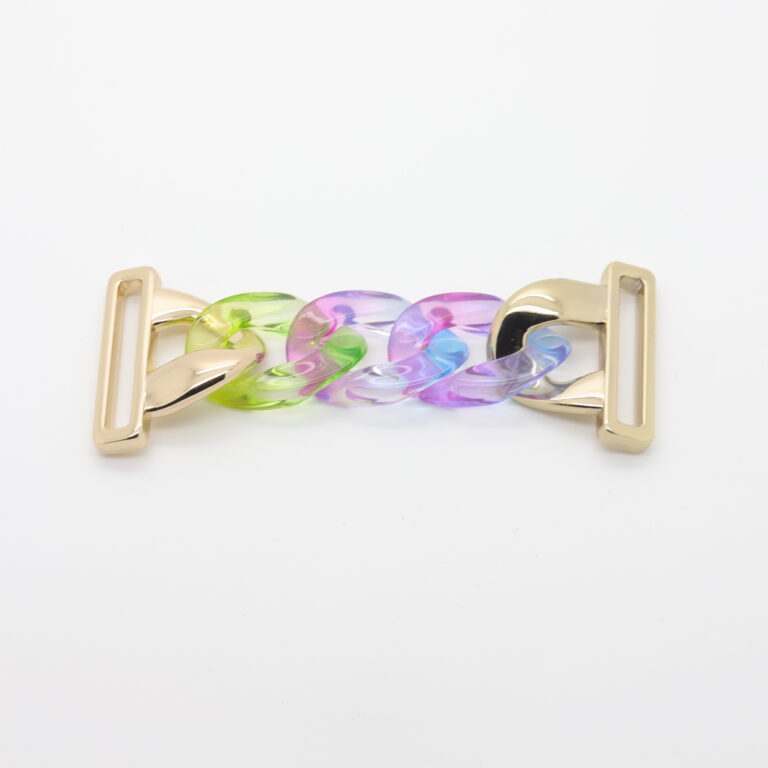 DY8042
Multicolored resin connector chain
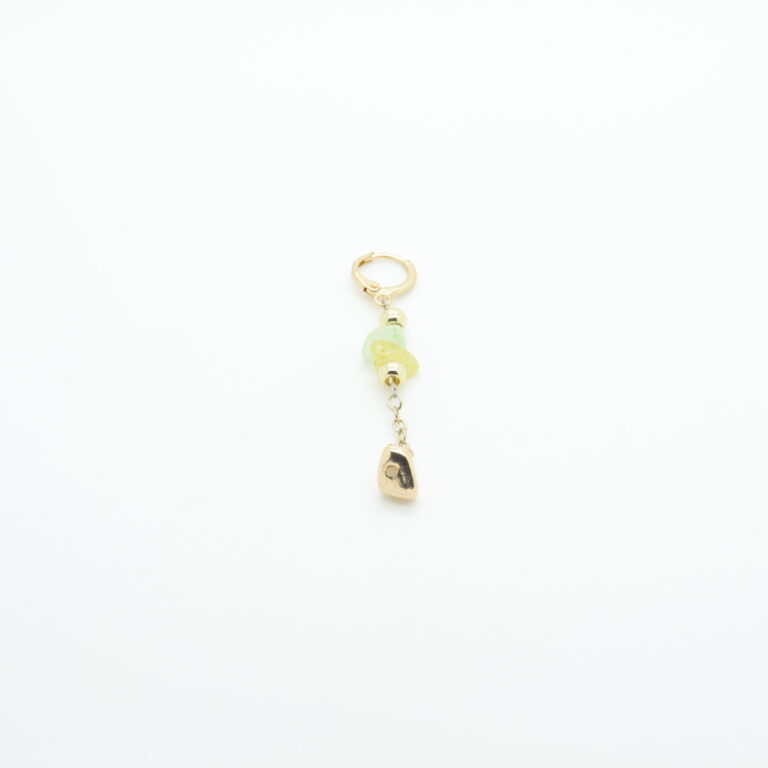 DY0088
Swimsuit jewel in gold metal with colored beads
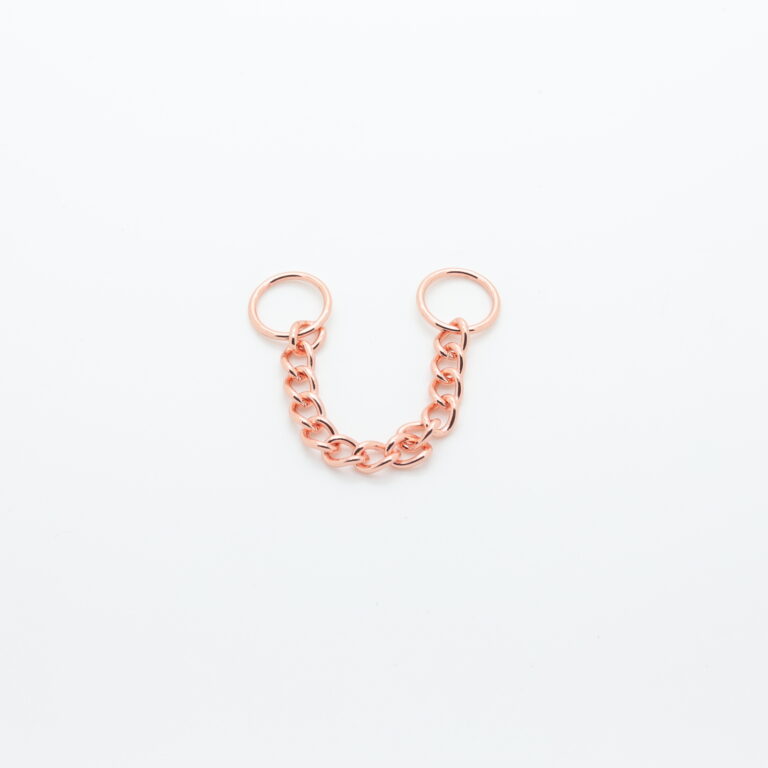 DY6690
Decorative jewelry chain in pink gold metal with rings
YRSAN's haberdashery : fabrics by the meter and supplies selected by the workshop. Discover the haberdashery
Written at the D'YRSAN workshop in Asnières-sur-Seine, where we develop and produce our clients' collections: pattern making, prototyping, industrialization, small-batch production.
Tell us about your project→